
How to Choose Automated Die-Cutters for Folding Cartons: Size, Speed, and Job Changeover
Choosing automated die-cutters for folding cartons is rarely about buying the fastest machine on a brochure. The real decision sits at the intersection of carton size range, usable speed, and changeover stability across short, mixed, and repeat jobs.
That matters more now because folding carton production is under pressure from brand variation, e-commerce velocity, compliance demands, and shorter delivery windows. In the broader converting chain tracked by PWFS, die-cutting is not an isolated step. It affects print registration, downstream folding-gluing rhythm, waste levels, and the economics of flexible manufacturing.
Why the selection process has become more demanding
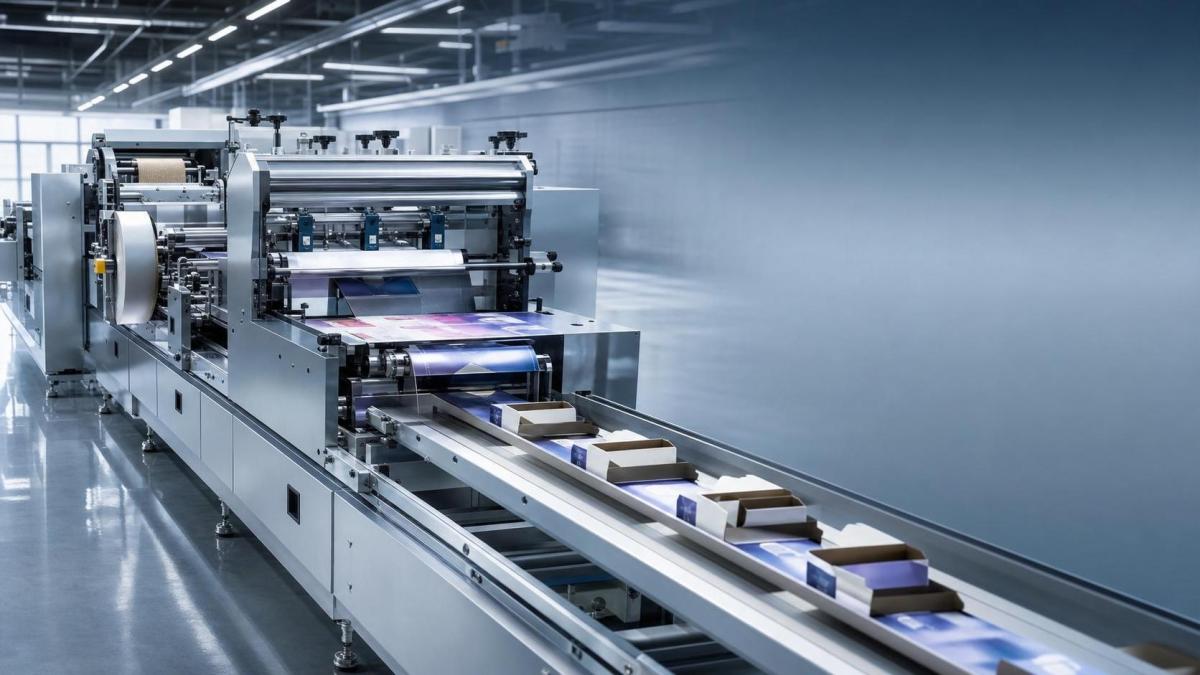
A modern folding carton line handles more SKU diversity than many plants managed a decade ago. Cosmetics, pharmaceuticals, food sleeves, promotional packs, and e-commerce retail cartons all introduce different board formats, cutting geometries, and inspection expectations.
For that reason, automated die-cutters for folding cartons are evaluated less by theoretical peak output and more by how they behave in everyday production. A machine that performs well on one long run may become inefficient if frequent tool changes, feeder adjustments, or stripping setup consume the shift.
PWFS often frames this issue within a larger production logic. Offset printing may deliver micron-level registration, but that precision loses value if die-cutting cannot maintain sheet control, crease consistency, and synchronized handoff to folder-gluers.
Start with format fit, not nameplate size
Machine size should first be matched to the real carton portfolio. That includes maximum sheet size, minimum sheet size, usable gripper margin, substrate thickness range, and blank layout efficiency.
Bigger is not automatically better. Oversized automated die-cutters for folding cartons can reduce utilization when most work is in smaller formats. They may also raise tooling cost, floor-space demand, and setup complexity.
Undersized machines create a different problem. They can force inefficient nesting, additional print formats, or job splitting across lines. That often increases waste more than the original equipment budget saved.
Questions that clarify the right format range
- What percentage of jobs fall within the top three sheet sizes?
- How often do oversized cartons appear in the annual order mix?
- Do current blanks require tight register between print image and cutting edge?
- Will future carton designs include more windows, embossing, or complex stripping?
- Can the feeder and delivery handle lightweight board without marking?
In practical terms, the best format decision supports today’s dominant work while preserving enough headroom for new business. That balance is usually more valuable than choosing the largest platform available.
Speed should be measured as stable throughput
Headline speed figures attract attention, but net output is the figure that matters. For automated die-cutters for folding cartons, stable throughput depends on feeder reliability, registration control, stripping performance, blank delivery, and how often operators need to intervene.
A machine rated at very high sheets per hour can still underperform if the carton design requires frequent slowdowns. Tight creasing tolerances, coated substrates, warp, static, and mixed board lots all reduce usable speed.
This is why speed should be tied to job families. Straightforward folding cartons for long retail runs behave differently from short-run healthcare packs with serialized graphics or premium cartons with complex waste stripping.
Useful ways to compare speed claims
A strong evaluation compares live production samples, not only demo-center output. The closer the trial resembles your own artwork, board grades, and downstream gluing conditions, the more useful the result.
Job changeover often decides the investment case
In many carton plants, changeover time is the hidden cost center. Shorter runs and more versioning mean automated die-cutters for folding cartons must recover productive time between jobs, not only during long production runs.
Fast job changeover includes more than die exchange. It covers feeder presetting, register adjustment, stripping frame handling, non-stop systems, delivery settings, HMI recipe recall, and the ease of confirming first-sheet approval.
In plants moving toward MES-linked workflows, digital presets become especially valuable. A machine that stores repeat job parameters can reduce dependency on manual memory and improve consistency across shifts.
Where changeover savings usually appear
- Automatic or assisted plate positioning
- Quick-lock systems for dies and stripping tools
- Recipe-based setup recall for repeat cartons
- Accessible operator-side adjustment points
- Short learning time for new crews
- Reduced trial sheets before approved production
A simple comparison works well here: measure changeover in total minutes from last good sheet of job A to first approved sheet of job B. That number speaks more clearly than a generic “quick setup” claim.
How carton type changes the machine priority
Not every folding carton application rewards the same equipment strengths. The best automated die-cutters for folding cartons are selected around business mix, not abstract specification ranking.
Pharmaceutical cartons usually put pressure on registration discipline, repeatability, inspection compatibility, and clean stripping. Cosmetic cartons often demand sharp crease definition and reliable performance on decorated board.
Food and consumer goods packaging may prioritize throughput and rapid changeovers across many SKUs. Promotional cartons and seasonal displays often raise the value of format flexibility and complex tool handling.
This is where the PWFS perspective becomes useful. Die-cutting should be reviewed as one node in a linked manufacturing system, alongside offset press capability, folder-gluer pace, material handling, and digital production control.
Key technical signals behind long-term value
The purchase decision should include physical performance, not only commercial terms. High-speed motion places stress on sheet transport, platen balance, and stripping precision. Small weaknesses become visible when production volume rises.
Several technical signals deserve close attention during evaluation:
- Registration consistency across the full sheet width
- Crease quality at different board calipers
- Feeder control with warped or static-prone stock
- Tool wear behavior and spare-part availability
- Compatibility with upstream and downstream automation
- Data visibility for maintenance and production analysis
Support structure also matters. Response time, remote diagnostics, local service coverage, and training depth often shape uptime more than minor differences in nominal machine speed.
A practical framework for final comparison
A disciplined shortlist keeps the process grounded. Start with production data from the last twelve months, then group jobs by sheet size, run length, substrate, and setup frequency.
Next, compare candidate automated die-cutters for folding cartons against those real job clusters. Include not just capital cost, but waste, labor intensity, changeover minutes, and the likely effect on downstream folder-gluer utilization.
Site visits remain valuable because they expose everyday operating behavior. Ask to see repeat orders, not only ideal showcase jobs. A machine that maintains quality through routine production is usually the better long-term asset.
The clearest next step is to build a scorecard around three questions: does the format fit the order mix, does the real speed hold under normal conditions, and does changeover support the plant’s actual SKU rhythm. That approach turns equipment selection from a specification exercise into a production strategy decision.
Related News
Get weekly intelligence in your inbox.
No noise. No sponsored content. Pure intelligence.
