
How to Evaluate a Woodworking Machinery Solutions Supplier for Capacity, Service, and ROI
How to Evaluate a Woodworking Machinery Solutions Supplier for Capacity, Service, and ROI
Choosing the right woodworking machinery solutions supplier can shape years of factory performance.
A weak choice often leads to downtime, scrap, delayed orders, and unstable margins.
A strong supplier helps turn capacity into predictable output and faster payback.
That is why evaluating a woodworking machinery solutions supplier must go beyond brochures and machine speed claims.
The real question is simple.
Can this supplier support production growth, service continuity, and long-term return on investment?
Start With Real Production Capacity
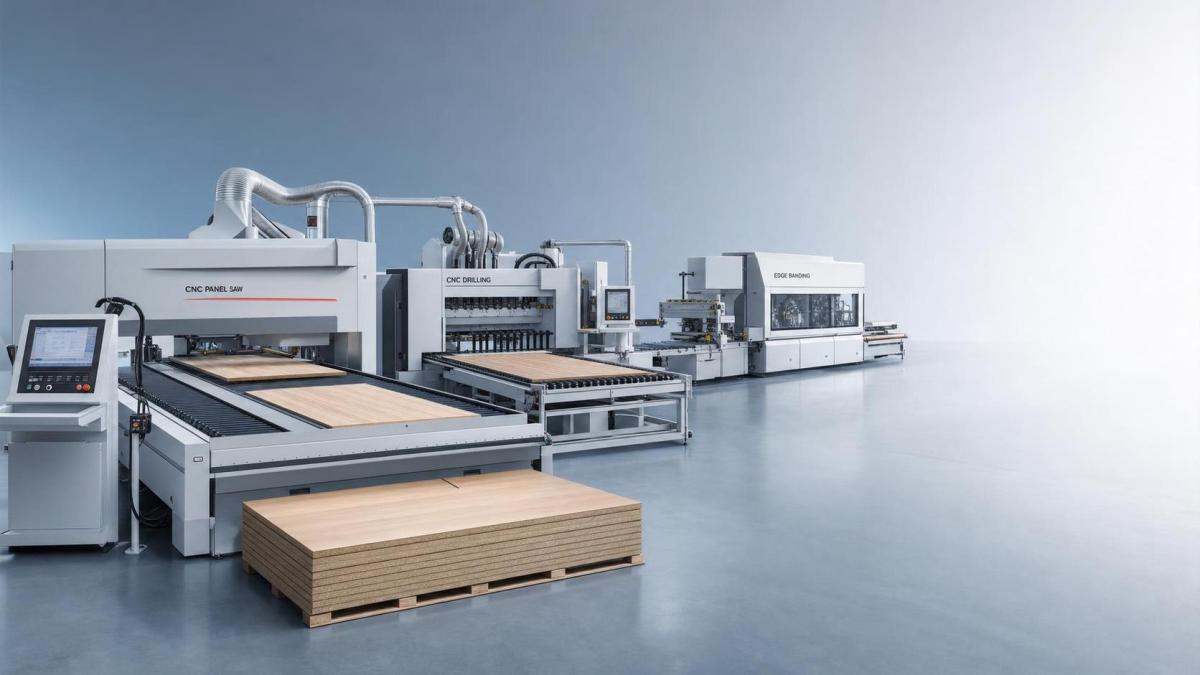
A woodworking machinery solutions supplier should first be measured by its ability to match actual factory demand.
This means more than maximum spindle speed or a polished demo video.
Look at throughput under normal shifts, mixed orders, and frequent material changes.
In practical terms, ask for line data from similar factories.
You need cycle time, changeover time, yield rate, and labor input per shift.
A reliable woodworking machinery solutions supplier should explain output limits honestly.
That includes tooling wear, dust extraction demands, software nesting efficiency, and operator skill assumptions.
If the supplier avoids those details, the capacity promise is probably too optimistic.
- Ask for performance data on panel sizing, drilling, routing, and edge processing.
- Check whether output was achieved on MDF, plywood, particleboard, or mixed materials.
- Verify uptime assumptions, including maintenance windows and spare part replacement cycles.
- Request evidence from installations with order complexity close to yours.
Evaluate Engineering Depth, Not Just Equipment Range
Many vendors sell machines.
Fewer operate as a real woodworking machinery solutions supplier with process engineering capability.
That difference matters when your workflow involves custom furniture, batch-size-one production, or rapid order switching.
A capable supplier should understand the entire flow.
Design input, CAD/CAM integration, labeling, nesting, cutting, drilling, edge banding, sorting, and packaging should connect cleanly.
More importantly, the supplier should identify bottlenecks before installation.
For example, a fast CNC cell creates little value if loading, labeling, or edge banding falls behind.
From recent market shifts, this has become more important.
Factories now need flexible output, not just raw speed.
That also means your woodworking machinery solutions supplier should support software interoperability and future automation upgrades.
- Review engineering drawings, layout planning, and utility requirements.
- Confirm compatibility with MES, ERP, barcoding, and production scheduling tools.
- Ask how the supplier handles customized workflows and nonstandard board dimensions.
- Check whether line balancing advice is included before purchase.
Service Capability Is a Core Financial Variable
Service is often discussed late.
In reality, it should be one of the first filters when comparing a woodworking machinery solutions supplier.
Every hour of downtime carries a cost.
Lost output, delivery penalties, overtime, and waste can quickly exceed a lower purchase price advantage.
So evaluate service like you would evaluate production risk.
Ask where service engineers are located, how remote diagnostics work, and what spare parts are stocked locally.
Also ask for response and resolution commitments in writing.
A strong woodworking machinery solutions supplier will usually define service levels clearly.
It should also provide operator training, preventive maintenance plans, and troubleshooting documentation that plant teams can actually use.
The clearer the post-sale structure, the lower the operational uncertainty.
Questions That Reveal Service Strength
- What is the average remote response time for critical faults?
- Which spare parts are available in the region?
- How long does on-site intervention usually take?
- Is software support included after commissioning?
- How often are operators and maintenance teams retrained?
Calculate ROI Across the Full Equipment Lifecycle
A lower quote does not always mean a better deal.
When selecting a woodworking machinery solutions supplier, lifecycle economics should guide the decision.
Start with total cost of ownership.
Include machine price, freight, installation, utilities, tooling, software, training, maintenance, and expected downtime.
Then compare that cost against measurable gains.
Typical gains include labor reduction, higher yield, less rework, faster delivery, and more order flexibility.
A serious woodworking machinery solutions supplier should help build this model using real assumptions.
If the payback estimate depends on perfect utilization from day one, treat it cautiously.
A better model uses ramp-up periods and realistic staffing levels.
Check References, Compliance, and Expansion Readiness
Supplier evaluation should also include proof from the field.
A credible woodworking machinery solutions supplier should provide reference projects with comparable production goals.
Try to speak with users who have operated the line for at least one year.
That is usually where the real story appears.
You can confirm uptime, spare part reliability, software stability, and post-installation support quality.
Compliance is another signal.
Review electrical standards, safety protections, dust handling, energy efficiency, and local certification requirements.
This becomes even more important for cross-border projects.
Finally, assess expansion readiness.
The right woodworking machinery solutions supplier should support future cells, conveyors, sorting, robotic loading, or digital upgrades without a full redesign.
- Visit reference sites whenever possible.
- Review safety documentation and local compliance records.
- Ask how the system scales with new product lines or extra shifts.
- Confirm whether software licenses allow future modules and integrations.
A Practical Supplier Scorecard for Better Decisions
When comparing options, use a weighted scorecard.
This keeps the decision anchored in business priorities, not presentation quality.
For most projects, five categories matter most.
- Capacity fit: real output under your product mix.
- Engineering fit: workflow design and system integration depth.
- Service fit: response speed, spare parts, and training structure.
- Financial fit: total cost of ownership and payback period.
- Strategic fit: scalability, compliance, and long-term supplier stability.
This approach makes discussions more objective.
It also helps internal teams align around risk, growth, and return expectations.
In the end, the best woodworking machinery solutions supplier is not simply the cheapest or the most famous.
It is the one that can prove operational fit, service reliability, and measurable ROI.
That is the standard worth applying before any final commitment.
Build the shortlist around evidence, test the assumptions early, and let data decide the supplier choice.
Related News
Get weekly intelligence in your inbox.
No noise. No sponsored content. Pure intelligence.
