
How do high-speed gluing machines affect output quality?
In packaging and converting lines, high-speed gluing machines can dramatically raise throughput, but they also place greater demands on quality control and safety management. From bond consistency and carton alignment to adhesive application accuracy and machine stability, every variable affects final output quality. For QC and safety teams, understanding these impacts is essential to reducing defects, preventing downtime, and ensuring reliable, compliant production at scale.
For most buyers and plant teams, the short answer is clear: high-speed gluing machines can improve output quality, but only when machine dynamics, adhesive behavior, carton design, inspection standards, and operator safety controls are managed together.
If those factors are not aligned, speed amplifies weaknesses. Minor glue variation becomes bond failure, slight registration drift becomes crooked cartons, and unstable feeding becomes a defect stream that reaches customers faster than teams can react.
That is why the real question is not whether speed is good or bad. It is whether the production system can maintain repeatable glue application, stable carton travel, and safe operation under higher mechanical stress.
What quality and safety teams are really asking when they evaluate high-speed gluing machines
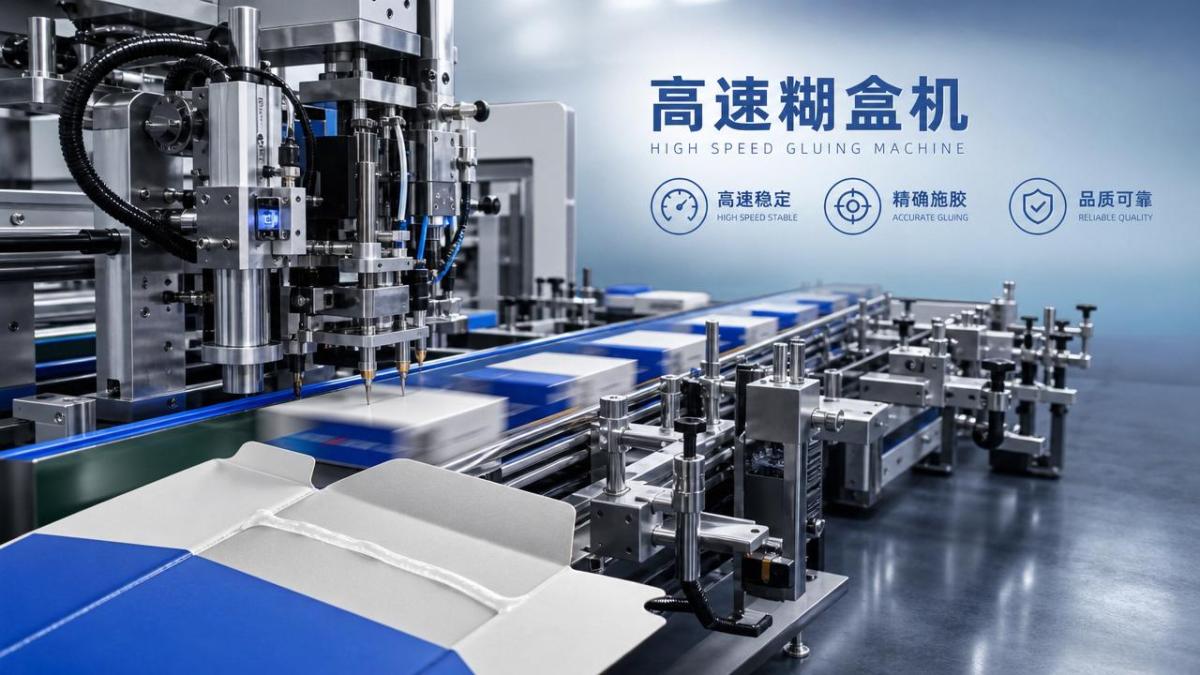
Quality controllers and safety managers usually are not searching for abstract theory. They want to know what changes on the line, which defects increase or decrease, and how to verify whether faster gluing will protect or damage shipment quality.
Their concern is practical. Can the line hold bond strength at top speed? Will cartons stay square? Will nozzles or wheels apply glue consistently? Can inspection systems catch misses early enough? Will vibration, heat, or operator exposure create safety risks?
These questions matter because folder-gluer and high-speed gluing performance affects more than appearance. It influences carton compression, retail presentation, filling line efficiency, sealing integrity, and complaint rates in pharmaceutical, food, cosmetics, and e-commerce packaging.
For this audience, the most useful evaluation framework includes five dimensions: adhesive consistency, mechanical precision, material compatibility, process control responsiveness, and safety reliability. Output quality depends on the interaction of all five, not one isolated machine specification.
How high-speed gluing machines can improve output quality
When properly configured, high-speed gluing machines often deliver better quality than slower, manually adjusted equipment. The reason is consistency. Automated systems can control glue volume, application location, compression timing, and carton transport more precisely from batch to batch.
At higher production maturity, speed also supports process stability. A modern machine with servo control, automatic set-up memory, and inspection feedback can hold repeatable standards better than older lines that rely heavily on operator feel and frequent manual correction.
One major advantage is more uniform adhesive application. Stable gluing heads, controlled pressure, and synchronized carton movement reduce random under-gluing and over-gluing. That means fewer open seams, less squeeze-out, cleaner folding, and better final pack appearance.
Another benefit is improved alignment during folding and compression. Well-designed high-speed gluing machines coordinate feeder, pre-break, folding rails, carrier belts, and delivery compression zones so carton geometry remains consistent even at elevated line rates.
That consistency improves downstream performance. Cartons that are properly glued and square run better on filling lines, stack more reliably, and reduce jams in automated case packing or distribution systems. In many plants, this hidden quality benefit matters as much as headline throughput gains.
Where output quality starts to suffer as speed increases
Higher speed does not create defects by itself. It reduces the time available for the process to tolerate variation. Materials move faster, glue must wet and tack faster, and the machine has less margin to absorb feeder irregularities or warped blanks.
The first quality risk is bond inconsistency. If adhesive viscosity changes with temperature, if glue delivery pulses, or if substrate absorption varies, the machine may still run fast while bond strength becomes unstable. Those defects may only appear after packing, transport, or customer use.
Another common issue is carton misalignment. At speed, small differences in board flatness, die-cut accuracy, scoring quality, or belt pressure can produce skewed folds, fish-tailing, twisted cartons, or poor seam overlap. Appearance defects often signal deeper functional problems.
High-speed operation can also magnify contamination issues. Stringing, nozzle build-up, glue splatter, and dust accumulation become more serious because they spread quickly across long runs. What looks like a minor maintenance issue can rapidly become a measurable quality loss.
For safety teams, quality loss often appears alongside operational instability. Excessive vibration, rushed changeovers, frequent jam clearing, and manual intervention around moving components increase both defect rates and the probability of operator exposure to hazards.
The main quality variables QC teams should monitor closely
Among all variables, adhesive behavior is usually the most critical. High-speed gluing machines depend on glue that matches the process window for viscosity, open time, set speed, and substrate wetting. If the adhesive is wrong, machine speed only exposes the mismatch faster.
QC teams should monitor glue line width, glue line position, coating continuity, and seam bond strength. These are more meaningful than simply checking whether glue is visible. A visible bead can still be misplaced, insufficient, or poorly transferred onto the mating flap.
Carton geometry is the second major area. Check squareness, panel alignment, seam overlap, fold accuracy, and compression results. Poor die-cutting or inconsistent creasing upstream often gets blamed on the gluer, even though the root cause started before adhesive application.
Substrate condition matters just as much. Moisture variation, warping, surface treatment, coating type, and fiber quality all influence adhesion and folding performance. High-speed lines are less forgiving of board variation, so incoming material controls become more important.
Machine condition should also be part of quality monitoring. Belt wear, nozzle condition, rail settings, sensor cleanliness, vacuum stability, and compression section performance all affect repeatability. A machine may be “running” while no longer running within quality capability.
Why adhesive application accuracy matters more than rated machine speed
Many plants compare high-speed gluing machines by maximum cartons per minute. That metric is useful, but for quality assurance it is secondary. The more important question is how accurately the machine places and controls adhesive within the real production mix.
A machine with superior glue application control at a slightly lower top speed often produces better net output than a faster line with unstable application. True output quality should be measured by saleable cartons, not by gross mechanical speed on a display screen.
Application technology also matters. Disc gluing, extrusion systems, and cold glue nozzles have different strengths and weaknesses depending on carton style, board grade, line speed, and cleanliness demands. There is no universal best option across all packaging formats.
For example, small pharmaceutical cartons demand tight positional control and clean seams. E-commerce or food service formats may prioritize bond reliability under compression and transport stress. QC teams should evaluate glue method against the defect modes that matter most in use.
The best assessment combines in-line checks with destructive and functional tests. That means not only measuring glue placement, but also testing bond strength, opening behavior, fill-line performance, and pack integrity after environmental or transport simulation.
How speed affects defect types, not just defect volume
As line speed rises, plants often focus on whether defects increase. Just as important is how the defect profile changes. Some defects become more frequent, while others become harder to detect before shipment because they are intermittent and speed-related.
Typical high-speed defect patterns include skipped glue, tailing, micro-misalignment, weak seam bonding, carton spring-back, flap bounce, and compression inconsistency. These are often dynamic defects, meaning they occur under motion and disappear during static machine checks.
This is why quality teams should avoid relying only on end-of-line visual inspection. A carton can look acceptable while still carrying poor bond development or dimensional instability. High-speed gluing machines require process-based monitoring, not just final appearance checks.
Trend data is especially valuable here. Tracking defects by speed band, shift, adhesive batch, temperature, carton style, and machine setting helps identify whether quality loss comes from the machine, the material, the adhesive, or operational practice.
Safety management and output quality are closely linked
For safety managers, high-speed gluing machines are not just a guarding issue. Safe operation supports quality because stable, controlled production reduces emergency stops, manual clearing, and rushed adjustments that often trigger both injuries and defects.
Frequent jams are a warning sign. They indicate that the process window may be too narrow, feeding may be unstable, or materials may be inconsistent. Every manual intervention near moving belts, compression sections, or adhesive systems adds risk and usually disrupts quality.
Adhesive handling is another key area. Depending on the glue system, teams may face exposure to heat, fumes, slip hazards, skin contact, or cleaning chemicals. Poor housekeeping around glue stations can degrade sensor performance and create unsafe work conditions.
Lockout-tagout discipline, interlocked guards, safe access design, and jam-recovery procedures should therefore be reviewed as part of quality assurance, not separately. A line that depends on unsafe operator intervention is not capable of delivering reliable output quality at scale.
Training should also cover defect recognition. Operators who understand early signs of glue starvation, misalignment, and instability can respond faster and more safely. Prevention is always better than repeated stop-and-reach behavior around high-speed mechanisms.
How to judge whether a high-speed gluing machine is truly suitable for your line
QC and safety teams should ask for evidence, not only performance claims. The right machine is the one that maintains acceptable defect rates, bond strength, alignment, and safe intervention frequency under your actual substrates, carton styles, and environmental conditions.
Begin with a structured factory acceptance or line trial plan. Test at multiple speeds, not only the ideal top speed. Include normal production board grades, coated and uncoated surfaces if relevant, and real adhesive systems rather than laboratory substitutes.
Define acceptance criteria in advance. These may include glue placement tolerance, seam strength, squareness, reject rate, restart stability, inspection system detection rate, and jam frequency per shift. Without agreed metrics, “successful” trials often hide future production problems.
It is also wise to assess changeover behavior. A machine may perform well on one standard carton yet lose control when product mix becomes more complex. Plants serving short runs or frequent SKU changes should value repeatable setup and recipe management highly.
Finally, review data connectivity. High-speed gluing machines that integrate with inspection systems, MES, alarms, and maintenance records give QC and safety teams stronger traceability. This makes root-cause analysis faster and supports continuous improvement across shifts and sites.
Best practices to protect quality when increasing gluing speed
First, stabilize materials before pushing speed. Control board moisture, flatness, die-cut accuracy, and storage conditions. Many gluing problems blamed on the machine are actually substrate variation problems that become visible only when throughput rises.
Second, match adhesive to speed and substrate. Work with suppliers on viscosity range, temperature behavior, set characteristics, and application method. Revalidate glue performance whenever carton design, coating, climate, or machine speed changes significantly.
Third, strengthen process monitoring. Use camera inspection, glue detection, SPC tracking, and routine destructive testing. High-speed lines produce defects faster, so they also need faster feedback loops. Delayed quality detection is expensive and operationally disruptive.
Fourth, maintain the machine proactively. Clean nozzles, inspect belts, verify sensors, check rail settings, and monitor vibration or wear trends. Preventive maintenance is one of the simplest ways to preserve output quality while reducing unsafe intervention events.
Fifth, train cross-functional teams together. Operators, maintenance staff, QC personnel, and safety managers should share one understanding of the process window. High-speed gluing machines perform best when departments solve stability issues collaboratively, not in isolation.
Conclusion: speed improves quality only when the process is capable
High-speed gluing machines do affect output quality, but not in a one-directional way. In capable plants, they improve consistency, reduce variation, and support stronger overall packaging performance. In unstable plants, they simply accelerate defects and expose weak controls.
For quality control and safety management teams, the key insight is that speed should be evaluated as a system capability question. Adhesive control, carton accuracy, machine condition, inspection response, and operator safety all determine whether faster production becomes better production.
If your process can hold those variables within a stable window, high-speed gluing machines can deliver both higher throughput and higher saleable quality. If not, the right strategy is to build control first, then unlock speed with confidence.
Related News
Get weekly intelligence in your inbox.
No noise. No sponsored content. Pure intelligence.
