
Industrial Corrugated Board Lines: Key Parameters That Affect Board Quality and Output
Why board lines deserve closer attention
Industrial corrugated board lines sit at the center of modern packaging supply.
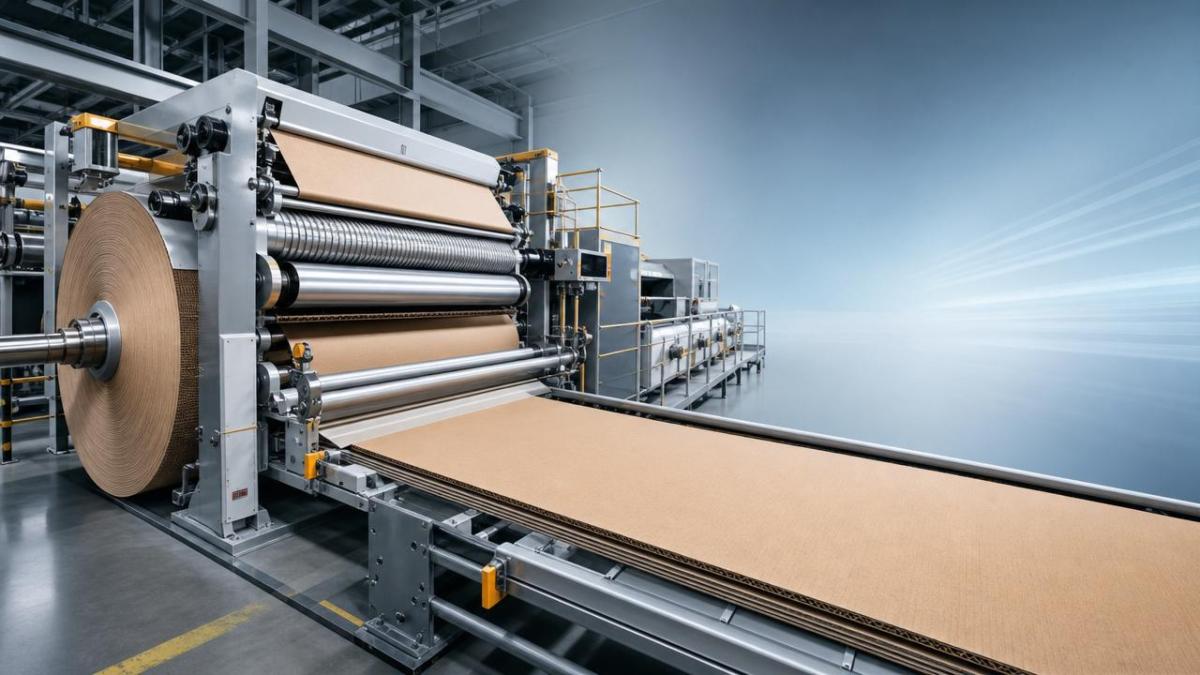
They turn paper reels into structural material for e-commerce, food distribution, electronics, and industrial shipping.
When output rises but board quality drifts, the damage appears quickly.
Warp, weak bonding, crushed flute tips, unstable caliper, and unplanned stoppages affect packaging performance and plant safety at the same time.
That is why industrial corrugated board lines are not only production assets.
They are process systems where heat, moisture, pressure, speed, and operator discipline must stay in balance.
From the broader PWFS perspective, these lines are the physical backbone of global logistics.
They also connect upstream paper quality with downstream printing, die-cutting, folding, and final package durability.
A small deviation in board formation can later become color registration issues, converting waste, pallet failures, or customer claims.
What defines quality on industrial corrugated board lines
Good board is not defined by appearance alone.
It must hold shape, resist compression, bond reliably, convert cleanly, and remain dimensionally stable through storage and transport.
On industrial corrugated board lines, quality usually comes down to five linked outcomes.
- Accurate flute formation without crushing or washboarding.
- Consistent starch bonding at single facer and double backer stages.
- Controlled moisture profile across width and machine direction.
- Stable caliper, flatness, and sheet geometry for converting.
- Reliable throughput without excessive defects or unsafe interventions.
These outcomes are interdependent.
For example, chasing higher line speed without matching steam condition and glue solids may increase output on paper, yet reduce real saleable volume.
The parameters that shape board strength and output
The most important variables on industrial corrugated board lines are usually process variables, not isolated machine settings.
Paper condition and reel consistency
Paper grammage, moisture, storage condition, and reel splice quality set the starting point.
If incoming liners and medium vary too much, downstream control becomes reactive rather than preventive.
Steam, temperature, and heat transfer
Corrugating rolls, preheaters, and hot plates need stable thermal energy.
Insufficient heat limits flute formation and starch gelatinization.
Excessive heat can overdry one side and trigger warp or brittle edges.
Adhesive preparation and application
Starch viscosity, solids, temperature, and pickup rate control bond integrity.
Too little adhesive weakens the interface.
Too much adhesive slows drying, encourages warp, and raises contamination risk around moving parts.
Pressure and alignment
Nip settings, roll parallelism, belt pressure, and web alignment affect flute profile and board flatness.
Poor alignment often looks like a quality issue first, then becomes a maintenance or safety issue later.
Line speed and synchronization
Higher speed only works when every thermal, mechanical, and adhesive variable follows it.
Otherwise, output gains are offset by waste, jam frequency, and unstable board performance.
How defects usually connect back to process conditions
In practice, defect diagnosis improves when symptoms are tied to parameter groups rather than isolated events.
This is where process intelligence matters.
PWFS often frames industrial corrugated board lines as part of a larger manufacturing chain.
Board defects rarely stay inside the corrugator hall.
They move downstream into printing registration loss, die-cut cracking, folding inconsistency, and damaged transport performance.
Why safety and process control are closely linked
Industrial corrugated board lines combine heat, steam, rotating rolls, belts, knives, and adhesive systems across long, fast-running sections.
That means unstable quality often creates unstable behavior around the machine.
Frequent jams invite manual clearing.
Excess starch buildup increases slip and housekeeping hazards.
Steam fluctuation may trigger rushed adjustments near hot surfaces.
When the process is stable, people intervene less, and risk exposure falls with it.
Useful control routines often include:
- Shift-based verification of steam pressure, condensate removal, and roll temperatures.
- Routine checks on glue kitchen consistency and application cleanliness.
- Trend monitoring for warp, bond strength, and moisture by grade combination.
- Clear lockout practices before clearing wraps, jams, or belt-side obstructions.
- Changeover standards that define safe speed ramping and tension stabilization.
Simple discipline around these points usually delivers both better yield and fewer unsafe disturbances.
Where current industry pressure is coming from
Demand for corrugated packaging is still shaped by fast delivery networks, wider SKU diversity, and stronger expectations for box performance.
At the same time, energy costs, paper variability, labor constraints, and traceability requirements are becoming harder to ignore.
That changes how industrial corrugated board lines are evaluated.
The discussion is no longer limited to maximum meters per minute.
More attention now goes to usable output, repeatability, digital visibility, and how easily the line supports the rest of the converting workflow.
This broader view matches the PWFS approach across corrugating, printing, die-cutting, and automation.
The strongest plants increasingly treat the board line as a data-producing system, not just a paper-processing machine.
A practical way to assess line performance
A useful review starts with a simple question.
Which parameter changes most often before defects, stoppages, or safety interruptions appear?
From there, assessment can stay grounded in evidence.
Focus on parameter relationships
Do not review glue, heat, and speed in isolation.
Look at how they move together during grade changes, speed increases, and seasonal humidity shifts.
Separate true output from nominal speed
A line running faster but creating more downgraded sheets is not performing better.
Saleable board per hour is a stronger metric.
Include downstream feedback
Print, die-cut, and folder-gluer teams often detect board instability before lab reports make it obvious.
Track intervention points
Where frequent manual adjustment occurs, both process capability and risk control need attention.
What to prioritize next
For industrial corrugated board lines, the most useful next step is usually not a broad equipment judgment.
It is a parameter map tied to actual defects, output loss, and intervention history.
That map should connect incoming paper condition, steam and condensate stability, starch performance, pressure settings, and line speed windows.
Once those links are visible, decisions about maintenance, automation, training, or process upgrades become far more credible.
In a packaging market that values both resilience and efficiency, industrial corrugated board lines perform best when quality, safety, and throughput are treated as one system.
That is the right point to compare benchmarks, refine control standards, and decide where deeper operational intelligence will create the next gain.
Related News
Get weekly intelligence in your inbox.
No noise. No sponsored content. Pure intelligence.
