
How to Evaluate a Corrugated Box Manufacturing Equipment Supplier for Line Reliability
How to Evaluate a Corrugated Box Manufacturing Equipment Supplier for Line Reliability
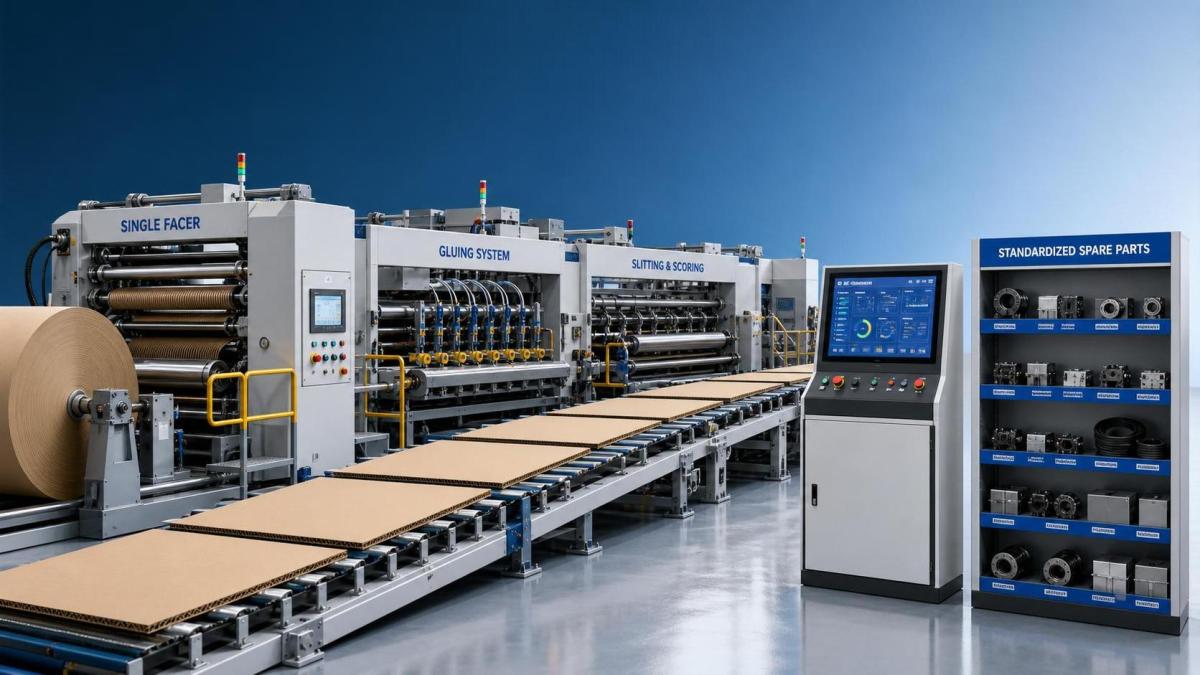
Choosing a reliable corrugated box manufacturing equipment supplier is not just about comparing quotes.
It shapes uptime, board consistency, delivery performance, and the real cost of ownership over many years.
That is why line reliability should sit at the center of every supplier evaluation.
In practice, a weak supplier can create hidden losses long after installation ends.
Missed production targets, unstable flute formation, glue waste, and delayed service visits all add up quickly.
A strong corrugated box manufacturing equipment supplier does the opposite.
It supports stable throughput, predictable maintenance, faster changeovers, and smoother integration with upstream and downstream systems.
The best evaluation process is structured, practical, and evidence-based.
Instead of asking who promises the most, ask who can prove reliable performance under real factory conditions.
Start with the Reliability Risks That Matter Most
Before comparing suppliers, define what line reliability means for your operation.
For some plants, reliability means running long shifts with minimal stoppages.
For others, it means stable quality across frequent SKU changes.
A corrugated box manufacturing equipment supplier should be evaluated against your actual production pressure points.
Usually, the core risks fall into five areas:
- Unplanned downtime caused by weak mechanical design or unstable controls.
- Board defects caused by poor heating, gluing, or tension management.
- Slow technical response when faults affect delivery schedules.
- Spare parts delays that extend stoppages beyond acceptable limits.
- Integration problems with printers, die-cutters, stackers, and MES platforms.
This early framing helps separate a true long-term partner from a low-price vendor.
Check Technical Capability Beyond the Sales Presentation
A polished brochure does not confirm technical depth.
A dependable corrugated box manufacturing equipment supplier should explain how its line performs under variable paper grades, speed changes, and ambient conditions.
Ask focused questions around the line’s weak points, not only its top speed.
What to verify in the core line design
- Single facer stability at target production speed.
- Steam and temperature control consistency across shifts.
- Glue kitchen accuracy and adhesive application repeatability.
- Warp control performance on different flute profiles.
- Slitter scorer precision and knife change efficiency.
- Control system diagnostics and fault traceability.
Recent market changes make this even more important.
Many plants now run wider product mixes, shorter order lengths, and tighter delivery windows.
That means a corrugated box manufacturing equipment supplier must prove process stability, not just installed power.
Ask for Evidence from Real Operating Lines
Reference checks often reveal more than formal proposals.
A reliable corrugated box manufacturing equipment supplier should provide comparable line references by board type, speed band, and production scale.
Do not settle for a generic customer list.
Ask for plants with similar order complexity, paper quality, and operator skill levels.
Questions for site visits or reference calls
- How often does the line stop unexpectedly each month?
- How quickly does the supplier respond to urgent faults?
- Which components fail most often in normal use?
- How accurate were the promised speed and yield figures?
- How difficult was installation, commissioning, and training?
- Would the plant buy again from the same supplier?
This step often exposes whether the corrugated box manufacturing equipment supplier performs well only during acceptance tests or throughout real production life.
Evaluate Service Speed, Parts Access, and Support Depth
Service quality is one of the clearest predictors of long-term line reliability.
Even a well-built line will face wear, tuning needs, and occasional faults.
The difference lies in how fast issues are solved.
A strong corrugated box manufacturing equipment supplier should present a clear support model before the order is signed.
Key support points to review
- Local or regional service engineers with defined response times.
- Remote diagnostics capability for PLC, drives, and sensors.
- Critical spare parts list with lead times and stock commitments.
- Preventive maintenance plans tied to actual production hours.
- Operator and maintenance training for day one and refresher cycles.
A practical point is often overlooked here.
Ask which parts are proprietary and which use standard market components.
If too many critical items are unique to one factory, your risk increases during emergencies.
Review Integration Ability Across the Full Packaging Workflow
Line reliability is not limited to the corrugator itself.
It also depends on how well equipment connects to the broader packaging workflow.
This is where many purchasing decisions become short-sighted.
A capable corrugated box manufacturing equipment supplier should understand handoff points to printing, die-cutting, folder gluing, stacking, and digital planning systems.
For operations influenced by e-commerce growth, short lead times put even more pressure on data flow and scheduling discipline.
This broader view is especially relevant for groups that value intelligent production, lower waste, and scalable automation.
Compare Total Cost of Reliability, Not Just Purchase Price
Price matters, but it should never stand alone.
The better comparison is cost per reliable operating year.
A cheaper line with unstable output can become the expensive choice very quickly.
When reviewing a corrugated box manufacturing equipment supplier, build a total-cost model that includes visible and hidden factors.
Include these cost items
- Expected uptime and downtime cost per hour.
- Waste rates during startup, changeover, and unstable running.
- Steam, energy, glue, and paper efficiency.
- Annual spare parts and consumables spend.
- Training, software support, and service contracts.
- Upgrade flexibility for future capacity or automation needs.
This approach usually makes supplier differences much clearer.
It also creates a stronger internal business case when investment approval depends on measurable risk reduction.
Use a Simple Supplier Scorecard Before Final Selection
To avoid subjective decisions, convert your findings into a weighted scorecard.
This keeps the evaluation consistent across multiple bids.
A practical scorecard for a corrugated box manufacturing equipment supplier can cover these categories:
- Technical fit and process stability.
- Reference performance and proven uptime.
- Service responsiveness and spare parts support.
- Integration capability with your existing workflow.
- Total cost of ownership over five to ten years.
- Commercial clarity, warranty terms, and upgrade path.
The goal is not to make the decision complicated.
It is to make the final choice defendable, repeatable, and aligned with production reality.
Final Takeaway
The right corrugated box manufacturing equipment supplier is the one that keeps your line running reliably, not just the one that sells an impressive machine.
Look closely at technical proof, real operating references, service depth, parts access, and system integration.
Then compare suppliers by the total cost of dependable production, not by initial price alone.
If you build your evaluation around line reliability, you reduce risk, protect delivery performance, and create a stronger foundation for long-term packaging growth.
A structured shortlist, a focused site visit, and a weighted scorecard are usually the best next moves.
Related News
Get weekly intelligence in your inbox.
No noise. No sponsored content. Pure intelligence.
