
What makes panel edge banders costly to maintain?
For after-sales maintenance teams, panel edge banders can become costly not because of one major failure, but because heat, glue, dust, pressure, sensors, and motion systems must stay perfectly synchronized every shift. When PUR units clog, trimming tools wear unevenly, or calibration drifts by fractions of a millimeter, service time, spare parts, and production downtime quickly multiply. Understanding where these hidden maintenance costs come from helps technicians prevent repeat faults, improve uptime, and protect the edge quality customers expect.
Where maintenance costs really start in panel edge banders
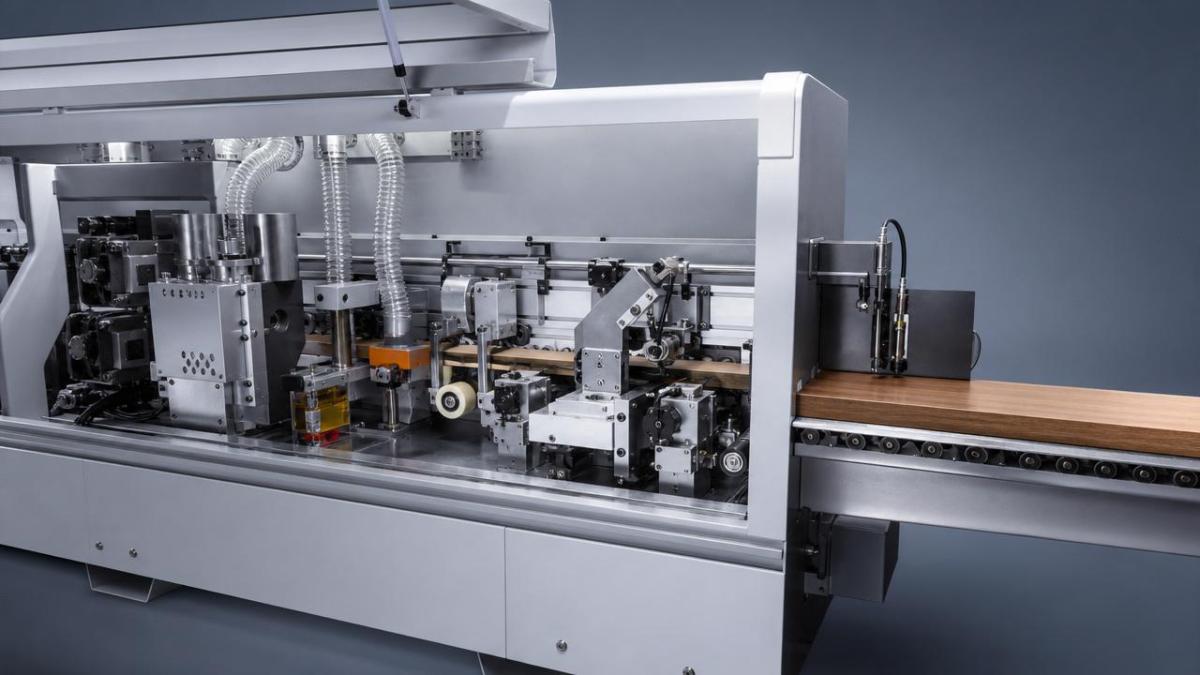
Panel edge banders sit at the final sealing stage of furniture panel production. They are expected to turn cut boards into finished components with clean edges, stable adhesion, and acceptable visual quality.
For after-sales teams, the costly part is not only replacing parts. It is diagnosing why the same edge opening, glue line, or trimming mark returns after production resumes.
In whole-house customization, batch sizes are smaller, panel materials change often, and delivery promises are tight. This makes panel edge banders more sensitive to setup errors than traditional mass production lines.
The hidden cost chain
- A small temperature deviation can reduce glue wetting, causing rework that appears hours after the service engineer leaves.
- Fine wood dust can block sensors, contaminate guides, and make fault codes look like electrical failures.
- Worn pressure rollers can create intermittent bonding defects that operators mistake for poor edge tape quality.
- Incorrect trimming calibration can damage finished panels, increasing material waste beyond the cost of the tool itself.
PWFS evaluates these machines as part of a broader paper and wood manufacturing ecosystem. The same discipline used for color registration, die-cutting dynamics, and CNC chip evacuation also applies to edge sealing stability.
Which assemblies consume the most maintenance budget?
The following table helps maintenance technicians separate normal wear from repeat-loss zones. In panel edge banders, the most expensive assemblies are usually those that combine heat, adhesive, dust, and motion.
This breakdown explains why maintenance cost often rises gradually. Panel edge banders rarely fail in isolation; one dirty reference rail may affect glue application, trimming accuracy, and sensor timing together.
Why glue systems make panel edge banders expensive to service
Adhesive technology is one of the biggest cost variables. EVA hot melt, PUR hot melt, and laser edge banding create different service routines, spare part needs, and operator discipline requirements.
EVA, PUR, and laser: different maintenance logic
EVA systems are familiar and easier to clean, but they may need more frequent visual control when customers demand narrow glue lines and higher heat resistance.
PUR systems provide stronger moisture resistance and premium edge quality. However, PUR reacts with humidity, so poor storage or incomplete purging can turn routine service into a costly shutdown.
Laser systems reduce liquid adhesive handling, yet they introduce optical, thermal, and energy-control requirements. Maintenance shifts from glue cleaning to beam path cleanliness and activation consistency.
- Check whether the adhesive type matches local humidity, board density, edge tape structure, and downstream cleaning expectations.
- Train service teams to read glue defects by shape, not only by fault code, because bonding problems often look mechanical.
- Keep a documented purge and shutdown routine, especially when panel edge banders run intermittent custom furniture batches.
From the PWFS perspective, adhesive control is similar to ink migration control in packaging: chemistry, temperature, substrate, and process timing must be managed together.
How production scenarios change the maintenance burden
Not every factory pays the same maintenance bill. Panel edge banders used for flexible custom furniture face different risks from machines installed in repetitive cabinet-door or flat-pack production.
The table below gives after-sales teams a practical way to predict service pressure before commissioning, retrofit, or annual maintenance contract negotiation.
A machine serving complex orders needs more than spare parts. It needs stable process data, disciplined cleaning, and service technicians who understand the relationship between CNC cutting accuracy and edge banding repeatability.
Procurement decisions that later become service problems
Many costly service issues are locked in during purchasing. If panel edge banders are selected only by price, speed, or the number of processing stations, maintenance teams inherit the consequences.
What after-sales teams should check before acceptance
- Confirm the machine can process the real board thickness range, not only the catalog range shown during sales discussion.
- Request sample tests using the customer’s actual edge tape, adhesive, panel material, and daily feed speed.
- Check accessibility for cleaning glue units, replacing trimming tools, and inspecting pressure rollers without excessive disassembly.
- Verify whether alarm history, servo data, temperature records, and pneumatic pressure information can support fault tracing.
- Review spare part availability for heaters, sensors, scrapers, cutters, belts, pneumatic valves, and glue application components.
A lower purchase price can be reasonable for simple production. But for mixed materials, tight delivery, and visible decorative edges, the wrong machine specification increases service frequency.
Parameter ranges that deserve routine monitoring
After-sales maintenance teams do not need to record every number every hour. They do need a controlled parameter map for panel edge banders that links defects to measurable conditions.
These parameters should be linked to defect photos and part replacement history. This makes service reports more useful than generic notes such as “adjusted machine” or “cleaned unit.”
Compliance, safety, and documentation pressures
Maintenance cost also rises when safety and documentation are treated as paperwork only. Panel edge banders include hot surfaces, rotating cutters, pneumatic actuators, and adhesive chemicals.
Common references include CE-related safety expectations, electrical safety practices, dust control requirements, and material documentation such as SDS information for adhesives and cleaning agents.
Documentation that reduces repeat visits
- Keep maintenance logs that include panel material, edge tape type, adhesive batch, shift temperature, and defect images.
- Record safety interlock checks after service, especially when covers or cutter stations have been removed.
- Attach machine parameter backups to major service reports, so future technicians can compare changes quickly.
- Document operator training after adjustments, because many repeat failures begin with incorrect restart procedures.
PWFS encourages maintenance teams to treat documentation as process intelligence. In integrated wood factories, data from CNC routers, edge banders, drilling centers, and MES systems should support the same quality narrative.
FAQ: practical questions maintenance teams ask
Why do panel edge banders develop the same bonding fault repeatedly?
Repeated bonding faults usually indicate an uncontrolled process variable, not a single bad component. Check glue temperature, panel edge quality, pressure roller alignment, adhesive age, and dust contamination together.
Is PUR always more expensive to maintain than EVA?
PUR can be more demanding because it reacts with moisture and requires strict shutdown discipline. However, in moisture-resistant furniture, its performance may reduce customer claims and rework.
When should trimming tools be replaced instead of adjusted?
Replace tools when adjustment no longer removes chipping, motor load rises, or edge quality changes across different panels. Excessive adjustment can hide wear and damage finished boards.
What should be checked before blaming the edge tape supplier?
Before blaming tape quality, verify tape storage, adhesive compatibility, pressure timing, panel squareness, and feed stability. Many tape complaints are actually machine setup or environmental issues.
Why choose PWFS for smarter edge banding maintenance decisions
PWFS connects mechanical precision, process chemistry, flexible manufacturing, and after-sales service logic across print, packaging, woodworking, and furniture equipment. That cross-industry view is valuable for diagnosing panel edge banders.
Our intelligence approach helps teams move from reactive repair to structured decisions: which machine specification fits the order profile, which parameters need monitoring, and which service routines reduce repeat faults.
Contact us for focused technical consultation
- Parameter confirmation for glue systems, feed speed, pressure zones, trimming units, and dust extraction requirements.
- Selection support for EVA, PUR, laser, and mixed-material panel edge banders used in custom furniture production.
- Maintenance planning for spare parts, service intervals, operator checklists, and troubleshooting documentation.
- Discussion of delivery schedules, retrofit feasibility, sample testing, quotation requirements, and compliance documentation.
If your maintenance team is facing repeat edge defects, uncertain spare part budgets, or difficult machine selection, PWFS can help structure the technical questions before the next costly shutdown occurs.
Related News
Get weekly intelligence in your inbox.
No noise. No sponsored content. Pure intelligence.
