
Packaging Machinery Price Breakdown: What Drives Cost in Automated Production Lines?
Why does packaging machinery price vary so much between automated lines?
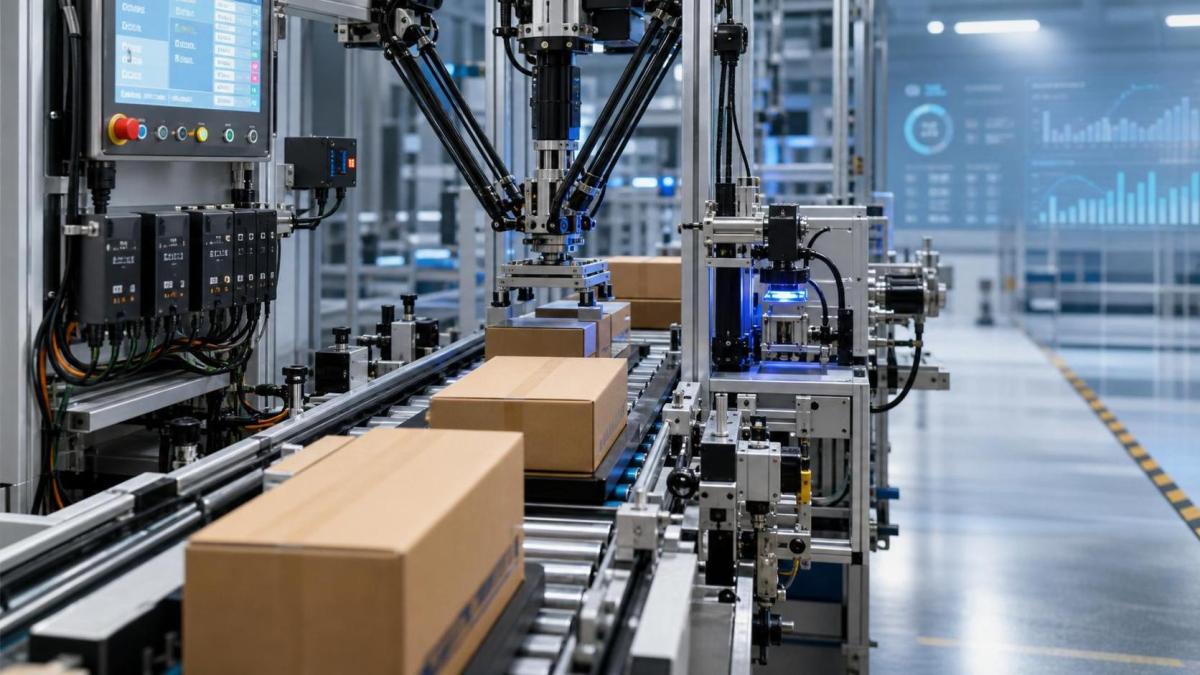
Understanding packaging machinery price starts with one simple fact: a line is never just a machine.
It is a combination of speed, control logic, material handling, precision, safety, and service life.
That is why two lines with similar output descriptions can have very different capital costs.
In practice, the biggest price gaps usually come from automation depth, tolerated error range, and production stability.
A semi-automatic line may look affordable on paper.
Yet a fully integrated line can lower labor dependency, reduce waste, and improve repeatability over several years.
This matters even more in sectors connected to corrugated packaging, printed cartons, and precision converting.
PWFS often examines these systems through a wider industrial lens.
The same logic used in high-precision offset presses or folder-gluers also shapes packaging line cost.
When micron-level registration, high-speed feeding, and digital synchronization are required, packaging machinery price rises for good reason.
So the better question is not only, “What is the price?”
It is also, “What exactly is included in that price, and what risks remain outside it?”
Which cost drivers usually have the biggest impact?
Most buyers expect line speed to affect packaging machinery price, and that is true.
Still, speed alone rarely tells the whole story.
A faster line needs stronger frames, better motion control, more stable feeding, and tighter quality monitoring.
Those hidden engineering layers are often where the budget moves.
- Automation level: robotic loading, auto changeover, vision inspection, and MES connectivity increase system value and cost.
- Material range: lines handling corrugated board, laminated paper, coated stock, or mixed formats need more adaptable modules.
- Precision demands: tighter print alignment, folding accuracy, or cut consistency raise component and calibration standards.
- Compliance requirements: food-contact packaging, traceability, and safety certifications add design and validation cost.
- Brand and service structure: established suppliers often charge more because downtime support is built into the offer.
For example, a corrugated board line serving high-volume logistics has a very different cost logic than a carton line for cosmetics.
The first prioritizes throughput and board strength consistency.
The second may prioritize print registration, die-cut precision, and rapid SKU changeover.
Both influence packaging machinery price, but in different ways.
A quick comparison helps
This is often the most useful way to discuss packaging machinery price internally.
Instead of comparing only quotations, compare the production assumptions behind them.
Is a lower packaging machinery price actually cheaper over time?
Not always, and this is where many investment decisions become misleading.
A lower packaging machinery price can reduce initial capital pressure.
However, the total cost picture includes scrap, energy use, staffing, maintenance, downtime, and upgrade limits.
In real production, weak synchronization between modules can create small, expensive losses every shift.
Misfeeds, adhesive variation, inaccurate folds, or unstable board handling rarely appear in the first quote.
They appear later as reduced OEE and difficult scheduling.
This is why mature line evaluation often borrows methods from other precision industries.
PWFS follows similar logic in offset, die-cutting, and CNC systems.
Machines with better control architecture usually protect yield better than cheaper systems with unstable performance.
A practical comparison should include these questions:
- How many operators are required per shift?
- How long does a format or SKU change actually take?
- What scrap rate is achievable on difficult materials?
- Which components are proprietary and expensive to replace?
- Can the line connect to future inspection or MES systems?
If the cheaper option performs poorly in these areas, the initial saving may disappear within one or two budget cycles.
How should pricing be judged across corrugated, carton, and flexible automation scenarios?
This is where context matters more than headline numbers.
Packaging machinery price should be assessed against the production environment, not against a generic market average.
Corrugated operations often care about board volume, line endurance, glue consistency, and maintenance accessibility.
Folding carton operations care more about registration, die-cut repeatability, and fast conversion between designs.
Mixed-product facilities need flexibility above all.
That usually means servo systems, recipe management, and more sophisticated human-machine interfaces.
There is a useful parallel with woodworking automation.
A basic CNC router and a five-axis custom line do not compete on purchase price alone.
They compete on flexibility, finish quality, throughput stability, and digital integration.
The same is true for packaging machinery price in automated production lines.
When lines are expected to support short runs, premium packaging, or frequent format shifts, the more expensive system may be the more rational choice.
A useful rule of thumb
If revenue depends on speed, buy stability.
If revenue depends on complexity, buy flexibility.
If compliance risk is high, buy traceability and validation support.
What hidden costs are most often missed before signing?
The common mistake is to treat packaging machinery price as if it ends at delivery.
In reality, several cost layers sit outside the visible quote.
Installation foundations, compressed air quality, power upgrades, exhaust handling, operator training, and spare tooling can all reshape the final budget.
Software licensing and remote service subscriptions also deserve attention.
Some lines are attractively priced because key modules are optional.
Others look expensive because essential functions are already included.
That difference matters during supplier comparison.
- Check whether commissioning is included or billed by day.
- Confirm the spare parts package for the first year.
- Ask for real utility consumption under normal load.
- Review acceptance criteria for speed, scrap, and uptime.
- Clarify which interfaces are open and which are vendor-locked.
A careful RFQ process usually reduces surprise costs more effectively than aggressive price negotiation.
That is especially true when comparing imported systems with local integration support.
So how can packaging machinery price be evaluated with more confidence?
The strongest decisions usually come from a structured comparison, not from chasing the lowest number.
Start with the production target for the next three to five years.
Then match packaging machinery price against that future operating model.
If SKU count is rising, changeover capability becomes a price driver worth paying for.
If labor stability is a concern, deeper automation deserves more weight.
If compliance exposure is growing, validation support and traceability should not be treated as extras.
A practical evaluation sheet should cover commercial terms, technical fit, lifecycle cost, and service resilience.
Sources like PWFS are useful here because they connect packaging, print precision, converting dynamics, and digital factory thinking.
That broader view helps explain why similar-looking equipment can deliver very different long-term returns.
In short, packaging machinery price should be read as an operating strategy signal, not just a purchase figure.
The next sensible step is to define must-have functions, identify acceptable trade-offs, and test supplier claims against actual production scenarios.
That approach makes cost comparison clearer, risk easier to spot, and investment decisions more durable.
Related News
Get weekly intelligence in your inbox.
No noise. No sponsored content. Pure intelligence.
