
Is automated woodworking worth it for small batch output?
For small-batch manufacturers, the real question is not whether automated woodworking is advanced, but whether it can deliver faster turnaround, consistent quality, and healthier margins without overloading capital budgets. As customization demand rises, understanding where automation creates measurable value helps decision-makers balance flexibility, labor efficiency, and long-term competitiveness.
For factory owners, operations directors, and investment teams, the answer depends less on hype and more on production mix, order volatility, panel complexity, and how often jobs change within a shift. In small-batch environments, automated woodworking can be highly worthwhile, but only when the selected level of automation matches real workflow constraints.
This is especially true in sectors influenced by whole-house customization, e-commerce furniture demand, and digitally connected production. In the broader paper and wood equipment landscape followed by PWFS, the most competitive plants are not always the biggest. They are often the ones that connect design data, CNC execution, edge processing, and scheduling into a flexible production loop with lower waste and faster quoting.
Why automated woodworking matters in small-batch production
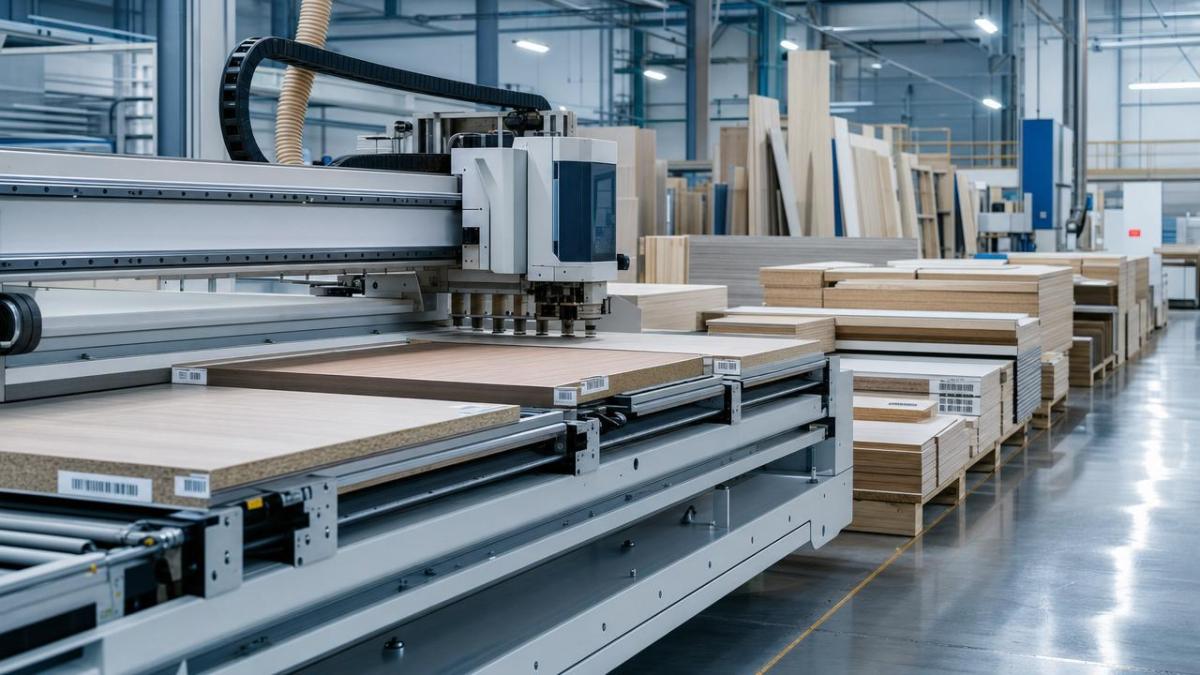
Small-batch output usually means order quantities of 1 to 50 units per SKU, frequent design variation, and compressed lead times of 3 to 10 working days. Under these conditions, manual woodworking often struggles with repeatability, training dependency, and hidden downtime between one order and the next.
Automated woodworking changes the economics by reducing manual handling steps, shortening setup cycles, and translating CAD or CAM data directly into machining actions. Instead of relying on memory and hand-marked boards, operators can move from file input to cutting, drilling, grooving, and labeling within a controlled digital workflow.
The core value is flexibility, not just speed
Decision-makers often assume automation only pays off at high volume. In reality, small-batch manufacturers gain value from consistency and changeover control. If a workshop runs 12 to 30 design changes per day, a machine that cuts setup time from 25 minutes to 8 minutes may create more financial impact than one that simply adds top spindle speed.
For custom cabinetry, office furniture, modular interiors, and panel processing, error reduction is equally important. A dimensional deviation of even ±1.0 mm can create downstream rework at drilling, edge banding, or assembly stages. Automated woodworking systems commonly target tighter repeatability ranges such as ±0.2 mm to ±0.5 mm, depending on material, machine type, and maintenance quality.
Where manual production starts to lose ground
- More than 15 job changeovers per day
- Labor-intensive nesting, marking, and drilling sequences
- Frequent remake rates above 3% to 5%
- Delivery promises under 7 days for customized panel components
- Dependence on 2 to 3 highly skilled operators for process stability
Once a plant reaches several of these thresholds at the same time, automated woodworking becomes less of a technology upgrade and more of an operating model decision.
Typical impact areas for small-batch plants
The following comparison shows where automation usually creates practical gains in small-batch woodworking, especially for panel furniture and customized interior manufacturing.
The main takeaway is that automated woodworking delivers value through process compression. It reduces the number of handoffs, not just the cycle time of one machine. That distinction matters in small-batch environments where paperwork, sorting, and rechecking often consume more time than cutting itself.
When the investment is worth it and when it is not
Not every factory should move directly to a fully integrated line. For some shops, a single CNC nesting center plus digital labeling may unlock 60% to 70% of the available efficiency gain. For others, especially those processing hundreds of custom panels per shift, broader automation across loading, drilling, routing, and edge banding may be justified.
Good candidates for automated woodworking
- Custom furniture plants with order variability higher than volume stability
- Panel processors handling MDF, plywood, particle board, or laminated boards in mixed dimensions
- Factories facing labor shortages or high operator turnover every 6 to 12 months
- Businesses targeting premium quality and low remake rates below 2%
- Manufacturers building a digital bridge from design software to shop-floor execution
Weak cases for over-automation
Automated woodworking may be a poor fit when product designs are extremely simple, order patterns are highly predictable, and utilization is too low to justify machine depreciation. A factory processing the same 3 to 5 panel formats every day with stable weekly demand may gain more from lean layout improvements than from complex flexible automation.
It is also risky when internal data discipline is weak. If drawings are inconsistent, bills of materials are inaccurate, and machine files require frequent manual correction, automation can expose process disorder rather than solve it.
A practical decision lens
Executives should evaluate automation through four lenses: utilization, changeover burden, error cost, and delivery pressure. If at least 3 of the 4 are already constraining growth, the return case becomes much stronger.
How to choose the right automation level
The smartest investment is usually not the most automated system on the market. It is the configuration that removes the most expensive bottleneck first. In small-batch woodworking, that bottleneck is often nesting accuracy, drilling consistency, panel identification, or edge-processing flow rather than raw cutting speed alone.
Key equipment layers to evaluate
- CNC nesting router for cutting and routing sheet-based components
- Automatic loading and unloading for labor reduction and throughput stability
- Horizontal or vertical drilling unit for high-repeat hole accuracy
- Barcode or QR code labeling for part traceability
- Edge banding integration for seamless downstream processing
- MES or production management interface for scheduling and reporting
The table below helps decision-makers align machine scope with business scale and complexity rather than buying on headline specifications.
This staged approach protects capital. It also allows management to validate assumptions about labor savings, panel throughput, and order mix before committing to deeper line integration.
Technical details that matter more than brochure claims
1. Accuracy under real materials
Ask for performance across MDF, chipboard, plywood, and laminated boards, not just ideal sample stock. Material density changes chip evacuation and tool heat. Stable performance across 12 mm, 18 mm, and 25 mm boards is more useful than a single best-case demonstration.
2. Tool change and maintenance rhythm
In small-batch production, unplanned stoppages can erase the gains from automation. Buyers should understand tool life windows, spindle maintenance intervals, dust extraction requirements, and daily inspection routines that may take 10 to 20 minutes per shift.
3. Software compatibility
The most overlooked risk in automated woodworking is poor data flow. The machine should communicate cleanly with design, nesting, labeling, and production planning software. Even a high-performance CNC cell will underdeliver if operators must manually repair files or rename parts between systems.
Implementation risks, cost logic, and operational reality
Executives should treat automated woodworking as a process project, not only an equipment purchase. The capital cost is visible, but the real business result depends on implementation speed, acceptance discipline, staff adaptation, and material flow redesign over the first 30 to 180 days.
Three common risks during rollout
- Buying too much machine capacity before stabilizing order data and process logic
- Underestimating training time for programming, tool setup, and machine care
- Failing to connect cutting output with edge banding, assembly, and delivery scheduling
A useful 5-step rollout path
- Map current workflow and identify the top 2 bottlenecks
- Define target panel volume, changeover frequency, and quality thresholds
- Match equipment scope to realistic 12–24 month growth plans
- Run operator training and file validation before full production launch
- Track remake rate, throughput, and downtime weekly for the first 8 to 12 weeks
Cost should be measured beyond labor
Many buyers calculate payback using direct labor alone. That is incomplete. Automated woodworking can also reduce offcut waste, remake material, delivery penalties, and dependence on a shrinking pool of highly experienced operators. In custom manufacturing, these hidden costs often account for a larger share of margin leakage than hourly wages.
A sound evaluation model should include at least 6 variables: machine uptime, tool consumption, labor redeployment, material yield, remake rate, and order lead time. That gives a much clearer picture than headline output per hour.
How PWFS readers should frame the decision
For the audience served by PWFS, the strategic issue is not isolated machinery. It is whether a woodworking plant can participate in a broader digital manufacturing future similar to what packaging, printing, and converting industries have already pursued: higher yield, lower manual variability, and better data continuity from design to finished product.
In that sense, automated woodworking is worth it when it becomes part of an integrated production logic. CNC routers, drilling systems, and edge banders create the most value when they share production intent, traceable part identity, and synchronized scheduling rather than operating as standalone islands.
Final perspective for business decision-makers
Automated woodworking is not automatically the right answer for every small-batch factory, but it is often the right direction for companies facing high mix, shorter lead times, and tighter quality demands. The strongest business case usually appears where setup reduction, error control, and digital workflow continuity matter more than simple mass output.
If your operation is moving from craft-based execution toward repeatable custom manufacturing, the question is no longer whether to automate, but how far and how fast to do it. A staged investment strategy, grounded in real bottlenecks and measurable targets, is usually the most resilient path.
To assess the right automation level for your plant, review your current panel flow, changeover frequency, and data readiness before expanding machine scope. For tailored guidance on CNC woodworking, digital production integration, and flexible manufacturing strategy, contact us to get a customized solution, discuss equipment details, or explore more industrial paper and wood processing insights.
Related News
Get weekly intelligence in your inbox.
No noise. No sponsored content. Pure intelligence.
