
For project managers balancing design complexity, labor constraints, and installation deadlines, custom furniture technology is redefining what “fast delivery” means.
Digital systems now compress weeks of manual coordination into traceable, repeatable workflows, from CAD-to-CNC programming to nesting, scheduling, and edge banding.
The real value is not only faster cutting, but fewer errors, clearer capacity planning, and more predictable whole-project timelines.
The real lead-time change: less waiting between decisions
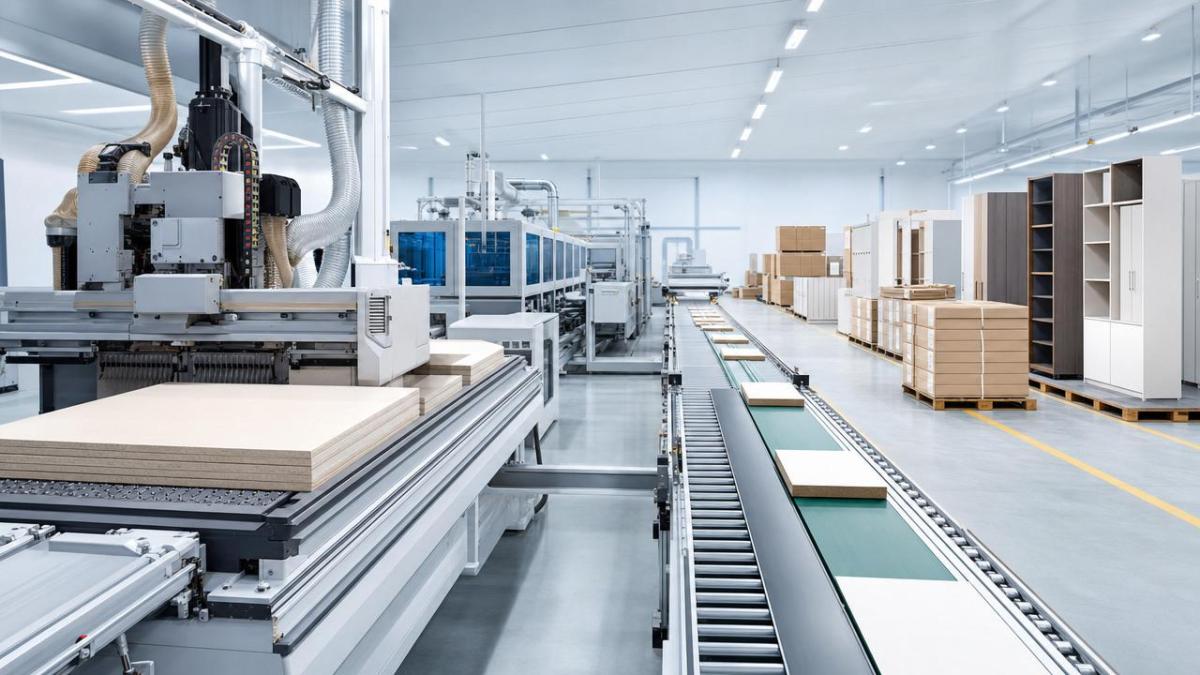
Most custom furniture delays do not come from one slow machine. They come from approvals, rework, missing information, and unclear production priorities.
Custom furniture technology changes lead times by reducing the number of times a project must stop, wait, and be interpreted manually.
For project managers, this matters because schedule risk often hides between departments, not inside a single manufacturing operation.
A digital workflow connects design, engineering, purchasing, production, quality checks, packing, and installation into one shared information chain.
When a cabinet, wall panel, wardrobe, or reception desk moves from approved drawing to CNC-ready data, fewer people redraw or reinterpret it.
That compression can turn lead time from a vague promise into a measurable production path with visible constraints and deadlines.
Where traditional custom furniture lead times usually break down
In conventional custom furniture projects, the first delay often appears during design clarification, when drawings lack manufacturing details or field dimensions change.
Engineering teams may then translate design intent into shop drawings, cutting lists, drilling patterns, hardware positions, and installation sequences.
If this translation is manual, every change can restart the cycle, creating hidden waiting time before production even begins.
Procurement creates another bottleneck because boards, veneers, laminates, hinges, slides, glue, and edge bands must match the approved specification.
Production scheduling becomes difficult when managers cannot see machine capacity, operator availability, material readiness, or urgent project conflicts in real time.
Finally, installation delays occur when components are mislabeled, dimensions are wrong, edges are damaged, or site sequencing was poorly coordinated.
Technology reduces these problems when it creates one reliable data source and keeps every department working from the same project version.
CAD-to-CNC workflows shorten the path from approval to production
The strongest lead-time improvement usually begins when approved designs can move directly into parametric engineering and CNC machining data.
Instead of redrawing furniture manually, teams use software to generate panel dimensions, machining codes, drilling operations, grooves, and joinery positions.
This is especially valuable in hotel, office, retail, healthcare, education, and residential projects where many pieces share logic but differ in size.
Parametric libraries allow standard cabinet bodies, wall units, desks, counters, and storage systems to update quickly when dimensions change.
For project managers, the benefit is faster change response without losing control over standards, tolerances, materials, or installation requirements.
Good CAD-to-CNC integration also reduces drawing ambiguity, because the same model can drive visualization, cost estimation, manufacturing, and assembly documentation.
Lead times improve because the project spends less time being translated and more time moving through controlled production stages.
Automated nesting improves material use and cutting schedules
Automated nesting software arranges multiple parts across boards to reduce waste while respecting grain direction, edge requirements, defects, and cutting constraints.
This directly affects lead time because cutting plans can be generated quickly, reviewed consistently, and sent to CNC routers without manual optimization.
For large projects, nesting also helps managers understand whether material quantities are sufficient before production starts consuming expensive boards.
Better yield reduces emergency purchasing, supplier substitutions, and approval delays caused by unexpected shortages during the middle of production.
Nesting data also supports batch planning, allowing similar materials, thicknesses, and finishes to be grouped for efficient machine setup.
Less setup time means CNC routers spend more hours cutting approved parts and fewer hours waiting for programs, tools, or material changes.
The practical result is not just lower material cost, but a more stable cutting schedule that supports downstream edge banding and assembly.
MES scheduling makes capacity visible before deadlines fail
A manufacturing execution system, or MES, is where custom furniture technology becomes especially valuable for project managers.
MES connects orders, drawings, materials, machines, operators, quality checkpoints, and delivery commitments into a live production management environment.
Without this visibility, managers often discover capacity problems only after promised dates are already at risk.
With MES, teams can see whether CNC routing, edge banding, drilling, sanding, finishing, packing, or inspection is becoming the bottleneck.
This allows managers to shift priorities, split batches, add shifts, outsource selected operations, or renegotiate delivery phases earlier.
For complex projects, MES also supports phased production, where priority rooms, floors, buildings, or installation zones are manufactured first.
That sequencing can protect critical site milestones even when the complete furniture package is still moving through production.
Lead time becomes more predictable because decisions are based on actual workflow status rather than workshop assumptions or verbal updates.
Precision edge banding reduces rework near the finish line
Many custom furniture projects lose time late in production because edges fail inspection, especially on visible panels and moisture-sensitive components.
Modern edge banders using laser, hot air, EVA, or PUR systems create cleaner, stronger, and more consistent edge sealing.
For project managers, this matters because late-stage defects are expensive. They disrupt packing, delay installation, and consume scarce finishing capacity.
High-quality edge banding also improves environmental performance by sealing panel edges and reducing concerns about moisture ingress or emissions exposure.
When machines are integrated with barcode systems, each panel can receive the correct edge material, thickness, color, and processing route.
This reduces the risk of mixing parts between rooms, finishes, or project phases, especially in whole-house customization and commercial interiors.
The lead-time benefit is simple: fewer rejected panels, fewer remakes, and less emergency coordination before delivery trucks leave the factory.
Digital quality control prevents small errors from becoming schedule crises
Quality control affects lead time because errors discovered late are far more disruptive than errors caught immediately after machining.
Digital inspection processes can compare finished parts against model data, barcode information, tolerance rules, and project-specific quality standards.
Operators can record defects, causes, photos, rework actions, and responsible process steps inside the same system used for production tracking.
This gives project managers a clearer view of whether a delay is isolated, recurring, material-related, or caused by engineering data.
When quality data is structured, factories can identify repeated issues such as wrong drilling depths, edge chipping, mislabeling, or incorrect hardware holes.
Corrective action then becomes faster because managers no longer depend on scattered notes, memory, or end-of-line inspection surprises.
Strong quality control reduces total lead time by preventing small manufacturing deviations from turning into installation-day emergencies.
Barcode tracking and labeling improve site readiness
Fast factory production does not help if furniture arrives on site in the wrong sequence or without clear identification.
Barcode tracking links each component to its order, room, elevation, cabinet number, material, process status, and installation location.
Labels can guide operators through machining, edge banding, drilling, assembly, packing, and logistics without relying on manual recognition.
For project managers, this improves the connection between factory output and construction-site reality, where space and access are limited.
Well-labeled packages reduce time spent searching, sorting, opening, repacking, or calling the factory for clarification during installation.
They also support phased deliveries, allowing high-priority zones to arrive first while later phases continue through production.
Lead time is therefore shortened not only in manufacturing, but also in the transition from factory completion to installed completion.
Technology improves predictability more than it guarantees instant delivery
A common misconception is that custom furniture technology automatically makes every project extremely fast. The reality is more practical.
Technology reduces avoidable delay, but it cannot eliminate approval waiting, late design changes, unavailable imported materials, or unrealistic site access.
The biggest gain is predictability: managers can identify constraints earlier and make decisions before the schedule becomes unrecoverable.
For example, a CNC router may cut panels quickly, but it cannot solve missing hardware approvals or late color sample confirmation.
Similarly, MES scheduling helps prioritize work, but it still depends on accurate data, disciplined updates, and realistic production assumptions.
Project managers should therefore treat technology as a control system, not as a magic shortcut around planning fundamentals.
The best results come when digital tools are combined with clear approval gates, stable specifications, and disciplined change management.
How project managers should evaluate ROI and implementation value
Return on investment should be judged by schedule reliability, rework reduction, labor efficiency, material yield, and capacity utilization.
For project managers, the most useful question is not whether a machine is fast, but whether the total workflow becomes dependable.
Useful metrics include drawing release time, engineering cycle time, CNC utilization, nesting yield, rework percentage, on-time delivery, and installation defect rate.
Another important measure is change-response time, especially for projects where client revisions and field-dimension updates are common.
If technology reduces the time between approved change and updated production data, it protects both margin and schedule credibility.
Managers should also evaluate whether the system integrates with existing ERP, design software, procurement processes, and site reporting practices.
Poor integration can create another data island, which may look modern but still require manual reconciliation between departments.
The strongest ROI appears when technology reduces coordination labor while improving accuracy across the entire project lifecycle.
Which projects benefit most from custom furniture technology
Custom furniture technology delivers the highest value when projects involve many unique parts, tight deadlines, repeated design logic, or phased installation.
Hotels, apartments, hospitals, schools, offices, retail chains, and whole-house customization programs are especially strong use cases.
These projects usually combine design variation with repetition, making parametric modeling, automated nesting, and barcode-controlled production highly effective.
Technology is also valuable when skilled labor is scarce, because it transfers knowledge from individual experience into repeatable digital workflows.
For smaller one-off artistic pieces, technology may still help, but the lead-time gain depends on design complexity and setup effort.
The best candidates are projects where errors are costly, revisions are frequent, and delivery dates are tied to broader construction milestones.
In those cases, reducing uncertainty can be more valuable than reducing machine time by a few hours.
Risks to manage when digitizing furniture production
Technology can also create risk if implementation focuses only on equipment purchase and ignores process discipline.
Common problems include incomplete part libraries, inconsistent naming rules, poor barcode habits, untrained operators, and inaccurate production feedback.
If design teams do not model details correctly, CNC automation may simply produce wrong parts faster and more consistently.
If MES data is not updated promptly, managers may trust dashboards that no longer reflect actual production conditions.
Project managers should request pilot runs, sample rooms, controlled change tests, and documented approval workflows before relying on full-scale automation.
They should also define ownership clearly: who releases drawings, who approves revisions, who locks materials, and who updates production status.
Successful adoption depends on aligning people, data, machines, and project controls around one shared version of truth.
Conclusion: faster lead times come from controlled information flow
Custom furniture technology changes lead times by making information flow faster, cleaner, and more traceable from design approval to installation.
CAD-to-CNC workflows reduce translation time, nesting improves cutting readiness, MES exposes capacity, and edge banding reduces late-stage rework.
For project managers, the strategic value is not simply faster production. It is the ability to predict, protect, and manage deadlines.
The most successful teams use technology to support disciplined approvals, realistic scheduling, quality control, and phased delivery planning.
When applied correctly, custom furniture technology turns complex bespoke work into a more measurable, repeatable, and schedule-friendly project process.
