
How to Choose Print and Packaging Equipment for Short Runs, Custom Jobs, and Scale-Up
Choosing print and packaging equipment for short runs, custom jobs, and future expansion is no longer a narrow technical purchase. It is a capital decision tied to lead time, waste control, changeover speed, visual consistency, and the ability to respond when order profiles shift.
That matters even more now, because demand is pulling in two directions at once. Brands want smaller batches and faster refresh cycles, while logistics, retail, and home customization still require stable output at industrial volume.
In that environment, the best print and packaging equipment is not always the fastest machine on paper. It is the setup that fits current jobs, protects quality, and still leaves room to scale without rebuilding the entire workflow.
Why the selection process has become more complex
Across packaging and furniture-related production, equipment decisions now sit at the intersection of automation, compliance, and customization. E-commerce keeps corrugated demand high, while premium packaging still depends on precise print performance and clean finishing.
At the same time, custom interiors and panel-based furniture push CNC routers and edge banders toward shorter cycles and more variable designs. The result is a broader definition of print and packaging equipment than many buyers used a decade ago.
PWFS follows this wider landscape closely, from corrugated board lines and offset presses to die-cutting, folding, gluing, and CNC processing. That perspective is useful because machine choice rarely succeeds when evaluated as an isolated asset.
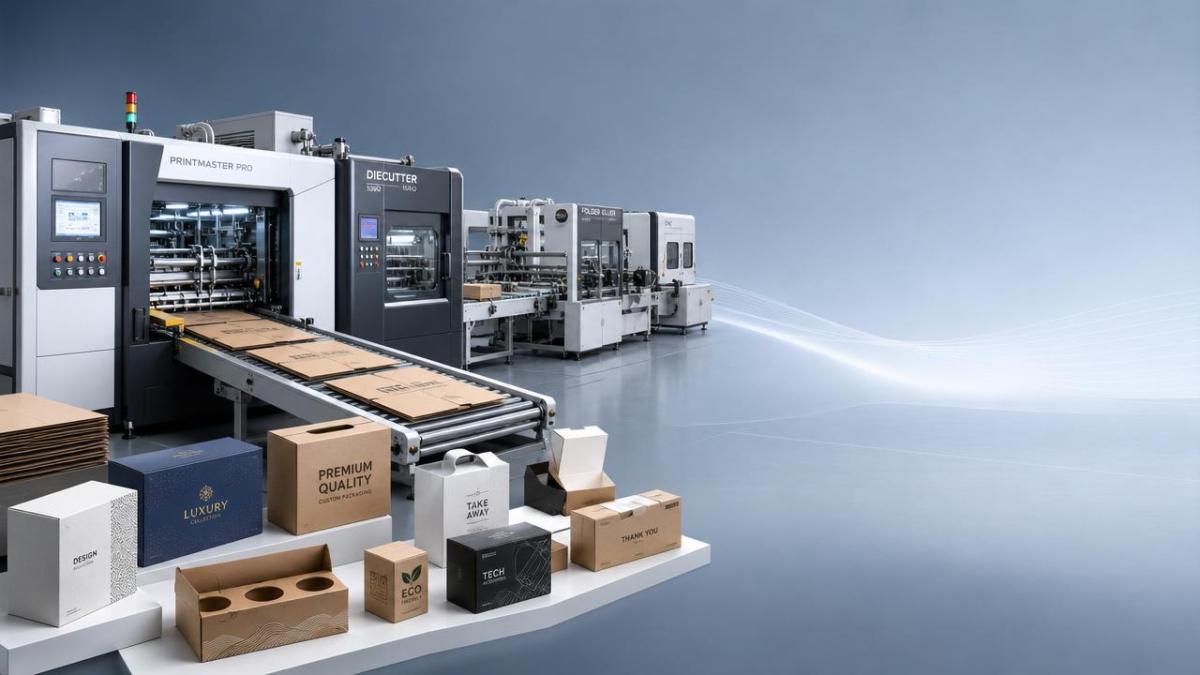
A short-run requirement in packaging can affect prepress, feeding, finishing, traceability, and downstream packing. A customization project in wood panels can raise similar questions around programming, tool changes, edge quality, and production scheduling.
What “fit” really means for short runs and custom work
For short runs, fit usually means profitable changeovers. A machine may have impressive top speed, but if make-ready time is long, waste is high, or operator adjustment is frequent, the economics quickly weaken.
For custom jobs, fit means flexibility without losing repeatability. That includes registration stability, file-to-machine accuracy, tooling adaptability, and the ability to maintain quality when designs or dimensions change often.
For scale-up, fit means more than adding throughput. It also means whether the equipment can connect with MES, support data capture, handle compliance documentation, and reduce reliance on manual intervention as volume grows.
In practical terms, the right print and packaging equipment should match three realities at once: today’s order mix, tomorrow’s margin pressure, and the production discipline needed for later automation.
How the main equipment categories differ in buying logic
Not every category should be judged by the same criteria. A corrugated line, an offset press, and a CNC router may all support packaging or product presentation, but their value drivers differ.
Corrugated lines and sheet handling
These systems matter when shipping volume, board strength, and raw material efficiency are central. Short-run buyers should look closely at order changeover, flute flexibility, glue stability, and waste during startup.
If growth is likely, it is worth checking whether the line supports broader board combinations and smoother integration with converting equipment.
Offset presses for high-precision graphics
Offset remains a strong choice where color accuracy, premium branding, and visual consistency drive value. For shorter runs, buyers should focus on make-ready speed, color control systems, substrate range, and operator dependence.
Micron-level registration sounds impressive, but its business value appears when that precision reduces rejects and keeps repeat orders visually consistent.
Die-cutters and folder gluers
These machines often determine whether printed sheets become profitable packaging or bottlenecks. For custom cartons, complexity of shape, quick tooling change, crease accuracy, and gluing reliability are usually more important than headline speed alone.
CNC routers and edge banders
Where furniture packaging, display fabrication, or panel-based customization overlaps with packaging operations, CNC and edging systems become part of the same investment conversation. File compatibility, nesting efficiency, tool-path accuracy, and finish quality deserve close review.
The buying criteria that usually matter most
A useful comparison framework keeps the evaluation grounded. Instead of starting with brand claims, start with production behavior.
This approach helps separate machine potential from brochure language. It also makes vendor comparison more transparent when several systems look similar on rated output.
Common mistakes when comparing print and packaging equipment
One common error is buying for maximum capacity while current order structure is highly fragmented. In such cases, underused speed often hides costly downtime, over-specification, and avoidable maintenance burden.
Another mistake is evaluating print and packaging equipment without the full workflow. A fast press with a slow finishing stage does not create an efficient plant. The same applies to CNC systems without streamlined programming and labeling.
- Do not rely only on rated speed; ask for throughput under your job mix.
- Do not ignore waste at startup, tooling changes, and cleaning cycles.
- Do not separate equipment choice from software, data, and traceability needs.
- Do not treat service access and spare parts as secondary issues.
More worth noting is that future scale-up often fails because the first purchase never considered digital connectivity. Equipment that cannot speak to scheduling, quality, or inventory systems limits later gains.
How to translate strategy into a practical shortlist
A strong shortlist usually begins with job data, not catalogs. Look at average run length, SKU count, substrate range, artwork complexity, delivery urgency, and the percentage of orders that require frequent adjustments.
From there, map each requirement to equipment behavior. If order variety is high, prioritize quick setup and digital controls. If premium graphics define the business, color and registration deserve heavier weighting.
If transport packaging is expanding, corrugated strength, line balance, and converting compatibility become central. If custom interiors are part of the broader operation, CNC flexibility and edging quality should be reviewed alongside packaging assets.
This is where an intelligence-led view, like the one PWFS applies, becomes practical. The question is not simply which machine is advanced, but which system best aligns physics, workflow, compliance, and commercial demand.
A simple decision path
- Define the real order mix for the last 12 months.
- Identify where margin is lost today.
- Test vendors against live production scenarios.
- Check upgradeability, data integration, and compliance support.
- Compare total operating behavior, not purchase price alone.
What to do before moving forward
Good decisions in print and packaging equipment come from disciplined comparison. That means building a short list around production facts, then validating each option against changeover efficiency, quality repeatability, automation depth, and expansion logic.
When requirements span corrugated, print, converting, or CNC customization, it helps to review the line as an interconnected system rather than a series of independent purchases.
The next step is straightforward: document current job patterns, rank the risks that hurt profitability most, and use those priorities to evaluate print and packaging equipment with clearer confidence and fewer assumptions.
Related News
Get weekly intelligence in your inbox.
No noise. No sponsored content. Pure intelligence.
