
Are High-Speed Gluing Machines Worth the Upgrade?
For packaging, print, and furniture manufacturers facing tighter delivery windows and rising labor costs, the question is no longer whether automation matters, but which upgrade delivers measurable ROI.
High-speed gluing machines promise faster throughput, cleaner bonding, and more consistent carton or panel assembly, but they also require capital planning, operator readiness, and workflow alignment.
This article examines whether high-speed gluing machines are truly worth the upgrade for enterprise decision makers seeking higher yield, reduced waste, and stronger competitiveness in modern paper and wood manufacturing.
The short answer: yes, when volume, waste, and labor pressure are already limiting growth
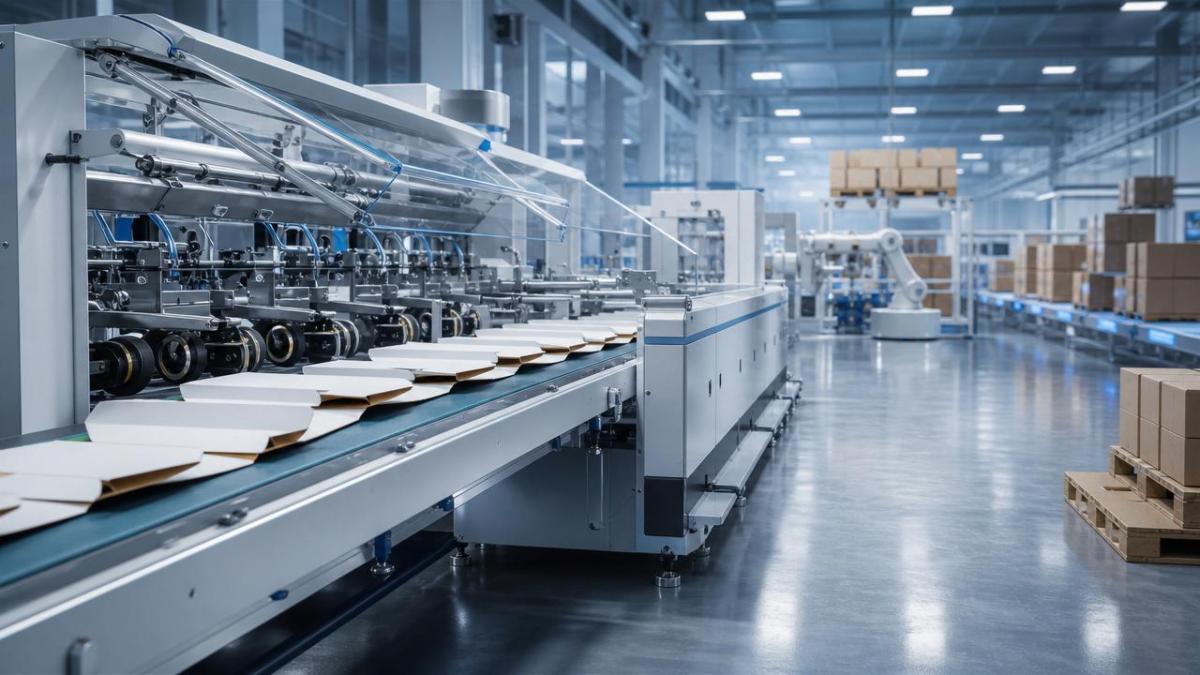
High-speed gluing machines are worth the upgrade when your current finishing or assembly process has become the bottleneck in an otherwise capable production system.
For many enterprises, the strongest business case is not speed alone. It is the combined gain from throughput, bonding consistency, lower rework, and predictable delivery.
If orders are increasing but overtime, manual inspection, glue waste, and missed schedules are also rising, faster gluing can release measurable hidden capacity.
However, the upgrade is weaker when upstream printing, die-cutting, corrugating, cutting, or panel preparation cannot feed the machine consistently and accurately.
Decision makers should view high-speed gluing machines as system investments, not isolated equipment purchases promising automatic productivity improvements.
What enterprise buyers are really trying to decide
Most buyers searching for high-speed gluing machines are not simply comparing machine speed. They are testing whether automation reduces business risk.
The practical questions are direct: Can we ship more orders without adding shifts, reduce dependence on scarce labor, and improve first-pass yield?
Packaging converters want cleaner carton seams, fewer adhesive failures, faster changeovers, and stable performance across medicine, cosmetics, tobacco, food, and e-commerce packaging.
Furniture and woodworking manufacturers may evaluate gluing systems for panel assembly, edge-related bonding, laminated components, or integrated custom production flows.
In both sectors, management usually cares less about technical novelty and more about cash conversion, customer retention, compliance, and production predictability.
Where high-speed gluing machines create measurable value
The first value driver is throughput. A faster gluing section can prevent completed printed sheets or prepared panels from waiting before final assembly.
When paired with automated feeding, alignment, folding, pressing, and rejection systems, high-speed gluing machines can multiply daily output without expanding floor space.
The second driver is consistency. Controlled glue application reduces over-gluing, under-gluing, weak bonds, squeeze-out, staining, and downstream packaging failures.
In carton production, a stable glue line protects brand presentation and prevents boxes from opening during packing, transit, storage, or retail handling.
In woodworking or panel-related operations, consistent adhesive control supports stronger bonding, cleaner surfaces, and fewer defects requiring repair or scrapping.
The third driver is labor efficiency. Automation does not eliminate people, but it changes their role from manual correction to process supervision.
This is especially valuable where skilled operators are retiring, wages are rising, and plants struggle to maintain reliable staffing across multiple shifts.
The ROI calculation should start with losses, not machine brochure speed
A common mistake is building the investment case around maximum rated speed. Real ROI depends on sellable output under normal factory conditions.
Start by measuring current losses: waiting time, rework, adhesive waste, seam defects, rejected cartons, manual touchpoints, overtime, and late delivery penalties.
Then compare those costs against expected gains from higher net throughput, lower scrap, reduced manpower per unit, and improved schedule reliability.
A machine rated for impressive speed may deliver disappointing returns if order sizes are small and changeovers consume much of each shift.
Conversely, a moderately faster machine with excellent setup memory, servo control, inspection integration, and easy cleaning may generate stronger practical ROI.
Enterprise buyers should request real production trials using representative materials, adhesives, carton styles, board grades, or panel configurations from their own order mix.
When the upgrade makes the most financial sense
High-speed gluing machines are most compelling for factories with steady volume, repeated product families, and growing pressure to shorten lead times.
They are also attractive when finishing capacity blocks sales growth, forcing management to reject orders or outsource profitable work to competitors.
Packaging plants serving e-commerce, pharmaceuticals, cosmetics, food, and consumer goods often benefit because they need fast delivery and consistent box quality.
Operations with frequent adhesive-related claims should also investigate upgrading. A lower claim rate can protect customer relationships and reduce hidden service costs.
The case strengthens further when the machine supports modular expansion, barcode-driven setup, automatic quality inspection, and integration with MES or ERP systems.
These capabilities turn a gluing machine from a standalone asset into a data-producing node within a more flexible manufacturing environment.
When high-speed gluing may not be the right first investment
The upgrade may not pay back quickly if upstream equipment cannot supply accurate, stable, and correctly prepared materials at matching speed.
For example, poor die-cutting accuracy can cause folding misalignment, forcing operators to slow the gluer and manually manage avoidable defects.
Similarly, inconsistent board moisture, warped blanks, unstable printing coatings, or unsuitable adhesives can prevent the machine from reaching planned performance.
If order variety is extremely high and batch sizes are very small, changeover performance may matter more than peak running speed.
In such cases, investment in workflow standardization, tooling control, prepress accuracy, operator training, or adhesive testing may come first.
The best decision is not always buying the fastest machine. It is buying the machine that removes the most expensive constraint.
Key capabilities decision makers should evaluate
Speed matters, but it should be evaluated alongside registration accuracy, glue application control, setup repeatability, machine stability, and rejection accuracy.
Look for servo-driven sections, precise belt control, reliable feeder performance, fast format adjustment, and strong support for complex folding patterns.
For packaging, evaluate performance across straight-line cartons, crash-lock bottoms, four-corner or six-corner boxes, sleeves, and special structures if required.
For wood or panel-related applications, focus on adhesive compatibility, pressure consistency, heating control, material handling, and integration with cutting or edging workflows.
Quality inspection is increasingly important. Camera systems, glue detection, barcode verification, and automatic ejection reduce human dependence and protect shipment quality.
Maintenance accessibility should not be overlooked. Easy cleaning, accessible glue units, clear diagnostics, and local spare parts reduce downtime risk.
Adhesive strategy can determine whether speed becomes profit
A high-speed machine places more demand on adhesive selection because bonding must occur reliably within shorter processing and compression windows.
Hot melt, cold glue, PUR, and specialty adhesives each behave differently under speed, temperature, humidity, substrate porosity, and surface coating conditions.
Decision makers should involve adhesive suppliers early, especially when switching substrates, adding food-grade packaging, or serving demanding export markets.
Using too much glue increases cost and causes contamination. Using too little creates weak bonds and increases complaint risk.
The right machine should support accurate metering, stable application patterns, and repeatable settings for different materials and product families.
This is where process engineering matters. Speed only becomes profit when adhesive consumption, curing behavior, and product handling are controlled together.
Integration with digital manufacturing raises the strategic value
Modern high-speed gluing machines deliver greater value when connected to production planning, order tracking, quality reporting, and maintenance systems.
MES integration can reduce setup errors by sending job parameters directly to the machine, especially in plants handling many repeat orders.
Production data helps managers compare planned versus actual output, identify chronic stoppages, and calculate real equipment effectiveness by product type.
For enterprises pursuing Industry 4.0 or dark-factory strategies, gluing automation becomes part of a broader move toward traceable, flexible production.
This matters in regulated packaging markets, where customers increasingly expect documented quality, material traceability, and stable compliance performance.
It also matters in customized furniture operations, where digital continuity from design to cutting, bonding, edging, and dispatch determines delivery reliability.
Operational risks that must be managed before purchase
The largest risk is underestimating change management. Operators, maintenance teams, planners, and quality staff must understand the new operating discipline.
A faster machine exposes weak upstream processes quickly. Minor inconsistencies that were manageable at low speed can become costly at higher speed.
Training should cover not only machine operation, but also adhesive behavior, troubleshooting logic, preventive maintenance, and quality standards.
Spare parts availability is another major consideration. Downtime on a finishing bottleneck can delay entire shipments and damage customer commitments.
Factories should also validate utility requirements, floor layout, compressed air, extraction, safety guarding, material movement, and finished-goods handling capacity.
A well-planned upgrade includes acceptance testing, ramp-up targets, operator certification, and a stabilization period before full commercial reliance.
A practical decision framework for executives
Begin by identifying the business constraint. Is the plant losing orders, missing delivery dates, paying overtime, or suffering adhesive-related quality claims?
Next, quantify the current cost of that constraint. Include labor, scrap, rework, waste, outsourcing, penalties, and lost contribution margin.
Then test several machine options against your actual order profile, not an idealized product running at maximum brochure speed.
Compare total cost of ownership, including installation, training, tooling, adhesives, energy, maintenance, software integration, and potential facility modifications.
Finally, model payback under conservative, expected, and aggressive scenarios. Strong investments remain attractive even when assumptions are slightly reduced.
This framework prevents overbuying and helps management select high-speed gluing machines that match commercial strategy rather than showroom ambition.
What a successful upgrade usually looks like after implementation
In a successful installation, managers see shorter queues before final assembly, fewer emergency schedule changes, and more stable daily shipment performance.
Operators spend less time correcting glue defects and more time monitoring settings, checking samples, and preventing process drift.
Quality teams see fewer open seams, cleaner folds, lower contamination risk, and better repeatability across shifts or operator groups.
Sales teams gain confidence promising shorter lead times because production capacity is less dependent on manual labor availability.
Finance teams see value through increased sellable output, reduced waste, lower unit conversion cost, and better use of existing upstream assets.
These improvements are often more important than headline speed because they strengthen competitiveness across pricing, reliability, and customer service.
Final verdict: worth it for the right plant, risky for the unprepared one
High-speed gluing machines are worth the upgrade when they solve a defined production constraint and fit the factory’s material, order, and staffing reality.
They can deliver powerful returns through higher throughput, cleaner bonding, lower waste, reduced labor pressure, and stronger delivery performance.
But the investment should be made with clear data, realistic testing, adhesive validation, operator readiness, and integration planning.
For enterprise decision makers, the best question is not whether high-speed gluing is advanced, but whether it improves profitable, sellable output.
If your current gluing process limits growth, consumes excessive labor, or creates quality risk, upgrading may be one of the most practical automation moves available.
If the bottleneck lies elsewhere, improve the system first, then invest when the machine can convert speed into measurable business value.
