
Flexible Packaging Materials and Formats: Which Options Fit Food, Pharma, and E-commerce?
Why does flexible packaging matter more now across food, pharma, and e-commerce?
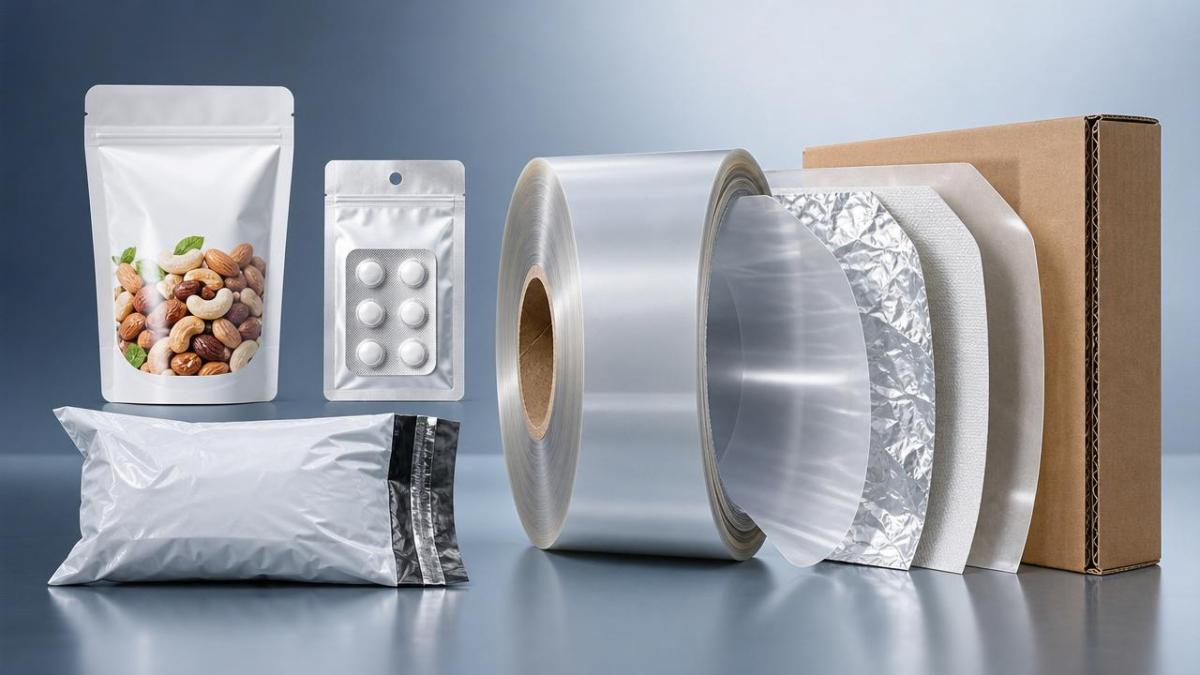
Flexible packaging now sits at the center of protection, efficiency, and brand presentation.
That shift is not only about lighter packs.
It reflects tighter compliance rules, faster shipping cycles, and stronger pressure on waste, cost, and shelf impact.
In practical terms, a snack pouch, a medical sachet, and an e-commerce mailer solve very different problems.
The material choice behind each one decides barrier performance, seal integrity, print quality, machine speed, and transport durability.
That is why flexible packaging cannot be judged only by appearance or unit price.
It must be read as a system combining substrate science, converting accuracy, logistics stress, and end-use expectations.
This broader view also fits the way PWFS studies industrial production.
Corrugated board lines, offset presses, die-cutters, and folder-gluers shape outer protection and visual impact.
Flexible packaging works alongside those systems, not apart from them.
A stand-up pouch may protect the product itself, while a corrugated shipper absorbs distribution shock.
So the better question is not whether flexible packaging is useful.
The real question is which material and format fit each product path most reliably.
Which flexible packaging materials solve the biggest performance differences?
Most flexible packaging decisions begin with barrier needs and sealing behavior.
From there, printability, stiffness, puncture resistance, and recyclability narrow the field.
Some common materials appear similar on a sample board.
Under heat, moisture, oxygen, and transport friction, they perform very differently.
- Polyethylene, or PE, is valued for sealing, moisture resistance, and softness.
- Polypropylene, or PP, brings higher clarity and better heat resistance for many food packs.
- PET offers stiffness, print quality, and dimensional stability on faster converting lines.
- Aluminum foil delivers strong barrier protection against light, oxygen, and aroma loss.
- Paper adds tactile value and branding warmth, but often needs a functional liner.
In food applications, oxygen and moisture transmission rates often drive the final structure.
Coffee, powdered drinks, sauces, and snacks usually require layered constructions rather than single films.
For pharma, the conversation becomes stricter.
Chemical compatibility, migration control, sterilization tolerance, and traceable sealing consistency take priority.
For e-commerce, barrier can matter less than burst resistance, tamper evidence, and dimensional efficiency.
More brands now use flexible packaging as part of a hybrid pack strategy.
A printed flexible primary pack is paired with a corrugated secondary pack produced on high-speed board lines.
That combined approach lowers shipping weight while preserving stacking strength and visual consistency.
How do you match flexible packaging formats to food, pharma, and e-commerce use cases?
Formats are where material science becomes commercial reality.
Even excellent films fail when the format does not match filling, storage, or shipping conditions.
A simple comparison helps separate the options.
Food usually rewards formats that balance barrier and convenience.
Stand-up pouches and sachets remain strong because they display well and ship efficiently.
Pharma requires much less compromise.
Here, flexible packaging must support validation, coding clarity, and stable peel or burst behavior.
E-commerce often favors mailers, returnable bags, and lightweight protective wraps.
Yet not every shipped item should use a flexible format alone.
Fragile or premium goods still benefit from corrugated support shaped by die-cutting and folder-gluing precision.
What usually gets overlooked when comparing flexible packaging options?
The most common mistake is comparing materials only by resin name or gauge.
Performance depends on structure, sealing window, line speed, artwork coverage, and real distribution conditions.
Another blind spot is printing and converting behavior.
High-quality flexible packaging often relies on excellent registration, controlled ink laydown, and repeatable lamination.
This is where PWFS insights around offset precision and industrial process control become relevant.
Even when a pack is not offset printed, the same discipline matters.
Color consistency, barcode readability, and sealing accuracy affect retail acceptance and traceability.
- Do not assume a stronger barrier always means a better total pack.
- Do not separate primary pack decisions from secondary shipping design.
- Do not ignore machine compatibility and startup waste.
- Do not judge sustainability claims without checking the full structure.
In actual projects, the better method is to map risks before selecting artwork or pack shape.
A beautiful pouch with unstable seals creates more loss than a simpler pack with consistent output.
How should cost, compliance, and production speed influence the final choice?
Cost in flexible packaging is rarely just material cost.
It includes scrap, changeover time, sealing rejects, freight efficiency, and the protection level needed downstream.
A lower-cost film can become expensive if it slows filling or increases leakage.
Compliance adds another layer.
Food contact requirements, migration limits, labeling rules, and pharma validation standards can eliminate many structures early.
That is why material screening should happen together with print, sealing, and logistics review.
Production speed matters just as much.
On high-output lines, a narrow sealing window or curl-prone laminate can damage throughput.
For many operations, the winning flexible packaging solution is not the most advanced one.
It is the one that holds stable quality across long runs.
This is similar to how corrugated and woodworking systems are evaluated in industrial intelligence.
The strongest investment case comes from yield, control, repeatability, and adaptation to product variation.
If the goal is a smarter shortlist, where should the evaluation start?
Start with the product, not the pack style.
Ask what must be protected, what can be simplified, and where failure would be most costly.
Then connect that answer to format, material, print method, and shipping conditions.
A practical shortlist usually becomes clearer when these questions are answered together.
- What barrier level is actually required over the product life cycle?
- Will the pack run reliably at the target line speed?
- Does the structure meet relevant food or pharma compliance rules?
- Can it survive parcel handling without overbuilding the secondary pack?
- Does the print surface support consistent branding and readable coding?
Flexible packaging works best when evaluated as part of a connected production chain.
That includes converting precision, outer box performance, automation readiness, and waste control.
For food, the balance often lands on barrier and convenience.
For pharma, control and compliance stay at the center.
For e-commerce, dimensional efficiency and transport resilience usually decide the winner.
The next useful step is to compare two or three realistic structures against actual filling, printing, and shipping conditions.
That approach produces better decisions than choosing flexible packaging from catalog descriptions alone.
Related News
Get weekly intelligence in your inbox.
No noise. No sponsored content. Pure intelligence.
