How Precision Woodworking Reduces Tolerance Errors in High-End Panel Processing
How Precision Woodworking Reduces Tolerance Errors in High-End Panel Processing
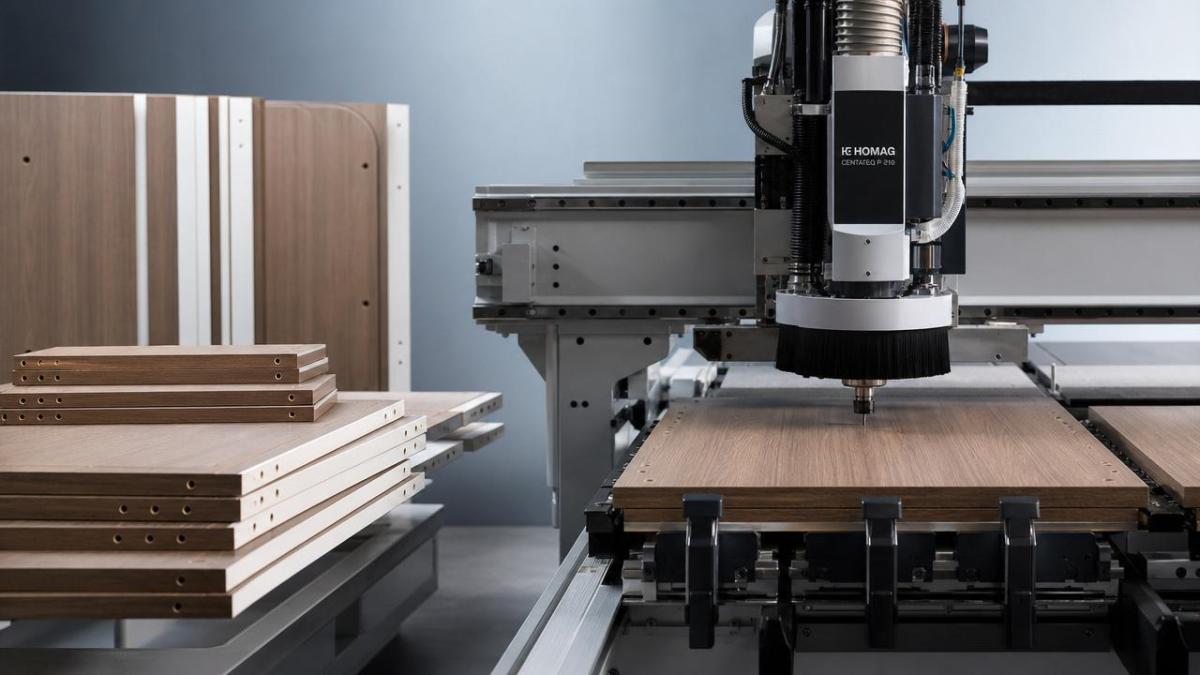
In high-end panel processing, tiny errors rarely stay tiny for long.
A 0.3 mm drift at cutting can become a visible gap at assembly.
That gap then affects edge banding, hardware fit, door alignment, and customer perception.
This is where precision woodworking makes a real difference.
In premium furniture and custom interiors, precision woodworking is not just about accuracy.
It is about repeatability, process stability, and predictable output across every batch.
When panel processors control tolerance errors early, they cut waste, reduce rework, and speed up delivery.
That matters even more as whole-house customization pushes factories toward smaller lots and faster changeovers.
From PWFS market observation, the strongest plants treat micron-level discipline as a daily operating habit.
They combine CNC motion control, tooling management, panel handling, and digital feedback into one closed loop.
Why Tolerance Errors Escalate So Quickly
Tolerance errors in panel processing rarely come from one dramatic failure.
More often, they build up through many small deviations.
A worn tool, unstable vacuum, board warpage, spindle vibration, and poor nesting strategy can stack together.
The result is a panel that looks acceptable alone but fails during downstream fitting.
In practical production, these are the most common error sources:
- Tool deflection during aggressive routing or drilling.
- Thermal expansion of machine components over long shifts.
- Inconsistent board density, moisture, or internal stress.
- Poor calibration of linear guides, spindles, or probing systems.
- Panel movement caused by weak clamping or uneven vacuum hold.
High-end projects amplify every one of these issues.
Gloss panels, thin edge lines, invisible connectors, and tight reveal designs leave little room for error.
So precision woodworking becomes the foundation of both visual quality and assembly efficiency.
How Precision Woodworking Controls Error at the Source
The best way to reduce tolerance errors is to prevent variation before it spreads.
Precision woodworking does this through machine accuracy, process consistency, and real-time correction.
1. Stable CNC Motion Keeps Dimensions Consistent
CNC routers used in precision woodworking depend on smooth servo response and rigid machine structures.
If backlash, vibration, or acceleration mismatch appears, dimensional errors follow immediately.
Accurate interpolation matters especially on curved profiles, hinge pockets, and concealed connector drilling.
2. Tooling Discipline Prevents Invisible Drift
Many tolerance issues start with the tool, not the machine.
A slightly worn cutter can enlarge slots, fray edges, and distort hole diameters.
Precision woodworking programs usually include tool life tracking, preset measurement, and replacement thresholds.
That keeps accuracy from depending on operator guesswork.
3. Material Handling Protects the Machining Result
Even perfect cutting can be ruined by poor handling.
Heavy or flexible panels can shift during loading, flipping, or stacking.
That is why precision woodworking often works best with automated loading tables and controlled panel transfer.
The goal is simple: keep the part geometry unchanged after machining.
Key Process Stages Where Precision Woodworking Matters Most
Not every process contributes equally to final error.
In high-end panel work, several stages deserve tighter monitoring than others.
Cutting and Nesting
Nesting strategy affects both yield and dimensional stability.
Poor path order can release internal stress too early and distort the remaining panel.
Precision woodworking software helps optimize cut sequence, tool entry, and support points.
Drilling and Hardware Positioning
Shelf pins, cam fittings, hinges, and drawer slides demand positional consistency.
A small offset may still allow assembly, but it can create stress and poor alignment.
Precision woodworking reduces this risk through calibrated boring heads and verified reference points.
Edge Preparation and Banding
Edge quality exposes machining errors faster than almost any other step.
If the cut edge is chipped, tapered, or out of square, edge banding will highlight it.
This is especially true with laser edge banding and thin seam designs.
Precision woodworking improves edge readiness by controlling feed speed, cutter sharpness, and chip evacuation.
Practical Standards for Lower Tolerance Error
Factories often ask what “good enough” really means.
The answer depends on material, product design, and assembly method.
Still, a few practical control points are widely useful in precision woodworking operations.
More advanced lines also link machine data to MES or shop-floor dashboards.
That makes precision woodworking measurable, not just observable.
Once recurring errors are tracked by shift, tool type, or material batch, correction becomes much faster.
Common Mistakes That Undermine Precision Woodworking
Many plants invest in capable CNC equipment but still struggle with tolerance stability.
Usually, the problem is not one missing machine feature.
It is a weak operating routine around that equipment.
- Skipping daily calibration checks because production is busy.
- Extending tool life too far to save short-term cost.
- Using the same cutting parameters for different panel materials.
- Ignoring dust extraction performance during high-speed routing.
- Checking only finished dimensions, not process capability trends.
These mistakes are common, but they are also fixable.
That is good news for any operation aiming to improve premium panel quality without slowing output.
A Simple Action Plan for Better Results
If the goal is lower rework and tighter fit, start with a short, disciplined plan.
- Define tolerance limits by product type, not by habit.
- Match cutting tools and feeds to board density and finish requirements.
- Verify machine calibration at fixed intervals every shift.
- Record recurring deviations and link them to tools, materials, or programs.
- Review edge quality and hardware fit before full-batch release.
In other words, precision woodworking works best when it becomes a system, not a slogan.
The long-term payoff is clear: fewer tolerance errors, cleaner assembly, and stronger premium positioning.
For high-end panel processing, that level of control is no longer optional. It is the standard that keeps quality, speed, and profitability moving together.
Related News
Get weekly intelligence in your inbox.
No noise. No sponsored content. Pure intelligence.
