
Evaluating woodworking CNC machines for sale is now a strategic procurement decision, not a simple comparison of spindle power or table size.
For furniture, cabinetry, panel processing, and whole-house customization buyers, the right machine affects flexibility, yield, labor dependency, and long-term ROI.
This guide helps procurement teams separate reliable industrial assets from attractive offers that may hide production, software, or service risks.
Start with the production problem, not the machine brochure
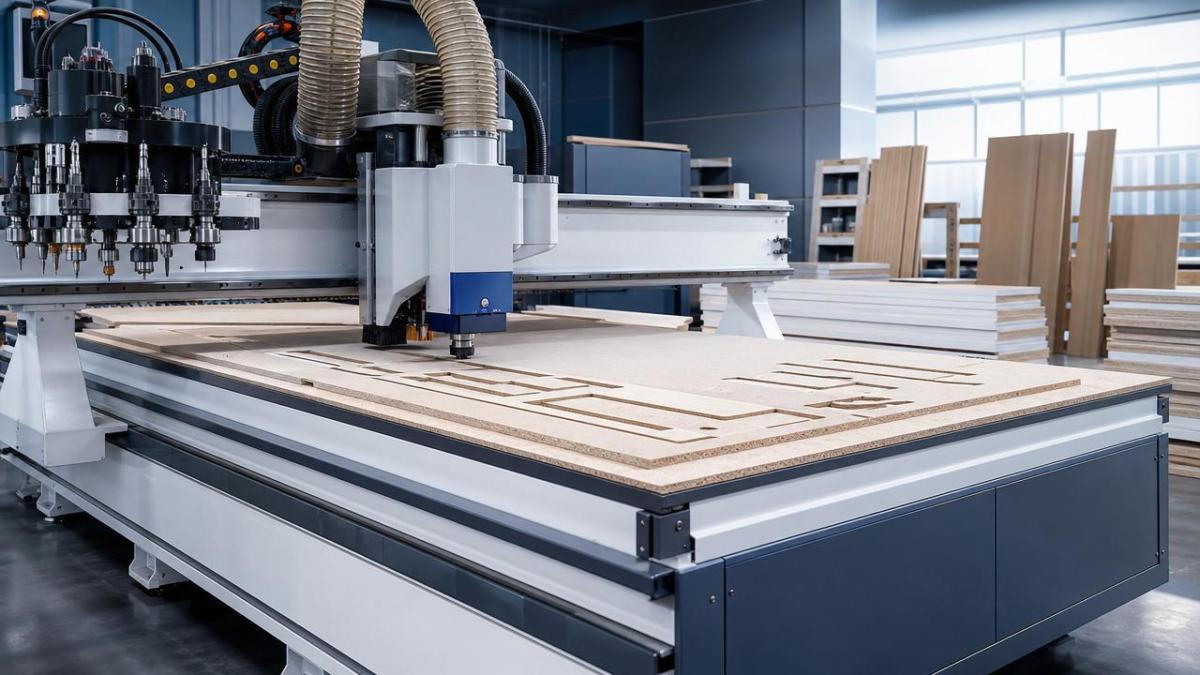
The best way to judge woodworking CNC machines for sale is to define the production bottleneck you are trying to remove.
A procurement team buying for nested panel furniture has different priorities from a factory producing carved doors, stair parts, or solid wood components.
If the machine is selected only by travel size, spindle rating, or price, it may fail at the real operational task.
Before comparing suppliers, identify your dominant product mix, daily order volatility, batch size, material types, and required tolerance level.
A machine that looks powerful on paper may be unsuitable if it cannot support barcode workflow, automatic tool changing, or reliable dust extraction.
For customized furniture manufacturers, the CNC router must connect design files, optimization software, drilling data, labeling, and downstream edge banding.
For procurement teams, this means the first question is not “Which machine is cheaper?” but “Which machine protects our production model?”
Evaluate structural rigidity before looking at cutting speed
Many buyers focus on maximum feed speed, but industrial accuracy begins with the machine frame, gantry, guide rails, and transmission system.
A rigid welded steel frame reduces vibration, tool chatter, edge tearing, and dimensional drift during long shifts or heavy nested cutting.
Ask suppliers about frame stress relief, gantry weight, machining accuracy of mounting surfaces, and long-term deformation control.
Linear guide quality, rack-and-pinion precision, ball screw selection, and servo tuning determine whether accuracy remains stable after months of production.
Procurement teams should request actual cutting samples, not only positioning accuracy reports measured under ideal conditions without load.
A useful test is to cut repeated cabinet parts across the full table and measure diagonal consistency, hole positions, and edge finish.
If the machine loses consistency at high utilization, low purchase cost quickly becomes expensive through rework, rejected panels, and delayed delivery.
Match spindle, tooling, and vacuum capacity to your materials
Spindle power matters, but it should be judged together with tool diameter, cutting depth, material density, and desired cycle time.
For MDF, particleboard, plywood, melamine panels, solid wood, and composite boards, the ideal spindle configuration can differ significantly.
An underpowered spindle slows production, while an oversized spindle may increase energy use without solving poor hold-down or tooling problems.
Vacuum table performance is often underestimated, especially in nested-based manufacturing where small parts shift during aggressive cutting.
Check vacuum pump capacity, zoning design, spoilboard management, gasket quality, and whether the machine can hold thin or warped panels reliably.
Tooling should also be evaluated as a cost center, not a consumable afterthought hidden outside the machine quotation.
Ask whether the supplier can recommend proven tool geometries, cutting parameters, and chip evacuation strategies for your exact board types.
Do not ignore software compatibility and data flow
Modern CNC woodworking procurement is increasingly about digital continuity from design to cutting, drilling, labeling, and assembly.
A machine may mechanically perform well but still create bottlenecks if its controller cannot communicate smoothly with your design software.
For cabinet and whole-house customization factories, compatibility with CAD/CAM, nesting software, ERP, MES, and barcode systems is crucial.
Procurement should verify supported file formats, post-processors, toolpath simulation, error checking, and automatic part identification functions.
Manual data conversion increases operator dependency and creates avoidable errors in drilling positions, panel orientation, and edge banding instructions.
Ask the supplier to demonstrate a complete workflow using your drawings, not a generic demo file prepared for trade shows.
The strongest woodworking CNC machines for sale are not isolated routers; they are production nodes within a connected digital factory.
Judge automation readiness by future capacity, not today’s budget
A machine purchased today may need to support automatic loading, unloading, labeling, robotic handling, or production line integration later.
If the base machine lacks communication interfaces, safety architecture, or layout flexibility, future automation upgrades can become difficult or uneconomical.
Procurement teams should ask whether the CNC can connect with lift tables, return conveyors, drilling centers, and panel sorting systems.
Even if full automation is not planned immediately, the machine should not block a phased upgrade path.
This is especially important for factories moving from skilled-labor workshops toward scalable, data-driven, Industry 4.0-style production.
Automation readiness also includes sensors, alarm records, remote diagnostics, preventive maintenance reminders, and production data collection.
A slightly higher initial investment may deliver stronger ROI if it reduces future reconstruction, downtime, and integration risk.
Assess real productivity through cycle time, yield, and labor reduction
Quoted cutting speed rarely reflects actual factory productivity because loading, unloading, tool changes, positioning, labeling, and inspection consume time.
Procurement teams should calculate output based on complete production cycles rather than the fastest movement speed shown in videos.
Ask suppliers to run a realistic nesting job using your panel dimensions, part quantities, drilling patterns, and material thicknesses.
Measure not only machining minutes, but also operator actions, tool change frequency, dust cleanup, and part identification workload.
Yield rate is equally important because a CNC router that saves minutes but creates scrap is not truly productive.
For panel furniture, better nesting optimization, stable vacuum holding, clean cutting, and accurate drilling directly improve material utilization.
A credible productivity comparison should include labor hours saved, rejected parts reduced, delivery time shortened, and downstream assembly accuracy improved.
Look closely at after-sales support and spare parts security
For industrial buyers, service capability can be more valuable than a small discount on the original machine price.
CNC downtime affects the entire production schedule, especially when the machine is the central cutting node for customized orders.
Before purchasing, confirm installation support, operator training, maintenance documentation, remote troubleshooting, and response time commitments.
Ask whether the supplier stocks critical spare parts such as servo drives, controllers, sensors, vacuum components, spindles, and tool holders.
International buyers should also evaluate language support, electrical compliance, import documentation, and experience with similar regional installations.
A professional supplier should provide maintenance schedules, lubrication guidance, parameter backup procedures, and clear escalation channels.
The cheapest machine becomes costly if every failure requires uncertain waiting, unclear responsibility, or improvised repairs by local technicians.
Compare total cost of ownership, not only purchase price
Total cost of ownership includes machine price, shipping, installation, tooling, software, training, electricity, vacuum power, maintenance, and spare parts.
It also includes hidden costs such as scrap, downtime, operator errors, slow support, poor dust control, and incompatible data workflows.
A procurement decision should estimate payback based on realistic production volume, labor savings, yield improvement, and delivery reliability.
For example, a more expensive CNC may pay back faster if it reduces manual drilling, rework, and dependence on highly skilled operators.
Buyers should request a cost model showing expected daily output, tool consumption, maintenance intervals, and service costs over several years.
Financing terms, warranty coverage, and upgrade options should also be evaluated because they affect cash flow and asset flexibility.
The right question is whether the machine creates measurable operational value, not whether it offers the lowest entry price.
Verify supplier credibility through evidence, not promises
When reviewing woodworking CNC machines for sale, supplier credibility should be proven with installations, references, technical transparency, and repeat customers.
Ask for customer cases in similar industries, especially factories processing comparable boards, order sizes, and customization requirements.
Video demonstrations are useful, but live testing, factory visits, or third-party references provide stronger procurement confidence.
A reliable supplier should openly discuss machine limitations, recommended applications, maintenance needs, and conditions required for best performance.
Be cautious if a seller promises universal performance across every material, product type, and production speed without engineering qualifications.
Check whether the supplier understands upstream design data and downstream processes such as edge banding, drilling, sorting, and assembly.
The best partners help you build a stable production system, not merely complete a machinery transaction.
Use acceptance testing to protect the purchase decision
Acceptance testing should be defined before the order is signed, not after the machine arrives and disputes begin.
Create a test plan covering cutting accuracy, repeatability, drilling alignment, edge quality, vacuum holding, tool changes, and controller stability.
Use your own materials and drawings whenever possible because supplier-selected samples may not reflect real production difficulty.
Define measurable standards, including allowable tolerance, surface finish expectations, cycle time targets, and acceptable defect rates.
The acceptance process should also verify software workflow, barcode recognition, operator training results, and safety system operation.
Document test results with photos, measurements, videos, and signed reports to create accountability for both buyer and supplier.
A clear acceptance standard reduces procurement risk and ensures the final machine matches the commercial promise.
Understand which machine type fits your factory scenario
Not every buyer needs the most advanced five-axis CNC router or the largest automatic production cell available.
Nested CNC routers suit panel furniture factories that require efficient sheet optimization, cabinet part cutting, and integrated drilling.
ATC routers are suitable when frequent tool changes are needed for profiling, drilling, grooving, and mixed processing tasks.
Five-axis machines are valuable for complex curved surfaces, molds, stair components, and high-value solid wood applications.
Door production lines may require specialized clamping, profiling, sanding coordination, and decorative carving capabilities.
High-volume customized furniture plants may benefit from CNC cells connected with labeling, automatic loading, and downstream edge banding.
The right configuration is the one that matches product structure, order rhythm, labor strategy, and expansion plan.
Red flags procurement teams should not overlook
Some warning signs appear before purchase if buyers examine quotations and technical communication carefully.
Unclear controller brands, vague servo specifications, missing maintenance documents, and inconsistent accuracy claims deserve immediate follow-up.
Be careful with suppliers who avoid sample testing, provide only generic videos, or cannot explain post-processor compatibility.
Extremely low prices may indicate weak frames, lower-grade components, limited quality control, or insufficient service infrastructure.
Another risk is an oversized machine sold without regard for workshop space, dust collection, power supply, or operator skill level.
Procurement teams should also question unrealistic delivery promises, unclear warranty exclusions, and missing spare parts commitments.
A disciplined evaluation process prevents emotional purchasing and protects the factory from long-term operating problems.
Final procurement framework: precision, integration, service, and ROI
Judging woodworking CNC machines for sale requires a balanced view of mechanical quality, digital integration, automation potential, service capability, and economics.
The strongest machine is not always the fastest, largest, or cheapest; it is the one that improves your specific production system.
Start with your factory’s real workload, then verify frame rigidity, spindle suitability, vacuum performance, software connection, and workflow efficiency.
Compare suppliers through evidence, acceptance testing, service readiness, and total cost of ownership rather than sales claims alone.
For procurement teams, a CNC router should be treated as a long-term industrial asset and a foundation for flexible manufacturing.
When selected carefully, it can reduce labor dependency, raise yield, shorten delivery cycles, and support profitable customization at scale.
A clear evaluation framework turns a complex purchase into a controlled investment decision with measurable production value.
