
How folding carton equipment affects setup time and waste
For operators, folding carton equipment directly shapes setup time, material waste, and daily output. From die-cutting accuracy to folder-gluer changeovers, every adjustment affects board loss, labor pressure, and line efficiency. Understanding how machine design, automation, and maintenance influence performance helps teams reduce downtime, improve consistency, and turn packaging production into a faster, leaner process.
Why setup time and waste vary across folding carton production scenarios
Not every carton job behaves the same. Short runs, luxury packaging, pharma boxes, and e-commerce inserts stress folding carton equipment in different ways.
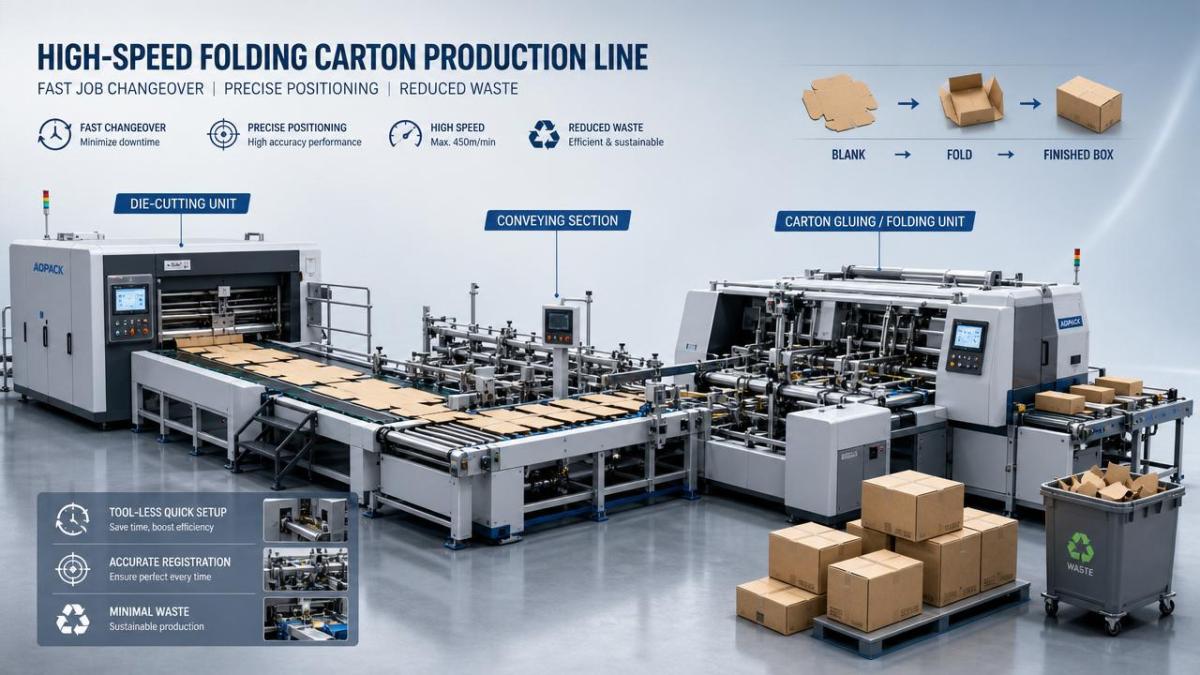
A line optimized for long, repeat work may struggle during frequent changeovers. A highly flexible line may reduce downtime, yet need tighter process discipline.
This matters across the broader converting industry. Better setup control lowers paperboard consumption, improves delivery reliability, and protects margin under rising material costs.
For intelligence platforms like PWFS, this topic connects machine physics, automation logic, and practical productivity. Setup efficiency is not isolated. It links design, workflow, and maintenance.
Scenario 1: Short-run packaging jobs demand fast changeovers
Short runs expose the real flexibility of folding carton equipment. When SKU counts rise, operators spend more time changing tools, guides, feeders, and glue patterns.
In this scenario, setup time often matters more than top mechanical speed. A fast machine with slow changeover can produce less sellable output than a moderate-speed line.
Core judgment points for short runs
- Tool-less adjustment for side guides, carriers, and belts
- Digital recipe storage for repeat carton formats
- Quick-lock die systems and faster make-ready alignment
- Automatic pre-setting for feeder and delivery sections
- Reduced trial-sheet waste during restart
For short-run work, good folding carton equipment should shorten the distance between one approved job and the next approved job.
Scenario 2: High-graphic cartons need accuracy before speed
Cartons for cosmetics, healthcare, and premium goods often carry strict visual standards. Here, poor setup creates waste faster than any speed gain can recover.
Die-cut registration, crease quality, glue placement, and blank squareness all influence reject rates. Small setup errors can destroy print appeal or downstream cartoning performance.
Core judgment points for high-graphic jobs
Look for stable feeder control, precise sheet transport, and consistent pressure distribution. These factors reduce cracked scores, fish-tailing, and glue misalignment.
Advanced folding carton equipment may include vision inspection, servo-driven positioning, and closed-loop correction. These features reduce setup guesswork and preserve sheet value.
Scenario 3: Long-run standard cartons reward repeatability and maintenance discipline
In stable, high-volume work, setup happens less often. Yet waste can still rise if settings drift over time or wear reduces machine consistency.
Long runs need folding carton equipment that holds registration, pressure, and glue accuracy over many hours. Mechanical stability becomes a profit driver.
Core judgment points for long runs
- Bearing condition and vibration control
- Glue system cleanliness and nozzle stability
- Consistent crease depth across the sheet width
- Reliable waste stripping and blank separation
- Preventive maintenance scheduling linked to output hours
This is where maintenance and setup merge. A machine that starts clean and aligned produces fewer surprises during extended production.
How different production scenes change equipment needs
Which machine features most affect setup time and waste
Several features have a direct, measurable impact on folding carton equipment performance. The key is not feature quantity, but feature relevance to the production scene.
1. Automation of repeat settings
Stored job parameters reduce manual resets. This lowers setup variation and shortens the time needed to reach stable output.
2. Access for cleaning and maintenance
If critical sections are hard to reach, glue buildup and debris remain longer. That increases micro-stoppages and startup waste.
3. Servo-driven positioning
Servo systems support more repeatable adjustments. They also improve synchronization in high-speed folding carton equipment lines.
4. Inline inspection
Inspection catches setup defects early. Rejecting fewer sheets later means lower total waste and better quality confidence.
5. Tooling compatibility
Poor die quality or mismatched tooling can ruin even advanced lines. Machine capability and tool condition must match each other.
Practical scene-based recommendations for better folding carton equipment results
- Map jobs by run length, board type, and changeover frequency.
- Measure setup from last good sheet to next good sheet.
- Track startup waste separately from production waste.
- Standardize job recipes for repeat carton styles.
- Review maintenance points that commonly delay restart.
- Audit operator adjustments that happen outside standard settings.
- Use data from die-cutting and folder-gluer stages together.
This approach fits the cross-industry intelligence logic of PWFS. Physical machine behavior and digital production visibility should support one another.
Common misjudgments that increase waste in folding carton equipment lines
One common error is focusing only on maximum speed. If setup takes too long, theoretical speed contributes little to daily throughput.
Another mistake is treating waste as a board issue only. In reality, tooling wear, feeder inconsistency, and glue instability often drive hidden losses.
A third issue is ignoring the connection between print quality and converting setup. Misregistered or warped sheets amplify downstream adjustment time.
Finally, some lines collect data without using it. Useful folding carton equipment analysis should show which job types create the most downtime and scrap.
Next steps to reduce setup time and waste with folding carton equipment
Start with a simple three-part review: changeover minutes, startup waste sheets, and causes of first-hour rejects. These reveal where improvement will pay back fastest.
Then compare those findings against machine design, automation depth, tooling quality, and maintenance access. The right upgrade may be procedural, mechanical, or digital.
When evaluated by scene rather than by headline speed, folding carton equipment becomes easier to optimize. Less waste, faster setup, and steadier output follow from that clearer judgment.
PWFS continues to connect carton converting, print precision, and intelligent production insight, helping packaging operations move toward lower waste and stronger efficiency.
Related News
Get weekly intelligence in your inbox.
No noise. No sponsored content. Pure intelligence.
