
Choosing an Offset Printing Presses Manufacturer: 7 Checks Before Requesting a Quote
Why does choosing an offset printing presses manufacturer take more than a price comparison?
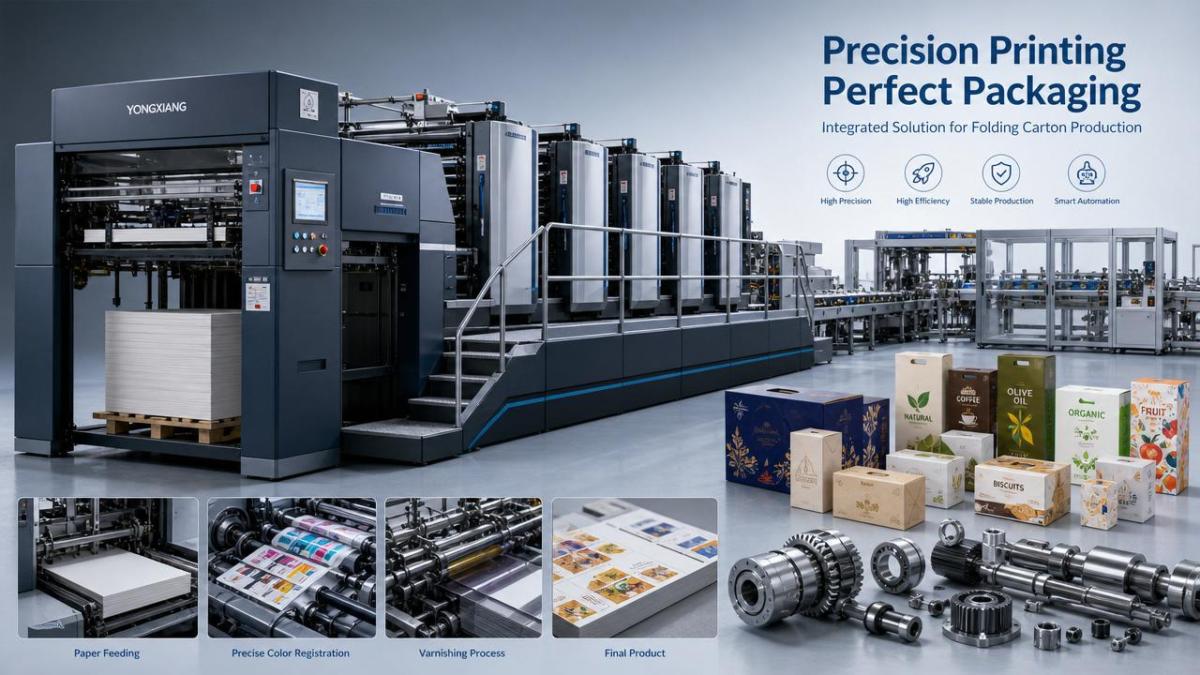
An offset press is rarely a standalone purchase. It affects packaging quality, delivery reliability, maintenance planning, and compliance performance for years.
That is why a serious offset printing presses manufacturer should be judged by production stability, engineering depth, and service continuity, not only by quoted speed.
In practical terms, the right partner helps convert paperboard into shelf-ready visuals with consistent registration, predictable waste rates, and fewer emergency stops.
This matters far beyond printing alone. Packaging lines connect to die-cutting, folder-gluing, logistics timing, and brand presentation in retail channels.
PWFS often frames this as part of a wider manufacturing chain. Corrugated lines protect goods, presses create visual value, and downstream converting turns flat sheets into sellable boxes.
So before requesting a quote, it helps to ask a simpler question: can this supplier support stable output under real production pressure?
What should you verify first when comparing an offset printing presses manufacturer?
Start with the manufacturer’s fit for your actual jobs. A press built for premium folding cartons may not suit short-run mixed packaging with frequent changeovers.
The first check is application match. Sheet size, substrate range, ink system, coating options, and drying configuration should reflect the work you print most often.
The second check is registration performance under speed. A brochure number looks good, but production value comes from how accurately the machine holds color at sustained output.
The third check is mechanical consistency. Bearings, cylinders, feeder design, gripper precision, and vibration control influence waste, color drift, and uptime more than headline speed alone.
The fourth check is automation logic. Preset systems, remote diagnostics, wash-up efficiency, and job recall functions reduce labor dependence and improve repeatability.
The fifth check is compliance readiness. For food, pharmaceutical, or export packaging, traceability, ink compatibility, and documentation support become part of machine value.
The sixth check is service structure. Spare parts response, training quality, installation supervision, and local technical coverage will shape long-term operating risk.
The seventh check is integration potential. A capable offset printing presses manufacturer should understand how the press fits with prepress workflows, MES, die-cutting, and finishing lines.
A quick evaluation table before you request a quote
A short comparison table helps separate attractive offers from durable solutions.
How can you tell whether the machine performance is real or just sales language?
The safest method is to move from claims to evidence. Ask for live production references, not only brochures or factory showroom demonstrations.
A strong offset printing presses manufacturer should be willing to discuss makeready time, waste sheets, registration stability, and typical maintenance intervals.
In many cases, visit data matters more than polished presentations. Look at operator interfaces, ink system cleanliness, noise behavior, and spare parts organization.
It also helps to review sample jobs close to your own. Cartons, labels, inserts, or display sheets each stress the press differently.
Where possible, request measurable benchmarks.
- Average setup time between repeat jobs.
- Waste during color matching and startup.
- Sheet handling accuracy at target speed.
- Downtime causes recorded over recent installations.
- Consumable requirements for normal operation.
PWFS frequently highlights that micron-level registration is not a marketing metaphor. It is a practical result of kinematics, roller stability, control logic, and operating discipline.
That wider engineering view is useful when evaluating any offset printing presses manufacturer, especially for high-volume packaging environments.
Which hidden risks are easy to miss before signing with an offset printing presses manufacturer?
One common mistake is focusing on purchase price while underestimating downtime cost. A lower quote can become expensive if parts lead times are long.
Another risk is assuming all automation features are equally mature. Some interfaces look modern but still require frequent manual correction during production changes.
Compliance gaps can also stay hidden until late. Food-contact packaging, FSC-linked sourcing records, and export documentation often require more support than expected.
That is where a knowledgeable offset printing presses manufacturer stands out. The supplier should understand not only machine parts, but also print chemistry, traceability, and destination market rules.
In real production chains, presses do not work in isolation. Weak coordination with die-cutters, folder-gluers, or digital workflow systems creates bottlenecks later.
A few warning signs deserve attention:
- Vague answers about installation acceptance standards.
- No clear spare parts stocking policy.
- References limited to dissimilar applications.
- Unclear software upgrade responsibility.
- Quoted performance without substrate conditions.
How do service, compliance, and digital integration affect the final decision?
These three factors often decide whether a press remains competitive after the first year. Mechanical quality matters, but support architecture matters just as much.
Service quality begins before startup. Training depth, commissioning procedures, and escalation paths influence how quickly stable output is reached.
Compliance is no longer a side topic. Packaging buyers increasingly expect documented process control, safer ink systems, and traceable production conditions.
This aligns with the broader PWFS perspective. Across print and woodworking equipment, competitive factories are moving toward connected systems, lower waste, and higher process transparency.
Digital integration therefore deserves a direct question. Can the offset printing presses manufacturer connect machine data with prepress, quality control, and plant-level management tools?
If the answer is yes, the benefit is not abstract. Better data improves job costing, repeat order accuracy, maintenance timing, and line balancing with converting equipment.
What should be included in your RFQ so vendors can be compared fairly?
A weak RFQ creates weak comparisons. Vendors will fill in assumptions differently, and the quotes will look inconsistent even when the machines target similar output.
A better approach is to define the production reality in plain operational terms.
- Main product types and monthly volume range.
- Substrate thickness, format range, and coating needs.
- Target setup time and expected running speed.
- Color quality expectations and inspection method.
- Required standards, documents, and traceability support.
- Needed interfaces with workflow, MES, or finishing lines.
- Training scope, spare parts package, and warranty terms.
When each offset printing presses manufacturer responds to the same structure, true differences become easier to spot.
That usually leads to a better final decision than comparing headline pricing across uneven proposals.
So, what is the smartest next step before contacting an offset printing presses manufacturer?
Clarify the job mix first, then rank your priorities. For some operations, registration consistency is the main issue. For others, setup speed or compliance support carries more weight.
From there, build a simple decision sheet using the seven checks: application fit, registration, mechanics, automation, compliance, service, and integration.
That process keeps the conversation grounded in output quality and operating reality, not only in catalog specifications.
Choosing an offset printing presses manufacturer is ultimately about long-term manufacturing confidence. A good quote should explain how performance will be achieved, supported, and sustained.
If needed, compare vendors against real samples, acceptance criteria, and service commitments before moving to final negotiations. That is usually where risk becomes visible.
Related News
Get weekly intelligence in your inbox.
No noise. No sponsored content. Pure intelligence.
