
What Is a Corrugated Box? Structure, Board Grades, and Common Packaging Uses
A corrugated box is often seen as ordinary packaging, yet it is one of the most engineered products in modern distribution. Its value comes from a carefully built structure that protects goods, supports automation, and balances cost with performance across retail, e-commerce, food, healthcare, and industrial supply chains.
For anyone comparing materials or packaging formats, the topic matters because a corrugated box influences damage rates, storage efficiency, print quality, sustainability claims, and shipping economics at the same time. In practice, understanding board construction and grade selection leads to better decisions than choosing by size alone.
Why corrugated boxes remain central to modern packaging
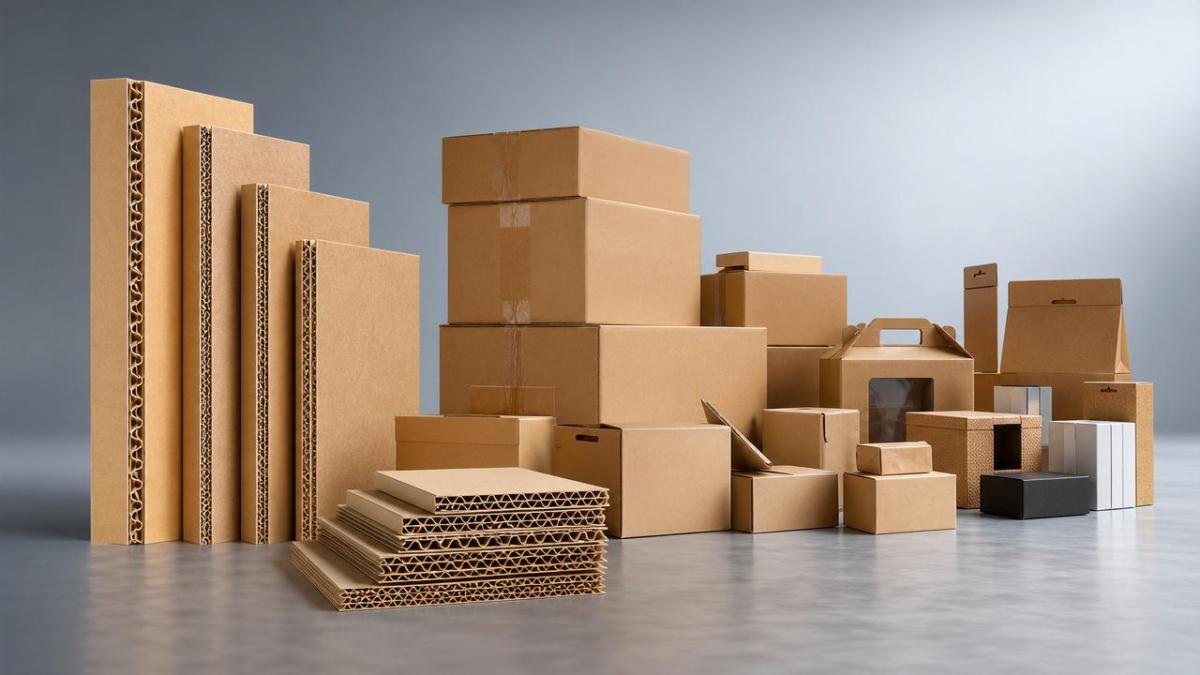
The rise of parcel delivery has turned the corrugated box into a critical logistics component rather than a disposable outer shell. Every day, large board lines convert paper rolls into compression-resistant sheets that protect goods moving through automated warehouses, sorting hubs, and last-mile networks.
That industrial context explains why packaging intelligence platforms such as PWFS pay close attention to corrugated board lines, offset printing systems, and folder-gluer operations. Box performance does not start at packing tables. It starts upstream, where material quality, flute formation, registration accuracy, and converting precision shape final box behavior.
This also makes the corrugated box relevant beyond shipping alone. It connects raw paper sourcing, structural design, graphic presentation, automation capability, and environmental compliance in one packaging format.
What a corrugated box actually is
A corrugated box is made from corrugated fiberboard, not from a single flat sheet of paperboard. Its strength comes from combining flat linerboards with a fluted medium placed between them.
The fluted layer creates arches that resist compression and absorb impact. The liners provide surface strength, stacking stability, and a printable face. Together, these layers create a lightweight structure that can carry surprisingly high loads.
This is why a corrugated box performs differently from folding carton packaging. Folding cartons are usually chosen for shelf presentation and lighter products. Corrugated formats are used when protection, stacking, and transport stress matter more.
The basic board structure
Most corrugated board types follow one of three common constructions:
- Single wall: two liners with one fluted medium.
- Double wall: three liners with two fluted mediums.
- Triple wall: four liners with three fluted mediums.
Single wall works for many standard delivery cartons. Double wall adds stacking strength and puncture resistance. Triple wall is used for heavier industrial loads or export conditions where rough handling is expected.
How flute profiles affect box performance
Flute type changes the behavior of a corrugated box in ways that are easy to overlook. Larger flutes provide cushioning and vertical strength. Smaller flutes improve print smoothness and space efficiency.
In real packaging development, flute choice is often a trade-off. A box designed for rough courier handling may need cushioning first. A branded subscription pack may favor a smoother surface for graphics and a slimmer profile for dimensional savings.
Board grades matter more than many buyers expect
When people ask what makes one corrugated box stronger than another, board grade is usually the key. Grade includes paper basis weight, liner quality, medium performance, and testing standards such as edge crush or burst resistance.
Two boxes may look similar in dimensions and print, yet behave very differently in a warehouse. One may survive pallet stacking and humid transit. The other may fail at the corners, crush under load, or split during sealing.
Common grade indicators
- ECT measures edge crush strength and predicts stacking performance.
- Burst strength reflects resistance to rupture under pressure.
- Liner quality affects surface durability and print appearance.
- Medium quality affects flute resilience and overall rigidity.
Usually, ECT has become especially important in e-commerce because parcel systems impose compression loads during storage and transit. Yet burst strength still matters where puncture or rough manual handling remains common.
A practical evaluation should also include moisture exposure, storage time, pallet pattern, and sealing method. A corrugated box chosen only by nominal grade can still underperform if the shipping environment is harsher than expected.
Where corrugated boxes are most commonly used
The versatility of the corrugated box comes from its ability to serve both transport and presentation roles. Some applications require plain protection. Others combine structure with printing, die-cutting, and brand visibility.
- E-commerce shipments that need light weight and drop protection.
- Retail-ready secondary packs for food, beverages, and household goods.
- Industrial transit cases for parts, tools, and components.
- Agricultural and produce boxes requiring ventilation and stackability.
- Protective packaging for electronics, cosmetics, and healthcare products.
In these scenarios, converting quality also matters. Die-cutters and folder-gluers determine whether slots align, folds remain accurate, and glued seams hold under fast packing operations. Even a well-specified board can lose value if converting precision is poor.
Printing adds another layer of decision-making. Offset and post-print technologies turn a corrugated box into a communication surface, not just a container. That is particularly relevant when packaging must carry compliance marks, traceability data, or retail graphics.
What to check before selecting a corrugated box
In practical sourcing or specification work, the best question is not simply, “What box size is needed?” A more useful approach is to define the stress profile the box must survive from packing to delivery.
- Product weight and fragility.
- Stacking height in storage and transport.
- Humidity, temperature, and transit duration.
- Manual handling versus automated conveying.
- Need for high-quality printing or die-cut presentation.
- Recyclability, fiber sourcing, and compliance expectations.
This is where broader manufacturing intelligence becomes useful. PWFS tracks not only packaging demand, but also the upstream systems that define repeatability, output speed, and material efficiency. That perspective helps explain why the same corrugated box specification can perform differently across converting environments.
It also highlights an important point: better packaging decisions usually come from linking board data, machine capability, and application context rather than viewing boxes as commodity items.
A practical way to move from concept to decision
The most useful next step is to build a short comparison framework. Start with product vulnerability, shipping route, and storage conditions. Then compare flute profile, wall construction, and board grade against those risks.
If branding matters, include print surface quality and converting accuracy in the review. If sustainability claims matter, verify recycled content, fiber traceability, and performance under real distribution conditions rather than relying on labels alone.
A corrugated box works best when structure, board grade, and application are aligned. Once that alignment is clear, it becomes easier to compare suppliers, judge cost trade-offs, and choose packaging that supports protection, presentation, and operational efficiency together.
Related News
Get weekly intelligence in your inbox.
No noise. No sponsored content. Pure intelligence.
