
How to Evaluate Industrial Cutting Equipment for Accuracy, Throughput, and Material Range
How to Evaluate Industrial Cutting Equipment for Accuracy, Throughput, and Material Range
Choosing the right industrial cutting equipment requires more than comparing headline speeds.
The real test is how well a machine performs under daily production pressure.
Accuracy, throughput, and material range decide whether a line stays profitable or becomes a bottleneck.
In packaging, print, and woodworking, industrial cutting decisions affect yield, labor, waste, maintenance, and delivery promises.
A smart evaluation framework helps compare options in a practical way, not just a marketing way.
Start with the Three Core Benchmarks
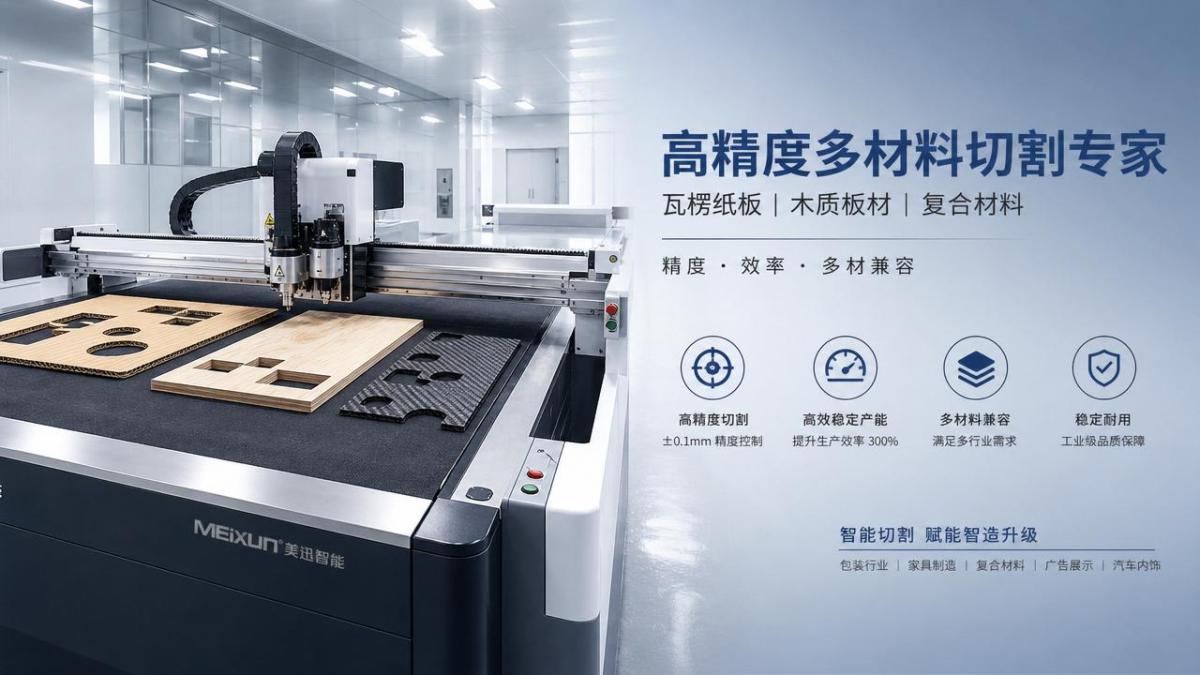
When evaluating industrial cutting equipment, keep three questions at the center.
- How tightly does it hold dimensional tolerance?
- How much output does it sustain across a full shift?
- How many materials can it cut well without constant compromise?
These benchmarks sound simple, but they interact with each other.
A faster machine may lose precision at higher speeds.
A highly accurate machine may struggle with thick corrugated board, laminated stock, MDF, plywood, or coated surfaces.
That is why industrial cutting assessment should focus on balanced production performance.
How to Judge Accuracy Beyond Spec Sheets
Accuracy starts with tolerance, repeatability, and cut quality.
Vendor brochures often highlight ideal numbers measured under controlled conditions.
In real production, heat, vibration, dust, tool wear, feed variation, and operator setup all change results.
Key accuracy checks
- Measure cut deviation at different machine speeds.
- Check repeatability across multiple shifts, not one sample run.
- Inspect edge finish, tear-out, burrs, scorch marks, and delamination.
- Review registration performance where print-to-cut alignment matters.
- Confirm tolerance on small features, corners, slots, and drilled holes.
For die-cutting and printed packaging, registration stability is often more important than top speed.
For CNC woodworking, cut path accuracy and hole positioning usually drive downstream assembly performance.
In both cases, poor industrial cutting accuracy creates hidden costs.
Those costs appear as rejected parts, extra sanding, fitting problems, and unstable quality claims.
Ask for proof, not promises
Request sample runs using your own material grades, thicknesses, and part geometries.
If possible, test short runs and extended runs.
A machine that performs well for twenty minutes may drift after six hours.
Evaluate Throughput Under Real Production Conditions
Throughput is not the same as rated speed.
This is one of the biggest mistakes in industrial cutting selection.
A machine may advertise impressive cycles per minute, yet lose time in loading, changeovers, nesting, cleaning, and maintenance.
Look at effective output
Effective output is what ships at the end of the shift.
It should include uptime, scrap rate, setup frequency, and material handling efficiency.
In actual business operations, throughput depends heavily on order mix.
High-volume box plants need stable long-run speed.
Custom furniture plants often need rapid switching between designs, thicknesses, and drilling patterns.
That means the best industrial cutting system is not always the fastest one.
It is the one that keeps production moving with the fewest costly interruptions.
Check Material Range with a Practical Test Matrix
Material range is where many purchase decisions become risky.
A machine may cut one material beautifully and perform poorly on another.
This matters more today because product portfolios are becoming wider and more customized.
Build a material test matrix
Test the industrial cutting equipment against your current materials and likely future materials.
- Thickness range and density variation
- Moisture sensitivity and surface coatings
- Paper, board, veneer, MDF, particleboard, plywood, composites
- Printed, laminated, recycled, or fragile substrates
- Tooling changes required between material types
For corrugated and folding carton work, flute structure, liner quality, and print surface matter.
For woodworking, resin content, grain direction, panel flatness, and coating hardness change cut behavior significantly.
A strong industrial cutting decision should support your future order mix, not only your current bestseller.
Review Machine Design Factors That Drive Performance
Performance comes from machine architecture, not just software settings.
A deeper technical review often reveals why one industrial cutting platform stays stable while another struggles.
Important design checkpoints
- Frame rigidity and vibration control
- Servo quality, drive system, and motion control response
- Tool head design and changeover simplicity
- Dust extraction or scrap removal efficiency
- Cooling, lubrication, and thermal stability
- Safety interlocks without unnecessary production delays
In fast-moving packaging lines, weak waste removal can reduce throughput quickly.
In CNC woodworking, poor chip evacuation can damage edge quality and shorten tool life.
These details often separate a good demo from a good long-term investment.
Assess Software, Integration, and Data Visibility
Modern industrial cutting equipment is part of a wider production system.
That means software capability affects both throughput and decision quality.
This is even more important where MES, CAD/CAM, job scheduling, and traceability are already in place.
What to verify
- Import compatibility with design and nesting files
- Production data feedback for uptime and quality
- Remote diagnostics and maintenance alerts
- Recipe management for recurring jobs
- User access control and training simplicity
From a decision standpoint, data transparency reduces risk.
It helps compare industrial cutting performance across operators, shifts, materials, and job types.
It also supports continuous improvement after installation.
Factor in Total Cost of Ownership and Risk
Industrial cutting evaluation should never stop at purchase price.
A cheaper machine can become more expensive if it causes scrap, rework, unstable uptime, or heavy tooling costs.
Cost and risk checklist
- Tool consumption per production unit
- Spare parts availability and lead time
- Service response speed in your region
- Training burden for operators and maintenance teams
- Energy use and compressed air demand
- Upgrade path for future automation needs
A practical selection model weighs performance against long-term operating reliability.
That is especially true in plants serving e-commerce packaging, branded print, or whole-house customization.
In these environments, delays spread fast across connected processes.
Use a Structured Evaluation Process Before You Decide
The most reliable industrial cutting decisions come from a structured review, not a single demo day.
- Define your critical parts, materials, tolerances, and daily output goals.
- Score each machine on accuracy, throughput, and material range.
- Run sample tests using real production files and actual substrates.
- Review maintenance, tooling, software, and support conditions.
- Model total cost of ownership over three to five years.
- Validate how the equipment fits future product and automation plans.
This approach creates a clearer basis for comparison.
It also reduces the chance of buying industrial cutting equipment that looks strong on paper but underperforms in production.
If the goal is better yield, flexible output, and dependable growth, a disciplined evaluation process is the smartest place to start.
Related News
Get weekly intelligence in your inbox.
No noise. No sponsored content. Pure intelligence.
