
What to Check Before Choosing a Packaging Machinery Exporter
Choosing the right packaging machinery exporter is a high-stakes decision for procurement teams balancing production capacity, compliance, after-sales support, and long-term ROI. Beyond comparing prices, buyers must evaluate technical expertise, machine reliability, customization capability, documentation quality, and global service responsiveness. In markets driven by e-commerce packaging demand and automated print-to-packaging workflows, the right partner can reduce downtime, improve yield, and protect your supply chain from costly risks.
Why the Exporter Decision Matters More Than the Machine Price
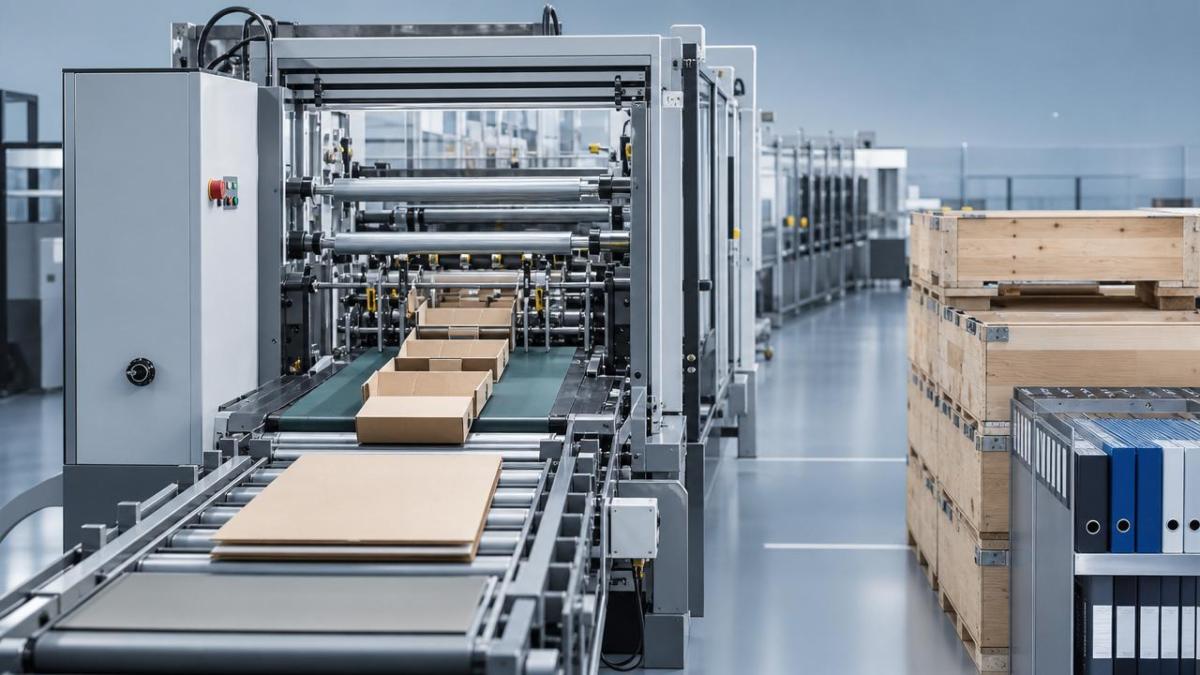
A packaging machinery exporter is not only a seller of equipment. For procurement teams, the exporter becomes a technical translator, risk filter, logistics coordinator, and service bridge.
This is especially true for corrugated board lines, offset printing presses, die-cutters, folder-gluers, and integrated packaging workflows where one weak link affects the whole plant.
PWFS observes paper, print, packaging, and woodworking production as connected industrial systems. Procurement should therefore evaluate whether the exporter understands upstream materials, downstream converting, and automation logic.
The risks procurement teams usually underestimate
- A machine may meet brochure speed but fail under local paper grades, humidity conditions, adhesive behavior, or operator skill levels.
- Incomplete documentation can delay customs clearance, installation, safety review, operator training, and internal acceptance testing.
- A low initial quotation may hide extra costs for molds, electrical adaptation, spare parts, remote diagnostics, or engineer travel.
- Poor communication between exporter, manufacturer, and buyer can turn minor commissioning issues into weeks of production delay.
The right packaging machinery exporter helps buyers avoid these gaps before contracts are signed, not after the equipment arrives on site.
Check the Exporter’s Industry Understanding Before Technical Negotiation
Before discussing price, ask whether the packaging machinery exporter can explain your production scenario in practical terms. Generic answers signal future communication friction.
For corrugated packaging, the exporter should understand flute profiles, board moisture, steam heating, glue application, slitting accuracy, stacking stability, and compression requirements.
For printed folding cartons, they should speak clearly about registration accuracy, die-cut pressure, waste stripping, folding geometry, glue systems, and carton inspection.
PWFS often frames these systems as physical creators of packaging value. Procurement teams should look for exporters who connect mechanics, materials, compliance, and factory economics.
Questions that reveal real technical depth
- Can the exporter match machine configuration to your board size, carton type, paper grammage, printing method, and daily order mix?
- Can they explain how speed changes affect registration, gluing quality, die-cut stability, waste rate, and maintenance frequency?
- Can they discuss optional modules with clear trade-offs instead of pushing every available feature?
- Can they review your layout, workflow, power supply, compressed air, foundation, dust removal, and material handling plan?
What to Compare When Shortlisting a Packaging Machinery Exporter
Procurement teams need a structured comparison because brochures rarely show operational risk. The table below supports early-stage exporter screening.
A capable packaging machinery exporter should be comfortable with this level of review. If answers remain vague, the sourcing risk usually increases later.
Technical Parameters Procurement Should Confirm in Writing
Specifications must be contract-level language, not casual chat records. This is where many packaging machinery exporter disputes begin.
The goal is not to collect every parameter. Buyers should focus on the values that determine output quality, changeover efficiency, maintenance cost, and acceptance criteria.
The following checklist is useful for corrugated, carton converting, print finishing, and related packaging production equipment.
A professional packaging machinery exporter should turn these parameters into drawings, quotation annexes, acceptance plans, and spare parts recommendations.
Compliance, Documentation, and Import Readiness
For procurement personnel, compliance is not paperwork decoration. It affects legal import, insurance, safety approval, customer audits, and resale confidence.
A packaging machinery exporter should clarify which documents are standard, which are optional, and which require project-specific preparation.
In packaging and print-related environments, buyers may also face food contact packaging expectations, FSC traceability questions, ink migration controls, and workplace safety reviews.
Documentation package to request
- Commercial documents including proforma invoice, packing list, shipment details, and clear equipment descriptions for customs review.
- Technical files including electrical diagrams, pneumatic diagrams, operating manuals, lubrication schedules, and wearing parts lists.
- Safety-related documents covering guarding, emergency stops, warning labels, lockout guidance, and operator protection instructions.
- Acceptance documents defining test materials, trial speed, output quality checks, defect handling, and installation completion records.
If the exporter cannot provide sample documentation before deposit, buyers should treat it as an early warning signal.
Cost, ROI, and Alternatives: Avoid the Lowest-Price Trap
A packaging machinery exporter may quote a competitive base price, but procurement teams must calculate the full ownership picture.
The lowest invoice price can become expensive if tooling changes are slow, spare parts are unclear, or technicians cannot respond during peak production.
Use the following cost view when comparing exporters and machinery configurations across different automation levels.
The best packaging machinery exporter helps buyers compare total cost per output unit, not only the equipment acquisition cost.
Service Capability: What Happens After the Machine Ships?
Export service is often tested when the equipment is already paid for, unpacked, and expected to produce immediately.
A dependable packaging machinery exporter should define installation scope, commissioning responsibilities, operator training, spare parts supply, and escalation paths in advance.
Service workflow procurement can request
- Pre-shipment inspection with video, test materials, key parameter records, electrical checks, and packaging confirmation.
- Installation preparation including foundation drawings, utility requirements, layout review, and unloading guidance.
- Commissioning support covering calibration, trial running, operator training, safety instruction, and quality acceptance.
- Post-startup support through remote diagnostics, spare parts recommendations, preventive maintenance planning, and issue documentation.
When buyers evaluate a packaging machinery exporter, service details should be treated as commercial terms, not informal promises.
Application Scenarios: Match Exporter Strength to Your Factory Type
Different factories need different exporter capabilities. A carton converter, an integrated corrugated plant, and a print-finishing supplier face different bottlenecks.
PWFS focuses on the transition from paper and wood materials into high-value industrial products, so scenario matching is central to procurement judgment.
Where exporter specialization becomes visible
- E-commerce corrugated plants need exporters familiar with fast order turnover, compression strength, board consistency, and logistics packaging specifications.
- Consumer packaging printers need strong knowledge of color registration, coating, die-cutting alignment, carton appearance, and brand quality expectations.
- Pharmaceutical or food packaging suppliers need cleaner documentation, traceable materials, stable gluing, inspection options, and audit-friendly operation records.
- Furniture and panel-related packaging buyers may value exporters who understand CNC cutting, edge banding, protective packaging, and digital customization workflows.
A broad but technically grounded packaging machinery exporter can help multi-process buyers avoid isolated equipment decisions that create workflow imbalance.
Common Mistakes When Choosing a Packaging Machinery Exporter
Many procurement failures are not caused by one bad machine. They come from unclear requirements, weak verification, and assumptions nobody documented.
Mistake 1: Comparing quotations without normalizing scope
Two offers may look similar while one excludes tooling, conveyors, spare parts, installation, electrical adaptation, or inspection systems.
Ask every packaging machinery exporter to quote against the same production target, material range, acceptance standard, and service requirement.
Mistake 2: Ignoring operator skill and local maintenance capacity
Highly automated lines can improve yield, but they require structured training, disciplined maintenance, and basic electrical or mechanical troubleshooting capability.
If the local team is inexperienced, procurement should request stronger training materials, remote support, and simplified operating interfaces.
Mistake 3: Treating acceptance testing as a formality
Factory acceptance testing should use relevant materials and measurable criteria. Speed, waste, accuracy, stability, and safety checks should be recorded.
A responsible packaging machinery exporter will welcome clear acceptance terms because they reduce misunderstanding for both sides.
FAQ for Procurement Teams
How do I verify whether a packaging machinery exporter is technically reliable?
Request a requirement review, sample layout feedback, parameter explanation, documentation samples, and a detailed commissioning plan. Reliable exporters answer with process logic, not slogans.
Should I choose a trading exporter or a manufacturer exporter?
Both can work. A manufacturer may control production directly, while a skilled trading exporter may integrate multiple machines and coordinate export service better.
Procurement should judge technical response, transparency, documentation, warranty responsibility, and service execution rather than relying only on business type.
What delivery period should buyers expect?
Delivery depends on equipment complexity, customization, factory schedule, shipping route, and inspection requirements. Standard machines may move faster than integrated automated lines.
Always ask the packaging machinery exporter to separate production time, testing time, export packing, shipping, customs, installation, and commissioning.
What should be included in a spare parts package?
Focus on wearing parts and critical downtime parts such as belts, blades, sensors, glue components, pneumatic elements, bearings, and selected electrical components.
The exact list should reflect machine type, operating hours, local availability, and the buyer’s tolerance for production interruption.
Why Choose PWFS for Packaging Machinery Exporter Evaluation
PWFS supports procurement decisions with cross-disciplinary intelligence across corrugated board lines, offset presses, folder-gluers, die-cutters, CNC woodworking systems, and edge banding equipment.
Our perspective connects micron-level print registration, folding and cutting dynamics, digital manufacturing, compliance concerns, and factory ROI into one sourcing framework.
Procurement teams can consult PWFS when comparing a packaging machinery exporter, reviewing technical parameters, clarifying certification expectations, or checking service feasibility.
We can help structure requirement lists, quotation comparison tables, acceptance criteria, layout questions, spare parts plans, and automation upgrade discussions.
If your team is preparing a purchase, contact PWFS to discuss machine selection, delivery cycle, customization scope, documentation needs, sample testing, and quotation communication.
A packaging machinery exporter should strengthen your supply chain, not add uncertainty. Start with a clear evaluation framework before the first deposit is paid.
Related News
Get weekly intelligence in your inbox.
No noise. No sponsored content. Pure intelligence.
