
What drives flexible manufacturing systems price today?
What drives flexible manufacturing systems price today?
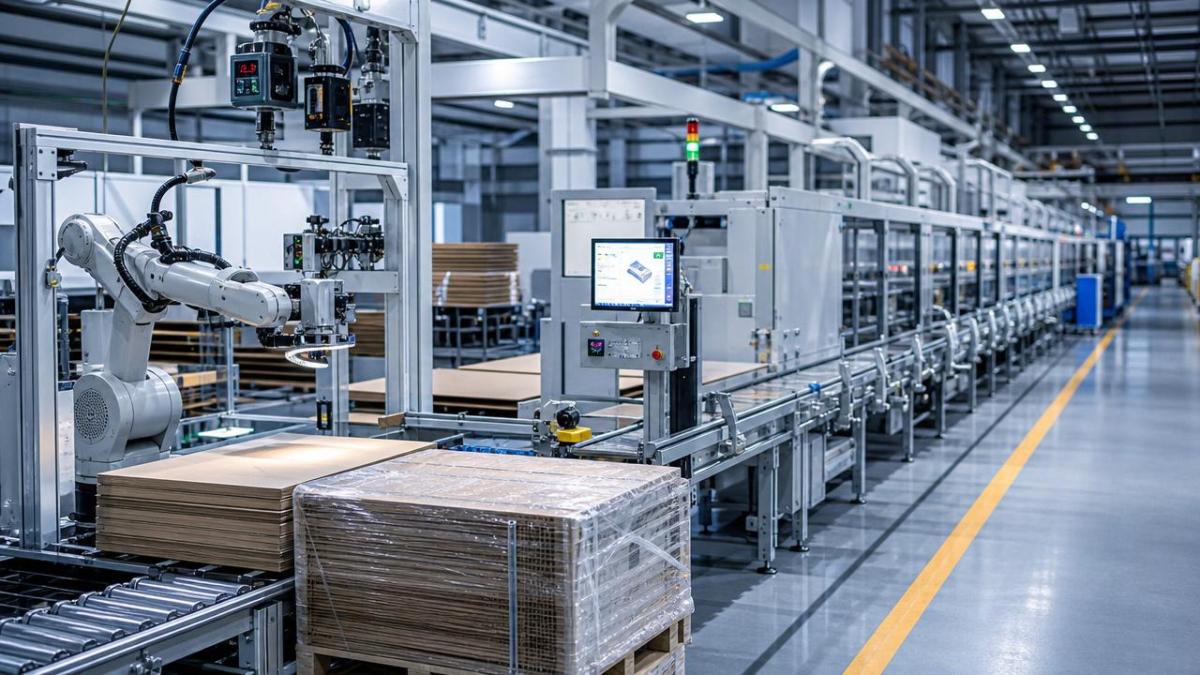
For capital approval, flexible manufacturing systems price is no longer a simple equipment quote.
It reflects automation payback, yield stability, labor reduction, product agility, and risk control across modern production networks.
In print, packaging, woodworking, furniture, and broader industrial operations, pricing is shaped by precision, software, compliance, and integration depth.
Understanding flexible manufacturing systems price helps compare capital spending with long-term margin, scalable output, and future product variation.
Flexible manufacturing systems price is rising with the new automation baseline
The baseline for automation has changed quickly.
A machine cell is expected to cut, print, fold, inspect, track, and report with minimal manual intervention.
That expectation directly affects flexible manufacturing systems price, especially where short runs and product variation dominate.
In corrugated packaging, demand shifts from long, stable batches toward e-commerce box diversity and faster replenishment.
In woodworking, whole-house customization requires digital cutting paths, edge quality, drilling accuracy, and rapid design conversion.
In offset printing and die-cutting, micron-level registration must remain stable while speed and substrate variation increase.
Therefore, flexible manufacturing systems price now includes the cost of consistency under change, not only mechanical capacity.
Trend signals changing the cost structure of flexible automation
Several visible signals explain why flexible manufacturing systems price varies widely across suppliers and project scopes.
The first signal is the replacement of isolated machines by connected production ecosystems.
The second signal is the growing value of software logic behind physical processing.
The third signal is compliance pressure around traceability, emissions, safe materials, and process documentation.
These signals turn flexible manufacturing systems price into a measure of production resilience.
A cheaper system may still be expensive if it cannot hold quality during frequent job changes.
Core drivers behind flexible manufacturing systems price today
The strongest price drivers are not always visible in a quotation headline.
They usually sit inside motion architecture, data connectivity, tooling flexibility, and process control.
- Servo precision: Higher accuracy raises cost but reduces scrap, rework, and unstable output.
- Changeover automation: Automatic settings shorten downtime between different formats, boards, panels, or print jobs.
- Vision inspection: Cameras and algorithms detect registration errors, glue defects, cutting drift, and surface flaws.
- MES integration: Connected scheduling improves throughput, traceability, labor planning, and production visibility.
- Tooling intelligence: Smart tool libraries reduce setup dependency and protect repeatable cutting or die-cutting quality.
- Energy performance: Efficient drives, vacuum systems, drying units, and heating modules influence total ownership cost.
- Safety design: Guarding, interlocks, diagnostics, and compliant control architecture add necessary engineering value.
Flexible manufacturing systems price also depends on how much uncertainty the system must absorb.
A line handling one stable product is fundamentally different from a cell processing thousands of variants.
In that sense, flexible manufacturing systems price rises with complexity, but so does strategic production freedom.
Why print, packaging, and woodworking face stronger price pressure
Paper and wood processing combine physical variability with high commercial visibility.
Raw paper humidity, board stiffness, ink behavior, veneer quality, and panel density all influence process stability.
This makes flexible manufacturing systems price sensitive to sensing, compensation algorithms, and mechanical rigidity.
A corrugated board line must maintain bonding strength while speed, paper grade, and flute profile change.
An offset press must align CMYK dots at high speed while substrate and ink conditions shift.
A folder-gluer must hold carton geometry while running hundreds of pieces per minute.
A CNC woodworking router must translate digital furniture design into repeatable cutting, drilling, and nesting results.
A panel edge bander must seal exposed edges with strong adhesion and consistent appearance.
These requirements explain why flexible manufacturing systems price cannot be judged by tonnage, speed, or station count alone.
The impact spreads across cost, quality, and delivery models
Changing flexible manufacturing systems price reshapes more than the capital budget.
It changes how production absorbs demand shocks, labor shortages, material variation, and sustainability requirements.
- Production planning gains value when systems accept frequent job switching without long stoppages.
- Quality control becomes more predictive when sensors identify drift before waste expands.
- Labor models shift toward supervision, data review, maintenance, and process optimization.
- Inventory strategy improves when smaller batches become economically realistic.
- Customer response accelerates when design data flows directly into machine execution.
The financial implication is clear.
Flexible manufacturing systems price should be evaluated against measurable operational effects, not only invoice comparison.
Lower scrap, fewer operators, faster approvals, and higher machine availability can offset a higher initial price.
Key checkpoints before judging a quoted flexible manufacturing systems price
A reliable evaluation needs a structured view of technical and economic variables.
The following checkpoints help separate low purchase cost from true production value.
- Define the expected product mix, including batch size, format range, material types, and future variants.
- Calculate changeover frequency and downtime cost under realistic production conditions.
- Measure scrap value across paper, board, ink, glue, wood panels, and finishing consumables.
- Verify integration depth with MES, ERP, CAD, barcode, inspection, and maintenance systems.
- Review tolerance requirements for print registration, die-cut geometry, drilling accuracy, and edge sealing.
- Compare energy usage during peak load, idle time, heating, drying, vacuum, and compressed air operation.
- Assess service capability, spare parts access, remote diagnostics, and upgrade pathways.
These checkpoints reveal whether flexible manufacturing systems price supports daily competitiveness.
They also reduce the risk of underestimating software, commissioning, training, and lifecycle maintenance.
How to compare price levels without losing strategic context
A practical comparison should place the quotation inside a payback model.
That model should include throughput, yield, labor, energy, floor space, service, and product flexibility.
This approach makes flexible manufacturing systems price easier to compare across different technical architectures.
It also prevents narrow decisions based only on speed claims or discount levels.
What to watch next as flexible manufacturing systems price evolves
The next pricing shift will likely come from intelligence embedded deeper inside equipment.
Predictive maintenance, AI-assisted nesting, automatic color correction, and adaptive motion control will become stronger differentiators.
Energy rules and material traceability will also influence flexible manufacturing systems price in export-oriented supply chains.
Systems with verified records, lower waste, and transparent process data may gain approval faster.
At the same time, modular design could make entry investment more manageable.
A staged path may start with automated cutting, then add inspection, MES linkage, and robotic handling.
Practical response for the next investment cycle
- Build a total cost model before requesting final technical proposals.
- Use real job data, not ideal catalog examples, to test payback.
- Prioritize systems that maintain quality during rapid product variation.
- Request clear definitions for software licenses, interfaces, upgrades, and service response.
- Link flexible manufacturing systems price to measurable savings and revenue protection.
Final view: price is the visible part of flexibility value
Flexible manufacturing systems price is driven by the market’s demand for faster change, cleaner data, and more stable output.
In paper, packaging, printing, woodworking, and furniture production, flexibility has become a core operating asset.
The strongest decision is not always the lowest quotation.
It is the system that protects yield, supports customization, reduces risk, and scales with future demand.
Before approving a project, compare flexible manufacturing systems price with verified payback assumptions, integration needs, and lifecycle resilience.
That disciplined view turns automation spending into a stronger foundation for profitable, flexible, and compliant production.
Related News
Get weekly intelligence in your inbox.
No noise. No sponsored content. Pure intelligence.
