
Packaging Machinery Selection: Key Cost, Throughput, and Layout Checks
Selecting the right packaging machinery is no longer a simple equipment purchase. It shapes capital efficiency, throughput, layout, labor dependency, and scalable automation.
The real challenge is not choosing the fastest machine on paper. It is proving that demand, space, integration, and cost structure fit together.
This guide outlines practical checks that reduce underperforming assets, hidden bottlenecks, and expensive redesigns before committing to a packaging line investment.
Why Packaging Machinery Selection Needs a Checklist
Packaging machinery decisions often fail when evaluation starts with catalog speed, not factory reality. Rated output rarely reflects actual upstream and downstream conditions.
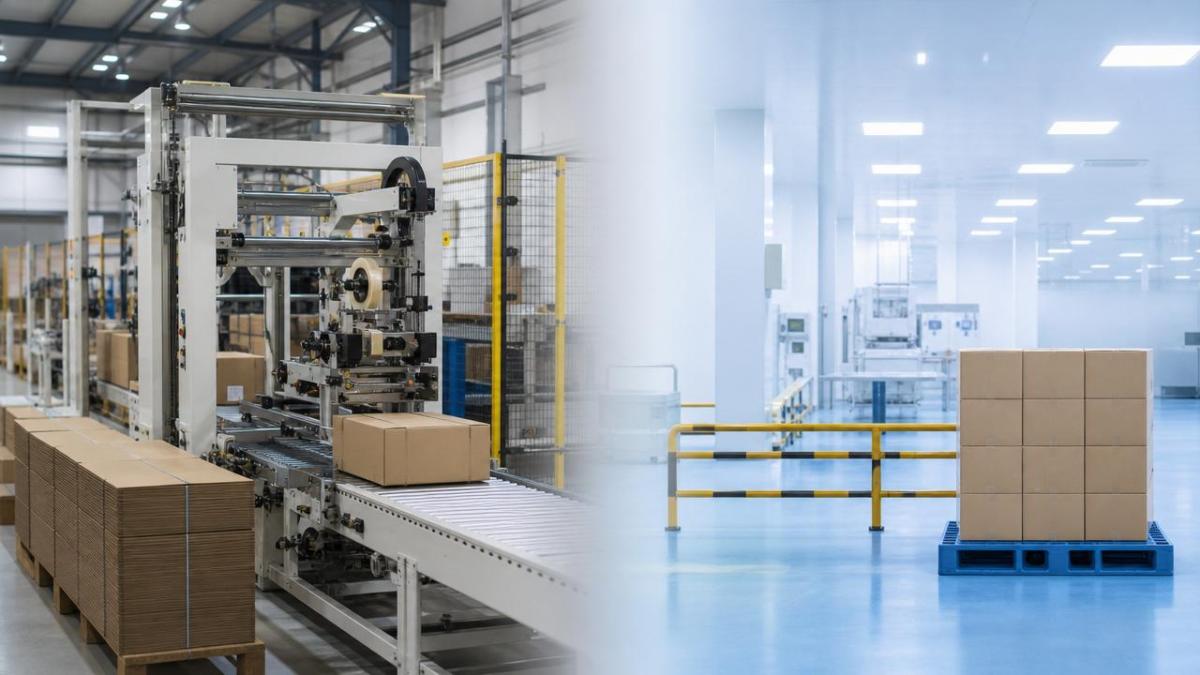
A checklist forces every assumption into measurable terms. It connects product mix, carton formats, labor availability, utilities, controls, maintenance, and future demand.
For corrugated, print, converting, woodworking, and general manufacturing environments, this discipline prevents isolated equipment choices from weakening the entire production flow.
Packaging machinery should be judged as part of a system. The strongest line is balanced, serviceable, data-ready, and adaptable to product variation.
Core Packaging Machinery Checks Before Investment
Cost, Throughput, Layout, and Integration Checklist
- Define the total cost of ownership, including tooling, change parts, compressed air, maintenance labor, spare parts, software licenses, and operator training.
- Validate real throughput against product mix, not brochure speed. Include feeding delays, changeovers, inspection rejects, and downstream accumulation limits.
- Map every footprint requirement, including access doors, maintenance clearance, pallet movement, reject bins, safety fencing, and future auxiliary equipment.
- Confirm material compatibility across board grades, films, labels, adhesives, inks, cartons, trays, and protective packaging formats used in production.
- Check changeover logic by timing actual adjustments, recipe loading, servo positioning, tool replacement, guide setting, and restart stabilization.
- Assess labor dependency by counting tasks for loading, clearing jams, quality checks, replenishment, cleaning, and minor mechanical adjustments.
- Verify utility demand for electricity, vacuum, steam, air, glue systems, extraction, chilled water, and environmental controls before layout approval.
- Review control integration with MES, ERP, barcode systems, vision inspection, weigh-checking, serialization, and production reporting tools.
- Inspect serviceability by locating wear parts, lubrication points, belts, sensors, knives, sealing jaws, bearings, and guarded access zones.
- Demand acceptance tests using real products, real operators, actual packaging materials, and documented reject criteria under realistic run durations.
These checks turn packaging machinery selection into a controlled engineering process. They also reveal whether a line can sustain repeatable performance after installation.
Cost Checks That Prevent Capital Waste
The purchase price of packaging machinery is only the visible layer. Long-term cost is often hidden in parts, downtime, utilities, and changeover loss.
Compare investment options by cost per sellable unit. This figure should include scrap, labor hours, energy demand, consumables, and expected equipment availability.
A cheaper system may become expensive if it requires frequent manual intervention. A premium system may pay back quickly through stability and reduced waste.
Capital Evaluation Points
- Calculate payback with conservative uptime assumptions, not ideal shift output. Use documented maintenance windows and seasonal demand swings.
- Compare tooling costs for each SKU family. Frequent carton, pouch, label, or tray changes can reshape the true machinery budget.
- Price critical spare parts before signing. Long lead times for electronics, jaws, motors, or proprietary sensors increase operational exposure.
- Include commissioning cost, operator ramp-up, floor reinforcement, guarding changes, network wiring, and material trials in the investment model.
A disciplined model makes packaging machinery easier to compare across suppliers. It separates technical value from attractive but incomplete quotations.
Throughput Checks for Balanced Line Performance
Throughput is not the same as machine speed. Packaging machinery must be measured by sellable output through the complete line.
A fast case packer creates little value if carton erecting, printing, inspection, or palletizing cannot maintain the same takt time.
Run capacity studies by product family. Small formats, heavy packs, fragile goods, or mixed orders may expose very different bottlenecks.
Operational Throughput Checks
- Measure the slowest stable operation, then design buffers around it. Avoid relying on peak bursts that cannot be sustained.
- Track micro-stops during trials. Short jams, missed picks, label misfeeds, or sealing faults often destroy expected efficiency.
- Test degraded material conditions. Curled board, dusty corrugated sheets, film tension variation, or adhesive aging affect real line speed.
- Confirm inspection speed. Vision systems, metal detection, checkweighers, and reject verification must match the required production cadence.
Packaging machinery should maintain controlled rhythm, not simply reach a short demonstration peak. Stability is usually worth more than theoretical maximum speed.
Layout Checks for Space, Flow, and Safety
Factory layout can make excellent packaging machinery perform poorly. Poor material flow creates waiting, crossing traffic, blocked access, and unsafe interventions.
Start with the movement of materials. Follow substrates, boxes, labels, inserts, finished goods, rejects, tools, and operators across the entire area.
Then review the layout under maintenance conditions. A machine that fits physically may still be difficult to repair or clean.
Layout Verification Checklist
- Draw full clearance zones for guarding, electrical cabinets, glue tanks, film stands, conveyors, doors, and operator access panels.
- Simulate pallet and forklift routes. Finished goods should leave the area without crossing raw material replenishment paths.
- Reserve space for accumulation. Balanced buffers protect packaging machinery from upstream variation without encouraging uncontrolled work in progress.
- Confirm safe access for cleaning. Food, pharmaceutical, cosmetic, print, and woodworking environments all need predictable sanitation or dust control routines.
Layout validation should happen before purchase approval. Moving installed packaging machinery is expensive, disruptive, and rarely budgeted accurately.
Scenario Notes for Different Production Environments
High-Volume Corrugated and Carton Converting
In corrugated environments, packaging machinery must handle board variation, warp, dust, glue behavior, print registration, and fast format changes.
The best results come from matching feeder design, die-cutting accuracy, folder-gluer stability, and stacking logic to the expected order profile.
Consumer Goods and E-Commerce Fulfillment
E-commerce packaging machinery must manage SKU variety, parcel protection, labeling accuracy, and fast order switching without excessive manual sorting.
Right-sized automation matters. Oversized lines can waste space, while underpowered systems create labor dependency during promotional demand peaks.
Furniture, Panels, and Custom Manufacturing
For panel furniture and woodworking operations, packaging machinery should protect finished surfaces, edges, hardware kits, and customized component sequences.
Integration with CNC routing, edge banding, labeling, and order tracking prevents mismatched parts from entering the final packing stage.
Commonly Missed Risks in Packaging Machinery Projects
Underestimating changeover loss: Frequent SKU shifts can reduce actual capacity sharply. Time recipe changes, material replacement, tool cleaning, and quality approval separately.
Ignoring upstream variation: Packaging machinery cannot correct every defect from printing, converting, filling, cutting, or assembly. Stable inputs are essential.
Overlooking data connectivity: Equipment without usable production data limits continuous improvement. Confirm reporting fields, alarms, downtime codes, and export formats.
Skipping operator ergonomics: Awkward loading, poor visibility, or repetitive reaching can slow performance and increase errors during long production shifts.
Accepting vague guarantees: Performance promises should specify products, materials, speed, reject rate, uptime, test duration, and responsibility for corrections.
Practical Execution Advice Before Final Approval
Build a decision file before issuing a purchase order. Include product drawings, material specifications, target output, utilities, layout drawings, and acceptance standards.
Request a live or recorded factory acceptance test using representative materials. Packaging machinery should prove performance under documented operating conditions.
Rank suppliers by technical evidence, not only price. Strong documentation, spare parts planning, controls support, and application experience reduce commissioning risk.
Plan the installation window carefully. Confirm floor preparation, rigging routes, utilities, training dates, safety validation, and startup inventory before shipment.
After startup, track the first ninety days closely. Use downtime logs, scrap reports, speed trends, and operator feedback to stabilize the line.
Summary and Next Action Guide
Effective packaging machinery selection depends on verified fit, not isolated specifications. Cost, throughput, layout, integration, and serviceability must be evaluated together.
Before committing capital, convert every claim into a testable requirement. Use real materials, realistic product families, and documented acceptance criteria.
The next step is simple: create a one-page checklist for each candidate line, then compare risks side by side before negotiation.
When packaging machinery is selected through evidence, the result is a line that protects margin, supports growth, and strengthens factory resilience.
Related News
Get weekly intelligence in your inbox.
No noise. No sponsored content. Pure intelligence.
