
How to choose print and packaging equipment wisely
Choosing the right print and packaging equipment is no longer just a capital purchase. It shapes quality, speed, waste, compliance, and profitability.
A wise decision compares machines beyond price tags. It examines automation, service, adaptability, material behavior, and future order complexity.
This guide explains practical questions to ask before investing in print and packaging equipment for scalable, efficient, and competitive operations.
What does print and packaging equipment actually include?
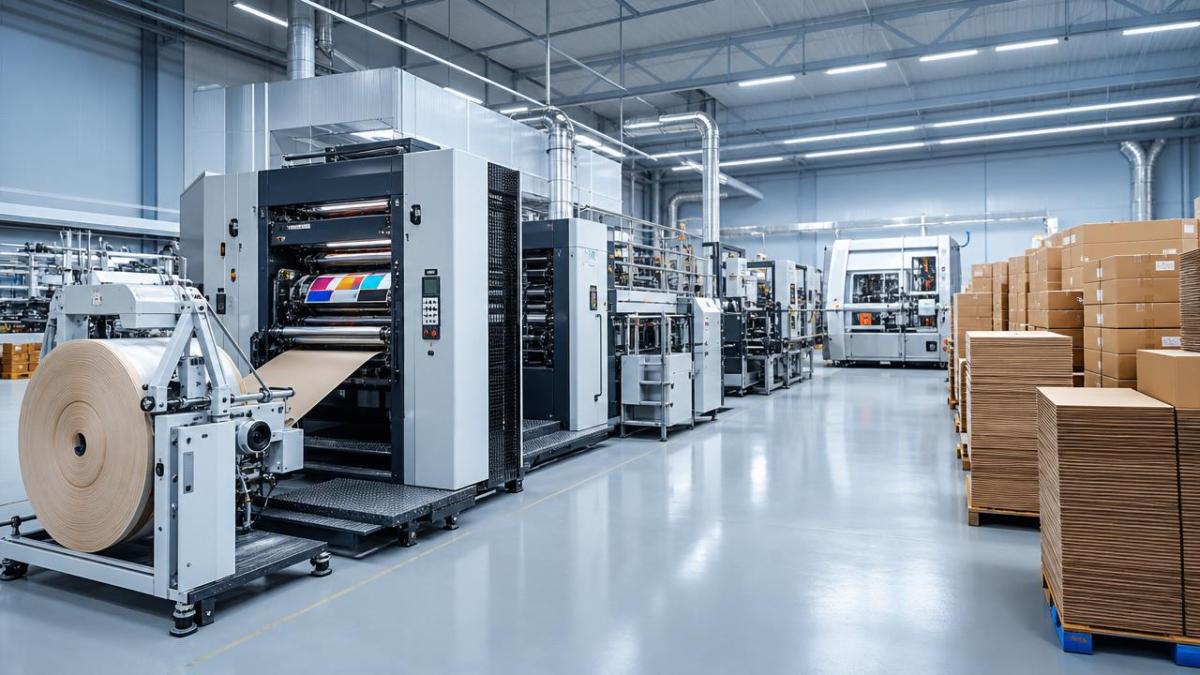
Print and packaging equipment covers the machines that convert paper, board, film, labels, cartons, and decorative surfaces into market-ready products.
It may include offset presses, digital presses, corrugated board lines, laminators, die-cutters, folder-gluers, coaters, and inspection systems.
In modern factories, print and packaging equipment also connects with MES, ERP, vision inspection, robotics, and automated material handling.
For corrugated packaging, the line may begin with paper rolls and end with printed, slotted, folded, and glued shipping boxes.
For folding cartons, production often requires accurate printing, coating, die-cutting, stripping, blanking, folding, gluing, and final quality control.
The best print and packaging equipment should match the product structure, substrate range, decoration level, and delivery expectations.
Why definitions matter before selection
A vague equipment definition leads to wrong comparisons. A press and a converting line solve different bottlenecks.
Before requesting quotations, map the full production path from artwork, material entry, printing, converting, inspection, packing, and dispatch.
This workflow view reveals whether print and packaging equipment must improve color accuracy, throughput, setup time, or labor dependency.
Which production goals should guide the decision?
The right print and packaging equipment begins with measurable production goals, not a catalog specification.
Common goals include shorter lead times, fewer defects, lower paper waste, stronger color consistency, and faster changeovers.
A high-speed offset press may be ideal for long runs with stable designs and strict visual standards.
Digital print and packaging equipment may fit short runs, variable data, seasonal packaging, and rapid brand testing.
A corrugated line requires different priorities. Steam control, board flatness, bonding strength, and trim optimization become critical.
For folding cartons, die-cutting accuracy, crease quality, blank separation, and gluing stability often decide final productivity.
Useful performance indicators
- Net output per shift, not only rated mechanical speed.
- Setup time between jobs with real operators and real materials.
- Waste rate during startup, color adjustment, and die alignment.
- Reject rate after printing, converting, packing, and transport testing.
- Energy use per thousand sheets, cartons, or square meters.
Good print and packaging equipment should improve these indicators under normal production conditions, not only during demonstrations.
How should automation level be evaluated?
Automation is valuable only when it reduces variation, waiting time, rework, and hidden operating cost.
Advanced print and packaging equipment may include automatic plate loading, color control, register correction, feeder adjustment, and inline inspection.
Converting automation can include servo-driven die-cutting, robotic palletizing, automatic glue monitoring, and barcode-based job verification.
However, automation should not create unnecessary complexity. A highly automated line still needs stable data, maintenance discipline, and trained operation.
The best approach is to identify repetitive decisions that cause defects, delays, or skill dependency.
Then select print and packaging equipment that automates those decisions with reliable sensors, controls, and feedback loops.
Questions to ask about automation
- Can job data be recalled accurately from previous production?
- Does the machine support JDF, barcode, MES, or ERP integration?
- Can inspection results stop defects before large waste appears?
- Are alarms clear enough for fast troubleshooting?
- Can remote diagnostics reduce downtime?
Automation should make print and packaging equipment more predictable, not harder to manage during urgent orders.
How do materials and applications affect machine choice?
Material behavior is a decisive factor when comparing print and packaging equipment.
Paperboard, corrugated board, coated paper, films, labels, and specialty substrates respond differently to ink, heat, pressure, and moisture.
A machine that performs well on premium folding carton board may struggle with warped corrugated sheets.
Food packaging requires attention to low-migration inks, coatings, cleaning procedures, traceability, and contamination control.
E-commerce packaging often demands compression strength, barcode readability, fast box formats, and economical brown-board printing.
Luxury packaging values fine registration, surface finishing, embossing quality, and consistent color across repeat orders.
Therefore, print and packaging equipment should be tested with actual substrates, inks, coatings, dies, and glue systems.
Application-based selection clues
This comparison helps clarify whether print and packaging equipment must prioritize speed, flexibility, compliance, or premium finishing.
What hidden costs should be checked before purchase?
The purchase price is only one part of total ownership cost.
Print and packaging equipment also creates costs through installation, foundations, utilities, tooling, consumables, training, spares, and software licenses.
Energy demand can be significant, especially for dryers, compressors, steam systems, vacuum pumps, and high-speed drives.
Tooling should also be examined. Dies, plates, blankets, anilox rolls, glue systems, and inspection cameras affect recurring expenses.
Downtime is another hidden cost. Slow spare-part supply can erase savings from a lower purchase price.
Reliable print and packaging equipment should include clear preventive maintenance schedules and realistic spare-part availability.
Cost questions worth documenting
- What civil work, power, air, steam, or ventilation is required?
- Which consumables are proprietary, and which are open-market items?
- What is the guaranteed response time for service support?
- How much training is included before commercial production?
- What software fees apply after the warranty period?
A complete cost model makes print and packaging equipment easier to compare across brands, configurations, and automation levels.
How can risk be reduced during equipment selection?
Risk reduction starts with sample testing, site references, technical audits, and acceptance criteria.
Never judge print and packaging equipment only by rated speed. Real productivity depends on stable feeding, registration, drying, stacking, and changeover.
Request a demonstration using actual order files, realistic run lengths, and typical operators when possible.
Acceptance tests should define color tolerance, waste limits, speed targets, glue strength, die-cut accuracy, and inspection rejection rules.
It is also wise to check compliance documentation for safety, emissions, ink migration, FSC traceability, and electrical standards.
PWFS emphasizes this intelligence-based selection logic for print and packaging equipment across paper, board, and connected converting systems.
Common mistakes to avoid
- Buying maximum speed without enough downstream capacity.
- Ignoring operator learning curves and maintenance skill needs.
- Selecting a machine before confirming substrate stability.
- Overlooking inspection data and traceability requirements.
- Accepting vague service promises without written response terms.
FAQ table: quick answers before investing
The final decision should connect print and packaging equipment with workflow data, material proof, service capability, and financial return.
A strong investment plan includes product samples, capacity targets, acceptance standards, training schedules, and lifecycle cost calculations.
For future-ready operations, choose print and packaging equipment that supports automation, compliance, flexible orders, and measurable waste reduction.
The next step is to audit current production data, define priority bottlenecks, and compare equipment using real operating scenarios.
Related News
Get weekly intelligence in your inbox.
No noise. No sponsored content. Pure intelligence.
