
Why automated packaging solutions fail without line planning
Many automated packaging solutions disappoint after installation because the real failure began earlier, during line planning. A fast machine alone cannot stabilize a packaging operation.
When infeed speed, buffer logic, changeover rhythm, and data exchange are misaligned, even premium equipment becomes a bottleneck. That is why system engineering matters more than isolated machine selection.
Across packaging, print, corrugated, and furniture-related manufacturing, the same lesson keeps appearing. Automated packaging solutions succeed only when the full line behaves like one controlled production organism.
The market signal is clear: line planning now decides automation value
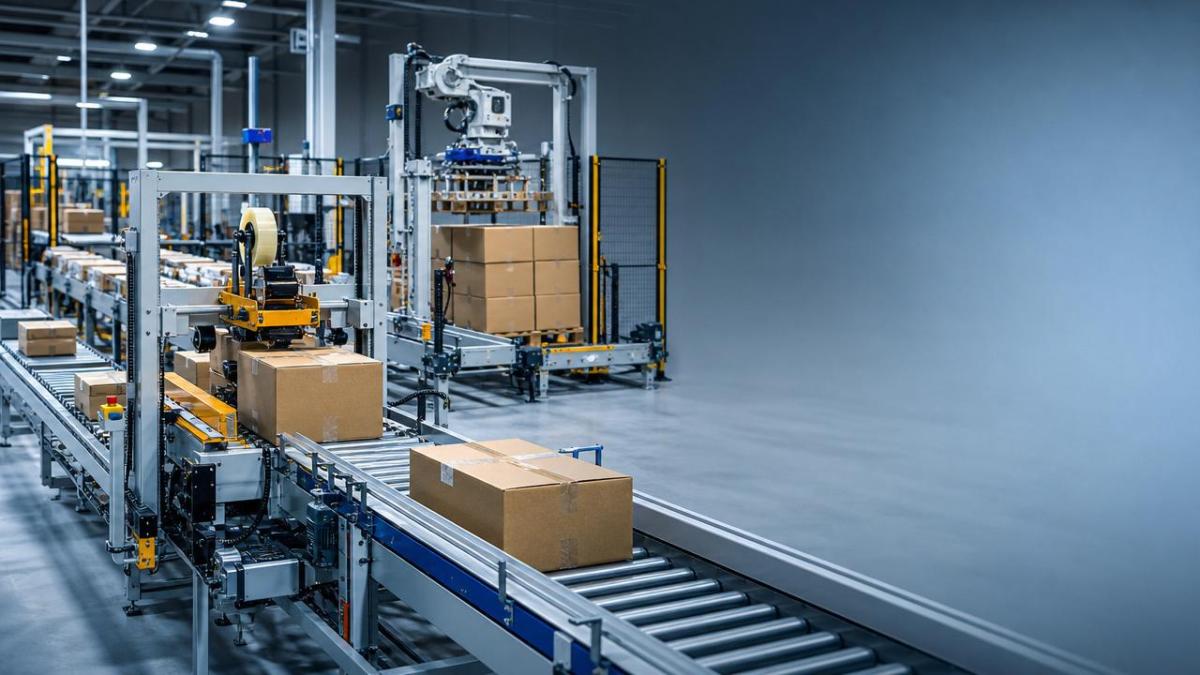
The automation market is changing fast. E-commerce volatility, shorter runs, SKU growth, labor pressure, and traceability demands are exposing weak line design across many plants.
In the past, companies could tolerate local inefficiency. Today, unstable throughput, poor carton flow, and disconnected controls erase the expected return from automated packaging solutions.
This shift is visible in corrugated board lines, offset printing, die-cutting, folder-gluing, and end-of-line packaging. Every added automation layer increases dependence on planning accuracy.
The key trend is simple. Automation is no longer judged by maximum speed on a brochure, but by sustained output across the entire line during real production conditions.
Why automated packaging solutions fail without system-level line planning
Most automation failures are not dramatic breakdowns. They appear as micro-stops, waiting states, rejected packs, rushed interventions, and unstable daily output.
Those symptoms usually come from one structural mistake. The project treated machines as separate assets instead of designing a synchronized material, control, and information flow.
Five common root causes behind underperforming lines
- Throughput assumptions ignore actual stoppages, changeovers, and mixed product conditions.
- Upstream and downstream machines run at different practical speeds, not different nameplate speeds.
- Buffer zones are too small, badly placed, or missing entirely.
- Control systems exchange incomplete or delayed production data.
- Line layouts neglect operator access, maintenance routes, and material replenishment paths.
These issues are especially dangerous in automated packaging solutions because one unstable node can force repeated slowdowns across the entire sequence.
The forces driving stricter planning requirements
Several industry forces are making line planning more important than ever. They affect packaging plants, print converters, board producers, and furniture-related product operations alike.
The implication is direct. Automation projects now need engineering discipline across mechanics, controls, data architecture, quality logic, and operational behavior.
Where the mismatch usually appears first on a live packaging line
In practice, failure rarely starts at the advertised core machine. It often begins at transfer points, accumulation zones, or software handshakes between connected equipment.
Frequent mismatch zones
- Carton blank feeding versus downstream erection rhythm
- Printing or coding speed versus inspection and rejection timing
- Case packing output versus palletizing cycle time
- Die-cut batch flow versus folding and gluing accumulation capacity
- CNC cut-part output versus packaging preparation readiness
In corrugated and folding carton environments, unstable board quality can amplify these gaps. In furniture-related packaging, dimensional variation and product mix create the same pattern.
That is why automated packaging solutions must be planned around process interaction, not just machine capability lists.
The business impact reaches beyond downtime
Poor line planning affects far more than output. It changes labor use, inventory behavior, material waste, order reliability, and even customer confidence.
A line that stops often creates hidden queues upstream and urgent recovery work downstream. That weakens schedule accuracy and makes quality issues harder to isolate.
Typical consequences of weak planning
- Lower real OEE than expected during acceptance
- More manual intervention around supposedly automated sections
- Higher scrap from jams, misfeeds, and rushed restarts
- Longer payback periods for automated packaging solutions
- Limited scalability when demand or product variety increases
For operations connected to high-precision printing, converting, or custom wood processing, these effects spread quickly because every downstream process depends on consistent upstream timing.
What deserves attention before investing in automated packaging solutions
The strongest projects begin by defining line behavior under normal, mixed, and stressed conditions. Planning must reflect practical production, not only ideal-state engineering.
Core checkpoints that should be reviewed early
- Map every product path, from infeed condition to final pack or pallet.
- Separate rated speed from sustainable speed under actual product mix.
- Define buffer strategy using stop frequency and recovery time, not guesswork.
- Verify data tags, alarm logic, and control priorities across all equipment.
- Test changeover impacts on upstream and downstream synchronization.
- Review access for maintenance, consumables, inspection, and safe intervention.
These checkpoints reduce the risk that automated packaging solutions become isolated islands of performance inside a poorly connected process chain.
A more reliable response starts with planning the whole production rhythm
A better response is not necessarily bigger automation. It is smarter orchestration of machine speed, transfer logic, data visibility, and recovery behavior.
This approach supports packaging plants seeking higher yield, print operations protecting quality flow, and woodworking-linked businesses aiming for flexible, fast delivery.
The next step is to evaluate automation as a line, not a machine
The central lesson is consistent across industries. Automated packaging solutions fail when planning starts too late or stays too narrow.
The stronger path is to review throughput logic, control architecture, product variability, and buffer design before commissioning pressure begins. That is where long-term performance is really decided.
For organizations following packaging, print, corrugated, and woodworking equipment trends, this systems view is becoming the baseline for dependable automation returns.
If automated packaging solutions are under review, start with a line-wide audit. Measure interaction points, realistic cycle behavior, and data continuity first. Better planning will usually deliver the fastest improvement.
Related News
Get weekly intelligence in your inbox.
No noise. No sponsored content. Pure intelligence.
