
How to Choose Industrial Packaging Solutions for Corrugated Production
Choosing the right industrial packaging solutions for corrugated production is no longer just a procurement decision—it is a strategic move that affects throughput, material yield, brand consistency, logistics resilience, and long-term profitability.
For enterprise decision-makers facing e-commerce growth, tighter sustainability requirements, and rising automation expectations, the ideal packaging setup must align corrugators, printing presses, die-cutters, folder-gluers, and digital manufacturing systems into one efficient value chain.
This guide explains how to evaluate equipment, performance priorities, and investment logic to build a future-ready corrugated packaging operation.
Start with the Real Search Intent: Better Output, Lower Risk, Stronger Margins
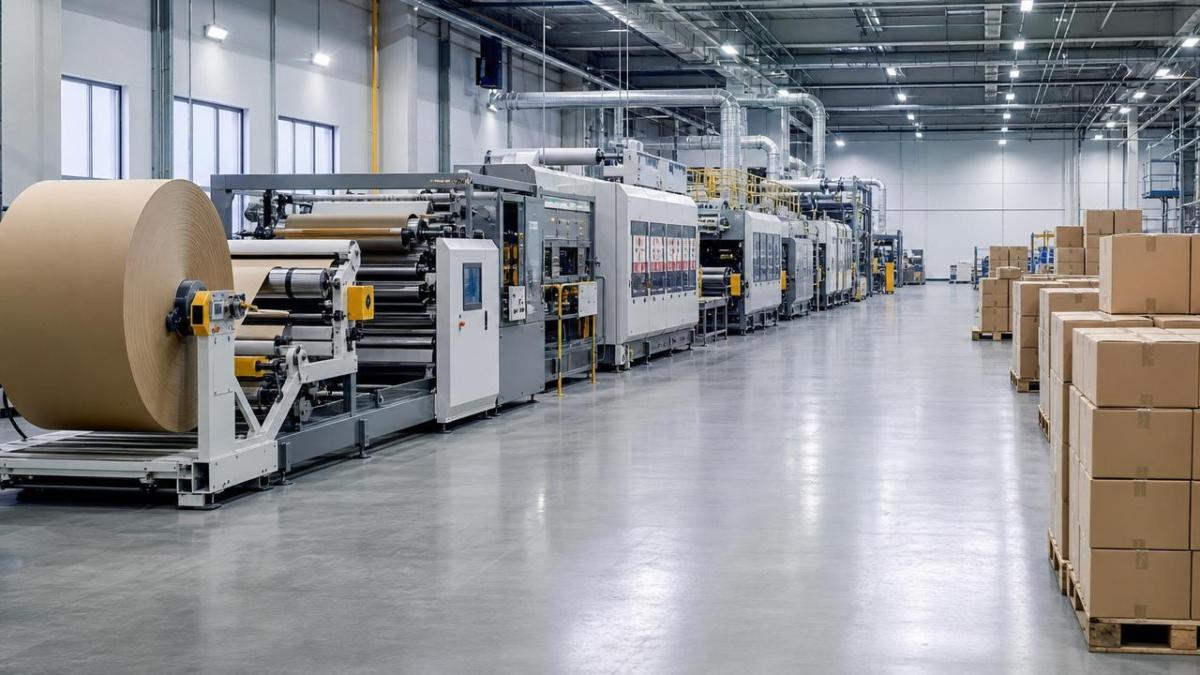
Most executives searching for industrial packaging solutions are not looking for a simple equipment list. They want a decision framework.
Their real concern is whether a new packaging line will improve production economics without creating operational complexity or stranded capital.
Corrugated production has become a strategic bottleneck for brands, converters, logistics suppliers, and e-commerce fulfillment networks.
Packaging must protect goods, support high-speed printing, reduce material waste, and meet tightening sustainability and traceability expectations.
The best solution is therefore not the most expensive machine. It is the most coherent system for a company’s demand profile.
Decision-makers should focus on throughput stability, board quality, print consistency, changeover efficiency, labor dependency, and lifecycle cost.
General claims about automation or sustainability are not enough. The winning choice must translate directly into measurable operational advantage.
Define Your Corrugated Production Model Before Selecting Equipment
Before comparing suppliers, define the production model your business actually needs. Corrugated packaging is not one uniform category.
A high-volume shipper box plant needs different industrial packaging solutions than a short-run display packaging or premium printed carton operation.
If your demand is dominated by e-commerce boxes, prioritize corrugator uptime, fast slitting changes, compression strength, and logistics-grade consistency.
If your business serves consumer brands, color control, surface quality, die-cut accuracy, and finishing performance become more decisive.
For mixed-order plants, flexibility matters more than peak speed alone. Frequent job changes can destroy profitability if automation is incomplete.
Executives should classify orders by run length, board grade, print requirement, delivery window, and post-printing complexity.
This demand map prevents overinvestment in unnecessary capacity and underinvestment in the constraints that actually limit margin.
Evaluate the Corrugator as the Foundation of Packaging Performance
The corrugated board line is the foundation of every downstream process. Poor board quality cannot be fully repaired later.
Important indicators include line speed, heat control, starch application precision, flute consistency, moisture balance, and automatic splicing reliability.
For enterprise buyers, the main question is not only how fast the corrugator can run under ideal conditions.
The better question is how consistently it produces saleable board across grades, shifts, paper sources, and seasonal humidity changes.
Board warping, delamination, caliper variation, and poor bonding create hidden costs through waste, downtime, customer claims, and logistics failures.
Modern industrial packaging solutions should integrate sensors, closed-loop temperature control, recipe management, and production data collection.
These features help factories reduce operator dependency while improving yield across long production cycles and demanding order mixes.
Match Printing Capability to Brand and Market Requirements
Printing is where corrugated packaging becomes both a protective structure and a commercial communication surface.
The right printing choice depends on whether your market values basic identification, retail shelf impact, or premium brand reproduction.
Flexographic printing may suit high-speed logistics and everyday packaging. Offset printing delivers superior visual precision for premium applications.
Digital printing can support short runs, personalization, and fast design iteration, although unit economics require careful evaluation.
Decision-makers should compare ink consumption, registration stability, color repeatability, drying performance, and compatibility with food-grade standards.
For regulated or export-oriented packaging, compliance with ink migration, traceability, and customer documentation may influence supplier selection.
The goal is not to buy the most advanced press. It is to align print capability with customer expectations and profitable pricing.
Do Not Underestimate Die-Cutting, Folding, and Gluing Constraints
Many packaging investments fail because attention concentrates on corrugation and printing while converting capacity is treated as secondary.
In reality, die-cutters, folder-gluers, stackers, and bundling systems often determine whether the line can ship finished orders on time.
High-speed die-cutting requires stable sheet feeding, precise pressure control, accurate registration, and tooling systems designed for repeatability.
Folder-gluers must handle different box styles, glue patterns, board thicknesses, and inspection requirements without excessive manual intervention.
If converting equipment cannot match upstream capacity, work-in-progress rises and the factory loses the benefit of faster board production.
Executives should request bottleneck simulations across typical order portfolios, not only demonstrations using ideal sample jobs.
Reliable converting performance is especially important for medicine, cosmetics, electronics, and subscription commerce packaging with strict dimensional expectations.
Prioritize Automation Where It Reduces Dependency and Variation
Automation should not be purchased as a slogan. It should target the processes where human dependency creates cost, delay, or inconsistency.
Useful automation areas include roll handling, splice control, recipe setup, print registration, die mounting, glue inspection, palletizing, and quality monitoring.
For management teams, the strongest business case often comes from reducing changeover time and stabilizing quality across shifts.
A plant that depends heavily on expert operators becomes vulnerable to labor shortages, training gaps, and inconsistent execution.
Industrial packaging solutions connected to MES, ERP, and warehouse systems can improve planning, traceability, and real-time decision-making.
However, digital integration must be practical. Data should help managers reduce waste, improve delivery accuracy, and identify process losses.
A highly automated line without actionable reporting may look modern but fail to improve profit or customer reliability.
Use Total Cost of Ownership Instead of Purchase Price Alone
Capital price is visible, but it is rarely the largest determinant of long-term value in corrugated production.
Total cost of ownership includes energy use, maintenance, spare parts, tooling, downtime, waste, labor, training, software, and financing impact.
A lower-cost machine may become expensive if it consumes more paper, requires frequent adjustment, or produces unstable board quality.
Conversely, a premium system can be financially justified when it improves yield, shortens lead times, and supports higher-value customers.
Executives should model payback using realistic order data rather than supplier brochures or best-case productivity assumptions.
Key calculations include waste reduction per ton, labor savings per shift, additional sellable output, reduced claims, and faster order turnaround.
The right industrial packaging solutions should strengthen cash flow, not simply expand installed capacity on paper.
Assess Supplier Capability Beyond Machine Specifications
Supplier selection should include engineering depth, service coverage, installation discipline, training systems, and long-term parts availability.
Corrugated production lines are complex ecosystems. Weak commissioning or poor operator training can delay performance realization for months.
Ask suppliers for reference plants with similar board grades, order complexity, climate conditions, and production volume.
Request evidence of uptime, maintenance intervals, energy consumption, and waste rates after the equipment has operated commercially.
Strong suppliers can also advise on factory layout, material flow, compressed air, steam systems, electrical capacity, and safety standards.
For global buyers, documentation quality, remote diagnostics, compliance support, and multilingual service can materially affect operating stability.
A supplier should be treated as a productivity partner, not merely a machinery vendor.
Build Sustainability Into the Operating Model, Not the Marketing Brochure
Sustainability is now a commercial requirement for many packaging buyers, especially in retail, food, electronics, and international shipping.
Corrugated packaging already benefits from recyclability, but customers increasingly demand proof of fiber sourcing, waste reduction, and safer inks.
Practical sustainability measures include optimized board structures, lower starch consumption, energy-efficient heating, water-based inks, and reduced overproduction.
FSC traceability, food-contact compliance, and documented material usage can help converters win contracts with multinational customers.
Decision-makers should avoid solutions that create sustainability claims without operational verification or reliable data capture.
The strongest environmental strategy is usually also a cost strategy: less waste, fewer rejects, lower energy use, and better planning.
When sustainability is embedded in production control, it becomes a measurable competitive advantage rather than a sales slogan.
Plan for Future Demand, but Avoid Overbuilding Too Early
Future-ready production does not always mean buying the largest line available. Overcapacity can create financial pressure and low utilization.
A better approach is to design a scalable system with modular expansion points and clear upgrade pathways.
Consider whether the plant may later add higher-definition printing, automated warehousing, robotic palletizing, or advanced inspection systems.
Layout planning should reserve space for future equipment, safe maintenance access, and improved material flow.
At the same time, the first investment phase must solve today’s highest-value constraints with reasonable payback.
For many enterprises, phased modernization reduces execution risk and allows teams to absorb new technology more effectively.
The ideal roadmap balances ambition with operational readiness, capital discipline, and customer demand visibility.
A Practical Selection Checklist for Enterprise Decision-Makers
Start by identifying the plant’s three biggest constraints: board quality, print capability, converting capacity, labor dependency, or delivery reliability.
Then define measurable targets, such as yield improvement, changeover reduction, uptime, energy savings, or order lead-time compression.
Compare equipment using real production scenarios rather than generic maximum-speed data from brochures.
Evaluate whether each supplier can support integration across corrugation, printing, die-cutting, folding, gluing, inspection, and digital reporting.
Review compliance needs for food packaging, export documentation, sustainable fiber sourcing, and customer audit requirements.
Build the investment case around total cost of ownership, not only purchase price or nominal capacity.
Finally, confirm that managers, operators, maintenance teams, and planners can realistically adopt the selected system.
Conclusion: Choose a System That Converts Strategy Into Production Advantage
The right industrial packaging solutions for corrugated production should connect business strategy with factory reality.
They must support reliable throughput, high material yield, consistent print quality, efficient converting, and transparent operating data.
Enterprise decision-makers should resist both underinvestment in critical constraints and overinvestment in capacity that lacks demand support.
The strongest choice is usually the system that matches your order mix, customer expectations, compliance requirements, and five-year growth plan.
When corrugators, presses, die-cutters, folder-gluers, automation, and digital management operate as one value chain, packaging becomes a profit engine.
In a market shaped by e-commerce speed, brand differentiation, and sustainability pressure, packaging decisions now directly influence enterprise competitiveness.
