
How to Evaluate a Packaging Machinery Exporter: 7 Checks Before You Request a Quote
How do you judge a packaging machinery exporter before asking for a quote?
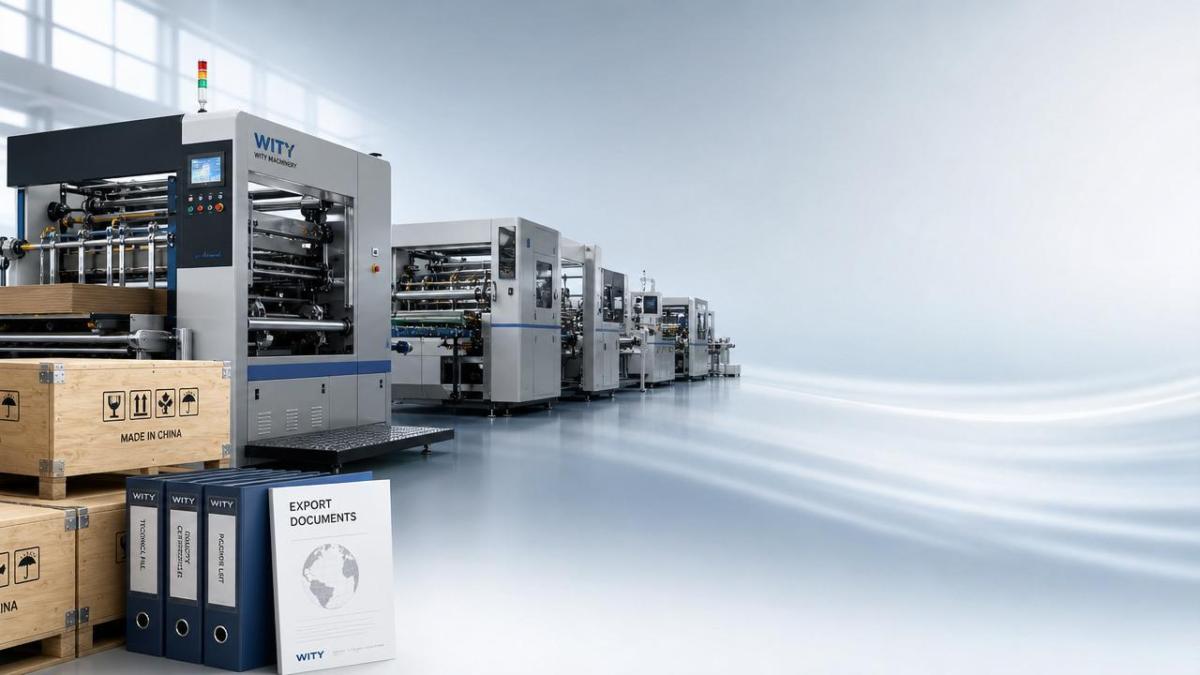
A quote can look competitive and still hide expensive problems.
With a packaging machinery exporter, the real question is not price first.
It is whether the supplier can deliver stable output, compliant documents, and support that survives installation day.
That matters even more in packaging and print environments.
Corrugated board lines, offset presses, die-cutters, folder-gluers, and related automation all depend on tight tolerances and predictable uptime.
A weak exporter can turn micron-level registration or high-speed converting into a chain of delays.
A strong packaging machinery exporter does the opposite.
It reduces risk from the first drawing review to spare parts planning.
At PWFS, this is a familiar pattern across paper and wood processing equipment.
The same logic used to assess corrugators or CNC routers also helps evaluate any exporter serving industrial production.
Before requesting a quote, seven checks usually reveal whether a supplier is worth serious time.
Is the exporter a real manufacturer, an integrator, or just a trading layer?
This is the first filter because it shapes every later conversation.
A packaging machinery exporter may own production, assemble from partner modules, or simply resell machines from different factories.
None of those models is automatically bad.
The problem starts when the business model is unclear.
A real manufacturer should show workshop capacity, machining processes, quality records, and technical staff depth.
An integrator should explain which critical modules are made in-house and which are sourced.
A trading company should be transparent about factory identity and service responsibility.
In practice, ask for factory videos, equipment lists, and a sample production workflow.
If the answers stay vague, the quote stage is already too early.
A quick verification table helps separate signal from sales talk
This table is simple, but it saves time.
A reliable packaging machinery exporter usually answers these points without hesitation.
Can the supplier prove technical fit, not just machine availability?
A common mistake is requesting quotes before defining production reality.
Machine availability does not equal application fit.
For example, a carton converting line may perform well on standard board grades but struggle with coated stock, short runs, or frequent design changes.
A serious packaging machinery exporter will ask about materials, target speed, labor conditions, plant utilities, and expected changeover frequency.
That is a good sign, not a delay tactic.
The best exporters often think like process engineers.
PWFS follows this same logic when analyzing print registration, die-cutting stress balance, or woodworking tool paths.
Equipment works only when the machine, material, and workflow match.
Ask for line layouts, utility requirements, sample output data, and tolerance expectations.
If the supplier jumps straight to a standard model, the comparison is still shallow.
- Request sample specifications linked to actual substrate types.
- Confirm rated speed versus stable production speed.
- Check changeover time for mixed-order production.
- Verify whether upstream and downstream integration is included.
How much export experience is enough to trust the process?
Export experience matters because industrial machinery is never just the machine.
It includes packing method, customs paperwork, labeling, manuals, electrical standards, and installation planning.
An exporter with limited overseas experience may still build decent equipment.
But weak export discipline can slow commissioning by weeks.
The safer approach is to ask where the packaging machinery exporter has delivered similar lines.
Look for markets with comparable compliance pressure.
That could involve CE, UL-related integration expectations, FSC traceability awareness, or food-contact documentation for printed packaging.
This is especially relevant in high-precision packaging sectors.
If a line handles pharmaceutical cartons or premium offset work, documentation quality becomes part of machine quality.
A mature packaging machinery exporter should provide sample manuals, packing lists, and acceptance documents on request.
What documents should be visible before quotation review?
- Preliminary technical proposal with configuration boundaries.
- Electrical and safety standard references.
- Draft layout, foundation, and utility demand notes.
- Sample acceptance criteria and warranty terms.
- Spare parts recommendation for the first year.
What support questions reveal the real long-term cost?
The quote is only the beginning of the cost curve.
Downtime, training gaps, and delayed spare parts can cost more than a higher purchase price.
That is why after-sales support deserves its own check.
Ask how the packaging machinery exporter handles remote diagnostics, software updates, field service travel, and parts dispatch.
Also ask who owns the PLC logic, HMI language support, and parameter backup procedures.
In real operations, these details decide whether a problem becomes a short stop or a major outage.
For complex packaging systems, especially those tied to high-speed printing or converting, technical support must be structured.
A dependable packaging machinery exporter usually defines response windows, escalation paths, and consumable recommendations before contract signature.
If support sounds informal, expect informal results later.
Seven checks worth completing before requesting a final quote
- Verify whether the exporter is manufacturer, integrator, or trader.
- Confirm technical fit with materials, speed, and changeover needs.
- Review export track record in similar regulatory markets.
- Check compliance documents and manual quality early.
- Clarify installation, training, and commissioning responsibility.
- Evaluate spare parts access and remote troubleshooting ability.
- Compare total operating risk, not purchase price alone.
Which red flags usually appear when a packaging machinery exporter is not ready?
Red flags often appear early, but they are easy to ignore when pricing is attractive.
One warning sign is inconsistent technical language.
If the exporter cannot explain tolerance, throughput stability, or maintenance intervals clearly, support quality may be weak.
Another issue is overpromising on lead time without discussing procurement dependencies.
That usually means the schedule is commercial, not operational.
Be careful when every answer is yes, every machine is customizable, and every market is familiar.
A capable packaging machinery exporter is normally specific about limits.
It will explain what needs engineering confirmation, what affects cycle time, and what changes the final price.
That kind of clarity is valuable.
It reflects process discipline rather than sales confidence alone.
So when is the right moment to request the quote?
The best moment is after the basic risk picture is clear.
That means production targets are defined, site conditions are known, and the packaging machinery exporter has answered the seven checks with evidence.
At that stage, the quote becomes useful for decision-making.
Before that, it is often just a number without context.
In packaging, printing, and adjacent converting sectors, detail matters because machine performance is tied to process physics.
That is why platforms such as PWFS focus on the full chain behind paper and wood transformation.
The most reliable decisions come from connecting equipment claims with workflow reality, compliance demands, and long-term operating logic.
If the next step is supplier comparison, start by listing required materials, output targets, utility conditions, documentation needs, and support expectations.
Then request quotations only from each packaging machinery exporter that can prove fit, not just offer availability.
Related News
Get weekly intelligence in your inbox.
No noise. No sponsored content. Pure intelligence.
