
Why Integrated UV Curing Modules Are Reshaping Press Retrofit Decisions
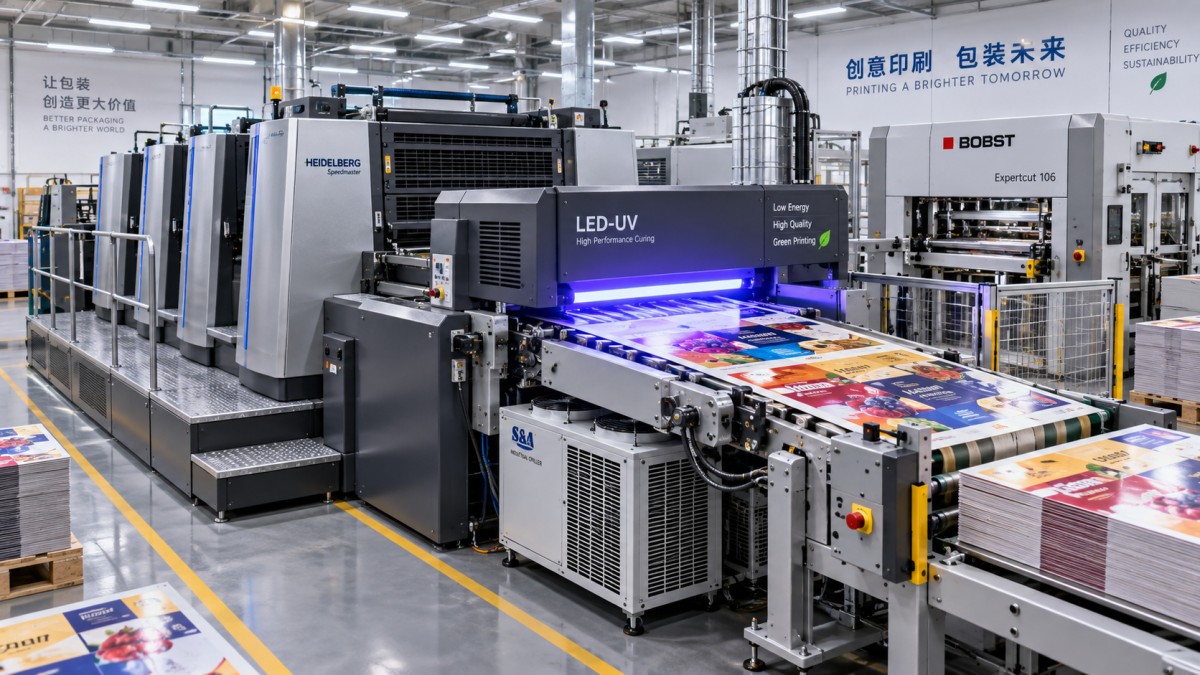
Integrated UV curing modules are rapidly changing how enterprise leaders evaluate press retrofit projects. As the integrated printing machinery market prioritizes faster turnaround, lower energy use, and higher-value packaging output, UV upgrades offer a practical path to improve productivity without replacing an entire press line.
This article examines the operational, financial, and quality factors driving these retrofit decisions, helping print business leaders determine where UV integration creates measurable value and where conventional drying still remains appropriate.
Search Intent: Is an Integrated UV Retrofit a Better Investment Than a New Press?
The core search intent is commercial and evaluative. Decision-makers want to know whether integrated UV curing modules can extend press life, increase margin, and reduce operational constraints without funding a complete equipment replacement.
They are not primarily looking for a basic explanation of ultraviolet curing chemistry. They need a framework for comparing retrofit capital expenditure against new-press investment, downtime risk, expected output, and strategic market opportunities.
For owners, plant directors, and capital planning teams, the central question is practical: can a UV retrofit improve competitiveness quickly enough to justify disruption, engineering work, training, and consumable changes?
The answer is often yes when an existing offset press has reliable mechanical condition, acceptable registration performance, and sufficient remaining productive life. Yet the investment case depends on application mix, substrate range, and workflow discipline.
Integrated UV systems reshape the discussion because they affect more than drying speed. They can alter job sequencing, finishing capability, inventory requirements, energy consumption, customer lead times, and the type of packaging a plant can profitably sell.
Why Retrofit Decisions Have Moved From Maintenance to Growth Strategy
Historically, many retrofit decisions were defensive. Printers replaced worn components, added automation, or improved safety because an aging press required support. UV curing integration increasingly serves a different objective: expanding profitable production capability.
Brand owners now demand shorter campaigns, more versions, stronger shelf impact, durable finishes, and predictable delivery. These pressures make long drying windows and work-in-progress storage increasingly expensive, even when the press itself remains mechanically capable.
In folding carton, premium consumer goods, pharmaceuticals, cosmetics, labels, and specialty commercial print, immediate curing can remove a major bottleneck. Sheets can move toward finishing far sooner, reducing queues between printing and converting.
That matters in plants where die-cutters, foil stampers, folder-gluers, and inspection systems are waiting for printed material. A faster press alone does not improve total throughput if drying delays block the downstream value stream.
The integrated printing machinery market is therefore treating UV modules as production-system investments. The value lies in connecting print, cure, inspection, and finishing into a tighter flow rather than merely installing another press accessory.
For enterprise leaders, this changes capital approval criteria. The relevant measure is no longer only added impressions per hour, but contribution margin per production day, including reduced handling, lower rejects, and faster conversion of orders into cash.
What Integrated UV Curing Modules Actually Change on the Shop Floor
Integrated UV curing modules use ultraviolet energy to polymerize specially formulated inks, coatings, varnishes, or adhesives. Unlike conventional oxidation or heat-based drying, curing occurs almost immediately when the correct energy dose reaches the printed surface.
That immediate response can sharply reduce set-off, marking, and sheet handling limitations. Jobs can often proceed to cutting, creasing, embossing, gluing, or packing earlier, assuming compatibility across inks, coatings, substrates, and finishing processes.
Traditional drying commonly requires racks, powder, extended delivery times, or staging areas. Those requirements consume floor space, labor, and working capital while creating additional opportunities for surface damage, color variation, and scheduling uncertainty.
UV integration can also reduce dependence on anti-set-off powder for relevant work. Less powder may improve finishing cleanliness, although plants must validate performance carefully because material behavior differs across carton grades, coated stocks, and finishing operations.
Modern module designs may use mercury lamps, LED-UV technology, or hybrid configurations. Each choice affects electrical demand, heat generation, maintenance requirements, ink selection, substrate tolerance, safety procedures, and the economics of future consumables.
LED-UV often attracts attention because it produces less infrared heat and can support heat-sensitive substrates. However, leaders should avoid assuming that LED is universally superior without reviewing application requirements and installed press constraints.
A well-designed integrated solution also includes shielding, extraction, interlocks, cooling, electrical architecture, controls integration, and service access. The curing unit cannot be assessed as an isolated lamp because system engineering determines reliability and safety.
The Financial Case: Where Return on Investment Usually Comes From
The strongest retrofit business cases rarely rely on electricity savings alone. Return on investment usually comes from several smaller gains working together: shorter turnaround, greater usable capacity, reduced waste, higher-value applications, and lower work-in-progress inventory.
Capacity gains should be measured at the plant level. If cured sheets reach finishing sooner, downstream assets may run more consistently, allowing the company to ship more orders without adding shifts or acquiring a second press.
Faster delivery can also support pricing. Customers facing promotional deadlines, product launches, regulatory artwork changes, or seasonal demand may pay for dependable lead times when a printer can prove that rapid output will not sacrifice quality.
Waste reduction deserves equal attention. Immediate curing can decrease marking and handling damage, but the savings calculation should include startup sheets, color corrections, coating defects, rejected finished cartons, and customer claims.
Inventory reduction can be material for high-volume carton operations. Conventional drying often forces plants to hold partially completed work between departments. UV-enabled flow can reduce these queues and make daily production scheduling more predictable.
A disciplined financial model should separate hard savings from capacity-enabled revenue. Labor reductions, floor-space savings, and energy changes are relatively visible, while incremental revenue requires realistic assumptions about sales demand, pricing, and conversion capability.
Management should model multiple cases rather than presenting a single optimistic payback. A conservative case based on existing demand, a planned-growth case, and a downside case provide a more credible capital committee discussion.
How to Evaluate Retrofit Economics Before Approving Capital
Begin with twelve months of job data, not equipment brochures. Identify current drying delays, average turnaround times, work-in-progress volumes, rejected sheets, coating jobs, substrate types, finishing requirements, and revenue lost because lead times were unacceptable.
Next, segment jobs by likely UV suitability. Premium cartons, coated packaging, specialty finishes, short-run launch work, and time-sensitive orders may justify the investment sooner than commodity jobs where conventional processes already meet customer expectations.
Estimate the true installed cost. Include modules, electrical upgrades, cooling, ventilation, safety systems, press controls, mechanical integration, commissioning, operator training, ink conversion, spare parts, and planned production interruption during installation.
Downtime should be valued honestly. Even a technically successful retrofit can disrupt peak-season production if installation timing is poorly chosen. Experienced suppliers should provide a detailed shutdown plan, acceptance criteria, contingency resources, and commissioning sequence.
Then calculate contribution from released capacity. Do not value every newly available press hour at full selling price. Use contribution margin, realistic utilization, likely job mix, and the throughput limits of downstream converting equipment.
Include quality-related economics in the model. Faster curing has value only when color, gloss, rub resistance, adhesion, odor, migration compliance, and foldability meet customer specifications consistently under production conditions.
A useful decision metric combines payback period with strategic optionality. A retrofit that opens pharmaceutical cartons, premium cosmetics, or fast-turn e-commerce packaging may deserve approval even when immediate savings alone appear modest.
Quality, Compliance, and Material Risks That Cannot Be Ignored
UV curing can create excellent visual impact and surface durability, but quality performance depends on the complete process. Ink, coating, fountain solution, blanket condition, substrate, curing dose, speed, and finishing operations must work together.
For food, pharmaceutical, tobacco, and personal-care packaging, migration control is especially important. Decision-makers must distinguish between a visually cured surface and a compliant package produced under validated low-migration process conditions.
Compliance review should include ink supplier documentation, curing validation, substrate specifications, barrier assumptions, package construction, local regulations, and customer standards. It should also clarify who owns ongoing testing and traceability responsibilities.
Odor can become a commercial issue in premium packaging, particularly when cartons are used near sensitive products. A retrofit project should include trials under actual production conditions, not only demonstration sheets produced under ideal settings.
Adhesion and cracking risks must be evaluated before approving a broad conversion. Some printed surfaces behave differently during scoring, folding, gluing, lamination, foil stamping, or high-speed die-cutting than conventionally dried material.
Operators also need clear control standards. Curing dose, lamp condition, conveyor speed, reflector cleanliness, temperature, and substrate variability should be monitored through documented procedures rather than left to individual judgment.
The right supplier will welcome production trials and provide transparent limitations. Claims of universal compatibility, effortless conversion, or guaranteed payback without job analysis should be treated as warning signs during procurement.
When an Integrated UV Retrofit Is the Right Choice
A retrofit is most attractive when the existing press still delivers stable registration, acceptable speed, reliable sheet transport, and good mechanical availability. UV capability cannot compensate for chronic press failures or serious quality instability.
It is especially suitable for plants constrained by drying time rather than printing speed. If presses frequently wait for sheets to cure before finishing, shipping, or reverse-side printing, the operational opportunity is easier to quantify.
Plants serving premium packaging segments may benefit because UV supports high-gloss coatings, tactile effects, durable surfaces, and fast finishing. These capabilities can strengthen differentiation where buyers value shelf appearance and launch responsiveness.
Retrofitting may also be logical when a company needs an intermediate step toward broader automation. It can free capacity and improve workflow while management prepares longer-term investments in inspection, robotics, MES, or new converting equipment.
Conversely, a new press may be preferable when capacity demand exceeds the current machine’s speed, format, automation level, or reliability. Retrofitting an obsolete bottleneck can delay a necessary replacement without solving the real constraint.
Leaders should also question retrofit economics where UV-suitable work is limited, customers resist price premiums, finishing cannot keep pace, or facilities lack the electrical and environmental infrastructure for dependable operation.
Choosing a Supplier and Building a Low-Risk Implementation Plan
Supplier selection should begin with comparable installations, preferably in similar press models and packaging applications. Ask for evidence of uptime, service response, curing consistency, component life, operator training, and post-installation performance reviews.
Technical proposals should define energy output, curing width, cooling method, control integration, guarding, extraction, electrical loads, service intervals, consumables, spare-part availability, and how the system responds to press speed changes.
Request a site survey before final pricing. The survey should assess press geometry, delivery configuration, floor loading, electrical capacity, cooling water or air requirements, ventilation, fire protection, access routes, and installation scheduling.
Commercial agreements should include measurable acceptance tests. These can cover curing quality at agreed speeds, adhesion, rub resistance, registration impact, startup performance, safety interlocks, training completion, and a clear process for resolving failures.
Change management matters as much as hardware. Sales teams need to understand new offerings, estimators need accurate costing, procurement needs approved materials, and production teams need standards that maintain repeatable results across shifts.
A phased launch usually reduces risk. Start with a controlled family of repeat jobs, validate quality and finishing behavior, refine recipes, then expand into more demanding substrates and customer applications after process capability is proven.
Conclusion: Treat UV Integration as a Production-System Decision
Integrated UV curing modules are reshaping press retrofit decisions because they can improve the economics of an entire packaging workflow, not merely accelerate ink drying at the press delivery.
For enterprise leaders, the most persuasive case combines verified demand, released finishing capacity, improved quality control, reduced work-in-progress, and access to applications where fast turnaround and premium appearance command better margins.
The right question is not whether UV technology is modern. It is whether a specific integrated printing machinery investment removes a documented production constraint and supports a defensible growth strategy.
Companies that assess job data, compliance requirements, downstream bottlenecks, and installation risk before procurement are better positioned to turn a retrofit into durable operational advantage rather than an expensive technical experiment.
